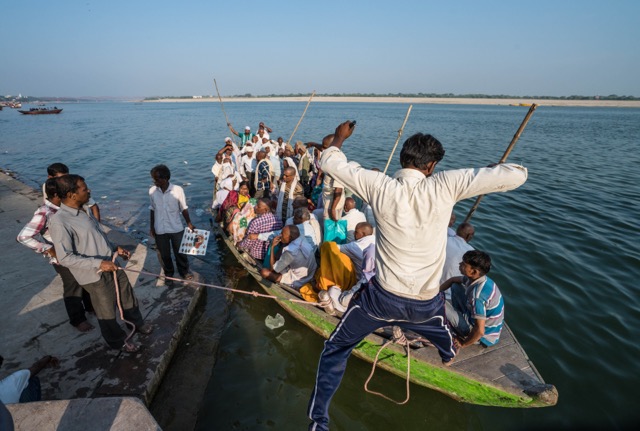
Prof stuff & cinema ~

Next week I’m doing Prof stuff.

Professorial stuff.

As some of you might know, I’m an Adjunct Professor up at the Queensland University of Technology, in their Creative Industries / Screen Studies faculty. This is my fourth year. It’s a part time gig, and my way of giving something back to the industry – in particular film students.

Each year around this time the film course has their student end of year “pitches,” where the students have to pitch to a panel – myself and two other industry professionals – and we determine what films get made the next year.

For me it’s a fascinating process because I’m able to see what stories young people are playing with – and how they’re attempting to interpret them cinematically.

It keeps me young!

Last year veteran producer Tony Buckley was on the judging panel with me, and like me, he lamented the students’ lack of knowledge of film history and culture. It seemed that most of their knowledge of cinema starts with Tarantino and Pulp Fiction. 

Very few had a knowledge of the cinema classics of the 40’s and 50’s – and even the great films from the golden era of Hollywood in the 70s were largely unknown to them.

We’re talking masterpieces such as The Godfather Pts 1&2, The French Connection Pts 1&2, Chinatown, The Exorcist, Network, Patton, The Conversation, Taxi Driver, Apocalypse Now, and my favourite film from the 70’s, Roman Polanski’s The Tenant…. I could go on and on.

Ask the students about the work of Billy Wilder, John Ford, Joseph Mankiewicz, Vincente Minnelli, John Huston, Howard Hawks, Fred Zinnemann, Hal Ashby – even Alfred Hitchcock – and they’ll stare at you blankly. There’s no point even mentioning Antonioni, Kurosawa, Renoir, Bunuel, Bertolucci, Jean Luc Godard, Samuel Fuller, Bergman, Fellini…

Plus, most of the students won’t watch black and white films. So that excludes them from the classics such as Casablanca, All about Eve, The Apartment, Sunset Boulevard, Paths of Glory, High Noon, Marty, etc…

There’s so much to learn from the work of past masters. And yet a lot of young people feel that what’s current is most important. And so they’ll talk about JJ Abrams and Robert Rodriguez and perhaps Paul Thomas Anderson – and yes their hero, Quentin Tarantino.

Tarantino is a good case in point. He knows his cinema. He’s a walking encyclopaedia on cinema. He knows the classics, plus he knows the most obscure art films and B grade schlock. Talk to him about the French New Wave and he could rattle on for hours about Truffaut and Godard and Breathless, and Jules & Jim, and The 400 Blows, and Contempt … these are films that influenced that great American directors that were to come.

It’s the same with Paul Thomas Anderson, who I believe is currently one of the world’s great auteurs. His films Magnolia and There will be Blood I would put as amongst the best movies of the past twenty five years. 

Tarantino and Anderson are making some movies that will last. So too the bigger names – Spielberg, George Lucas, Martin Scorcese, James Cameron, Robert Zemeckis – these guys know their cinema and have studied the classics over and over. But they love movies. That’s the thing. These great filmmakers love movies. 

Often I’ll ask the students when was the last time they went to the movies – and I’ll find that very few actually go to the cinema to watch films. They might download movies, and watch on their laptops – but most don’t even do that.

If you’re doing a tertiary course on filmmaking and you aren’t really interested in films, then what are your chances of success in a highly competitive industry?

Minimal.

You gotta love it.
And breathe it
And dream it
And live it.

Same with anything really.
If you want to be good at something, it requires complete and utter immersion.

I’m looking forward to seeing the students next week, and hearing their pitches. I’m also looking forward to catching up with old Camino buddies – Greg & Donna, and Angie & Ken.

They did the Camino Portuguese tour with us last year, and we’ve become very good friends. For the occasion, I’m taking up some white port…

Donna3 greg dirt on lens Angie with Ken

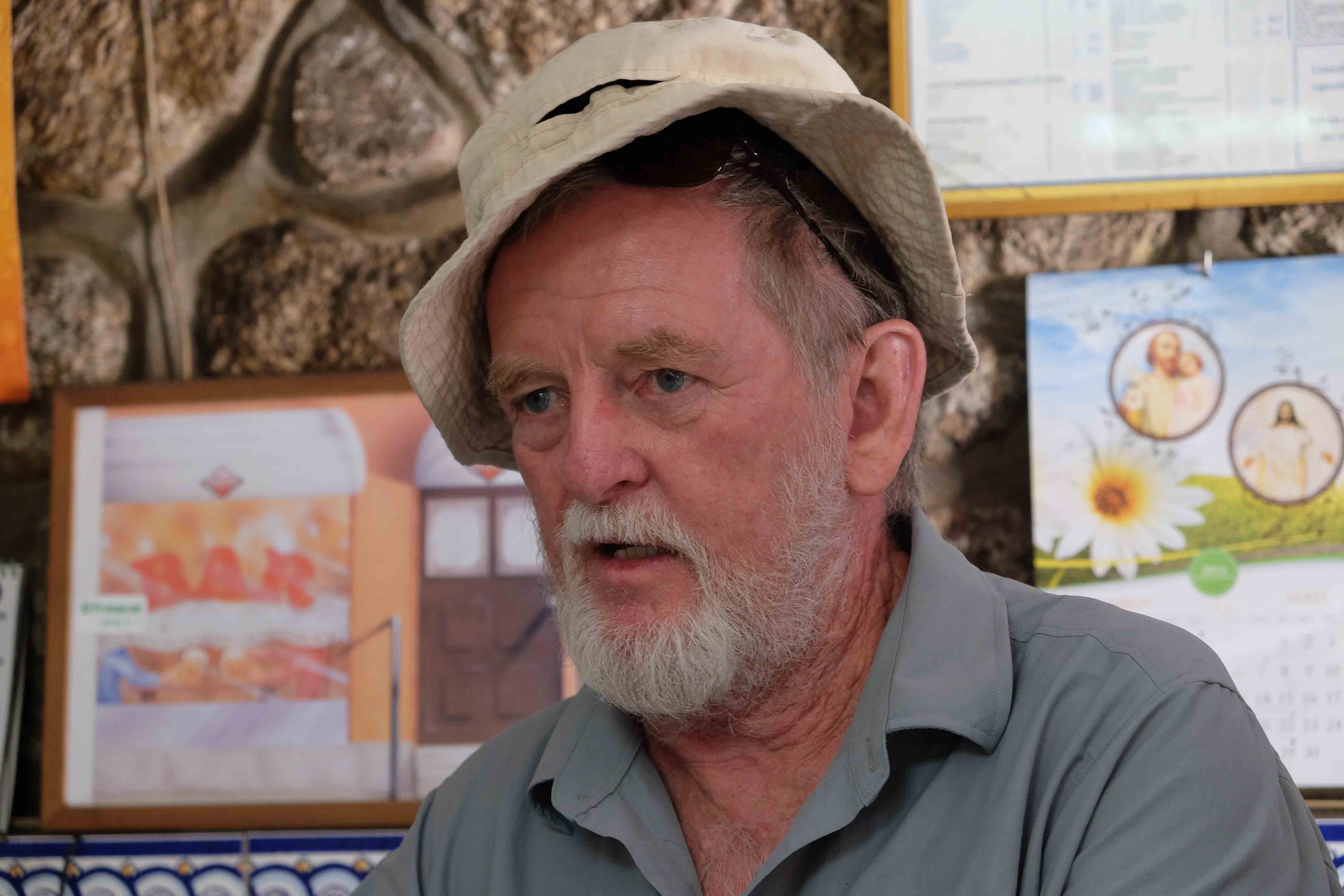
Ken with hat

pouring drinks

What I read on the plane ~

I know I said you wouldn’t hear from me for a bit, but I just wanted to tell you about a book I read coming back home from India.

First off, to explain: I always allow my intuition to choose for me what book I’m going to read. I used to go to bookstores, and consider various books until one screamed out:

READ ME, READ ME!

Now, particularly when I’m traveling, I read mostly on Kindle. And so choosing a book involves scrolling through my library of purchases and allowing a book to step forward.

(I very rarely buy a book to read immediately. I buy books that I will read at some stage in the future…)

Just before I boarded the flight from Bombay back to Sydney – 16 hours including transit time – I thought about what sort of book I’d like to read. After 7 weeks of fairly intense work, I figured I’d like to read something light and fun – non-spiritual, non-work related, something well written that I knew would make the flight pass quickly.

I’d recently purchased Salman Rushdie’s new book, TWO YEARS, EIGHT MONTHS, AND TWENTY-EIGHT NIGHTS, which I was very keen to read, as well as Jonathan Franzen’s new book, PURITY. I’ve read all his previous books. Both authors are magnificent writers, and I figured either book would do.

However, when I came to scroll down through my library, I found myself bypassing these two books until I settled on an old arcane book written in 1932 by Alice Bailey, called FROM INTELLECT TO INTUITION.

I’d bought this book after seeing it in a bookstore in Mount Shasta, earlier this year. There was a whole row of Alice Bailey books, and whilst I’d heard of her, I’d never read her. And so later I bought a bunch on Kindle. It was this one particular book that screamed out –

READ ME!

And so I did. And wow – it turned out to be exactly the book I needed to read on that long journey home.

Who is Alice Bailey? She was a very influential writer in the early part of last century. Here’s what Wikipedia says about her –

Alice Ann Bailey (1880 – 1949) was a writer of more than twenty-four books on theosophical subjects, and was one of the first writers to use the term New Age

Bailey’s works, written between 1919 and 1949, describe a wide-ranging system of esoteric thought covering such topics as how spirituality relates to the solar system, meditation, healing, spiritual psychology, the destiny of nations, and prescriptions for society in general.

She described the majority of her work as having been telepathically dictated to her by a Master of Wisdom, initially referred to only as “the Tibetan” or by the initials “D.K.”, later identified as Djwal Khul.

Her writings were of the same nature as those of Madame Blavatsky and are known as the Ageless Wisdom Teachings. 

She wrote about religious themes, including Christianity, though her writings are fundamentally different from many aspects of Christianity and of other orthodox religions. Her vision of a unified society includes a global “spirit of religion” different from traditional religious forms.

The book is esoteric, very intellectual, and dense. But full of extraordinary wisdom. It’s written in a very scholarly way and is well researched, citing references from core spiritual texts.

One of the early chapters is on education. She discusses the differences between Eastern and Western education, and summarises thus:

Firstly, in the Eastern system it is assumed that within every human form dwells an entity, a being, called the self or soul. Secondly, this self uses the form of the human being as its instrument or means of expression, and through the sum total of the mental and emotional states will eventually manifest itself, utilising the physical body as its functioning mechanism on the physical plane. Finally, the control of these means of expression is brought about under the Law of Rebirth.

Through the evolutionary process (carried forward through many lives in a physical body) the self gradually builds a fit instrument through which to manifest, and learns to master it. Thus the self, or soul, becomes truly creative and self-conscious in the highest sense and active in its environment, manifesting its true nature perfectly.

Eventually it gains complete liberation from form, from the thralldom of the desire nature, and the domination of the intellect. This final emancipation, and consequent transfer of the centre of consciousness from the human to the spiritual kingdom, is hastened and nurtured by a specialised education, called the meditation process. 

In the west, she says, the emphasis is entirely reversed.

First, there is an entity called the human being, who possesses a mind, a set of emotions, and a response apparatus through which he is brought into contact with his environment. Second, according to the calibre of his apparatus and the condition of his mind, plus the nature of his environing circumstances, so will be his character and disposition.

The goal of the educational process, applied wholesale and indiscriminately, is to make him physically fit, mentally alert, to provide a trained memory, controlled reactions, and a character which makes him a social asset and a contributing factor in the body economic.

His mind is regarded as a storehouse for imparted facts, and the training given every child is intended to make him a useful member of society, self-supporting and decent. The product of these premises is the reverse of the Eastern. 

She goes on to say:

The contrast between the two might be crudely summed up as follows: 

THE WEST / THE EAST
Groups / Individuals
Books / Bibles
Knowledge / Wisdom
Mechanical Development / Mystical Development
Standardization / Uniqueness
Science / Religion
Memory Training / Meditation
Investigation / Reflection

She concludes by saying something that now seems so obvious, and yet it hit me with enormous impact –

The Eastern method is the only one which has produced the Founders of all the world religions, for all are Asiatic in origin. 

When you think about it – Christianity, Hinduism, Buddhism, Taoism, Islam, Confucianism – all come from the Eastern / Asiatic method of education. The western way has given us science and art and philosophy and commerce, but not the spiritual.
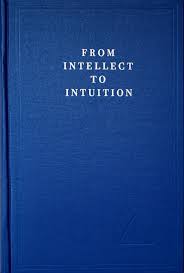
From intellect to intuition

Bombay / a final word ~

Jennifer and I have been away now about seven weeks. During that time we’ve criss crossed India many times – both for the tour and for filming.

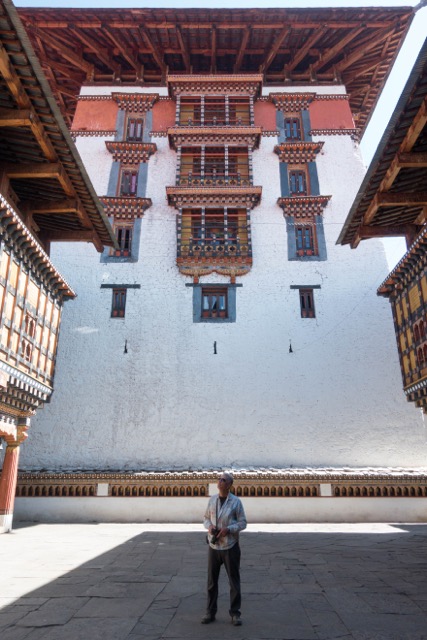
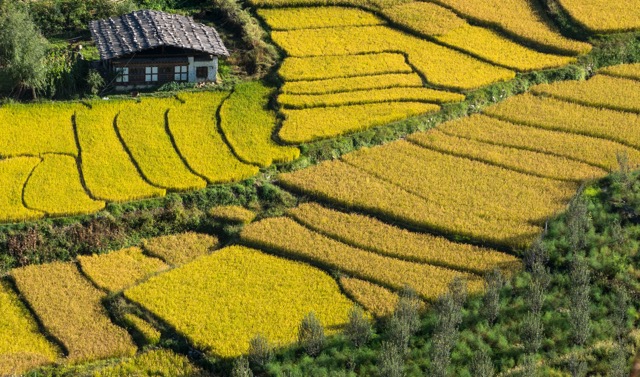
Not to mention our week in Bhutan.
It’s been an exhilarating time.

Whenever I travel I learn. And I’ve learned a lot from this trip.

Yesterday, meeting Hansaji – the director of the Yoga Institute – for the second time, I was reminded of her wisdom. She said many wise things, in the interview and off camera, that really struck a chord with me.

This is one of the benefits I get in making this film – that I get to ask questions of wise and learned people all over the world. And I get to learn from them. And what I learn will make its way into the film.

But I also get an added benefit – of sitting with them for hours on end later, going over in detail what they’ve said, in the privacy of the editing room.

This is where I really learn. Because in editing I’m able to fully take in what they’ve said, and it’s my job to pick the sections that say what I want the film to say.

That’s a unique privilege.

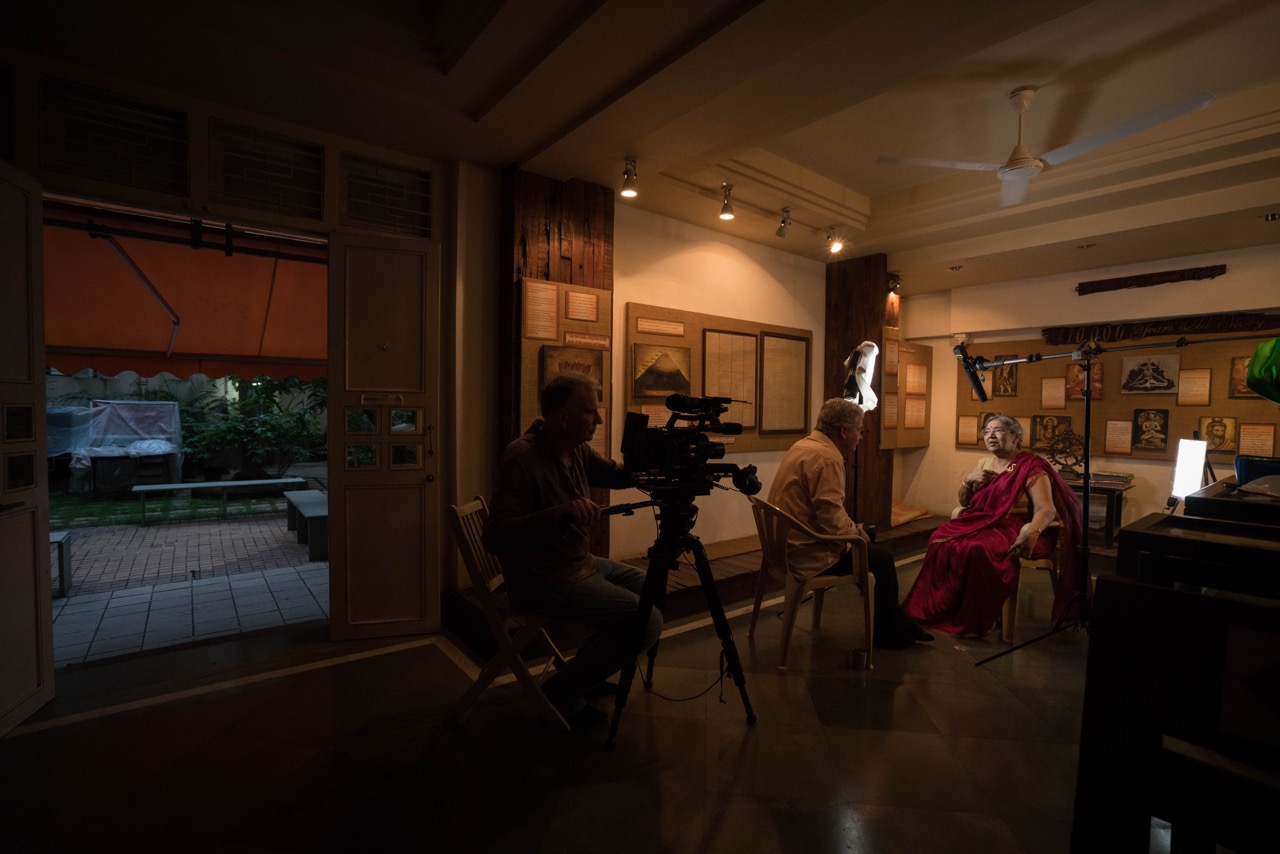
Here are some photos from yesterday’s shoot – which we filmed in the Institute’s small museum –

Yoga Lady-1

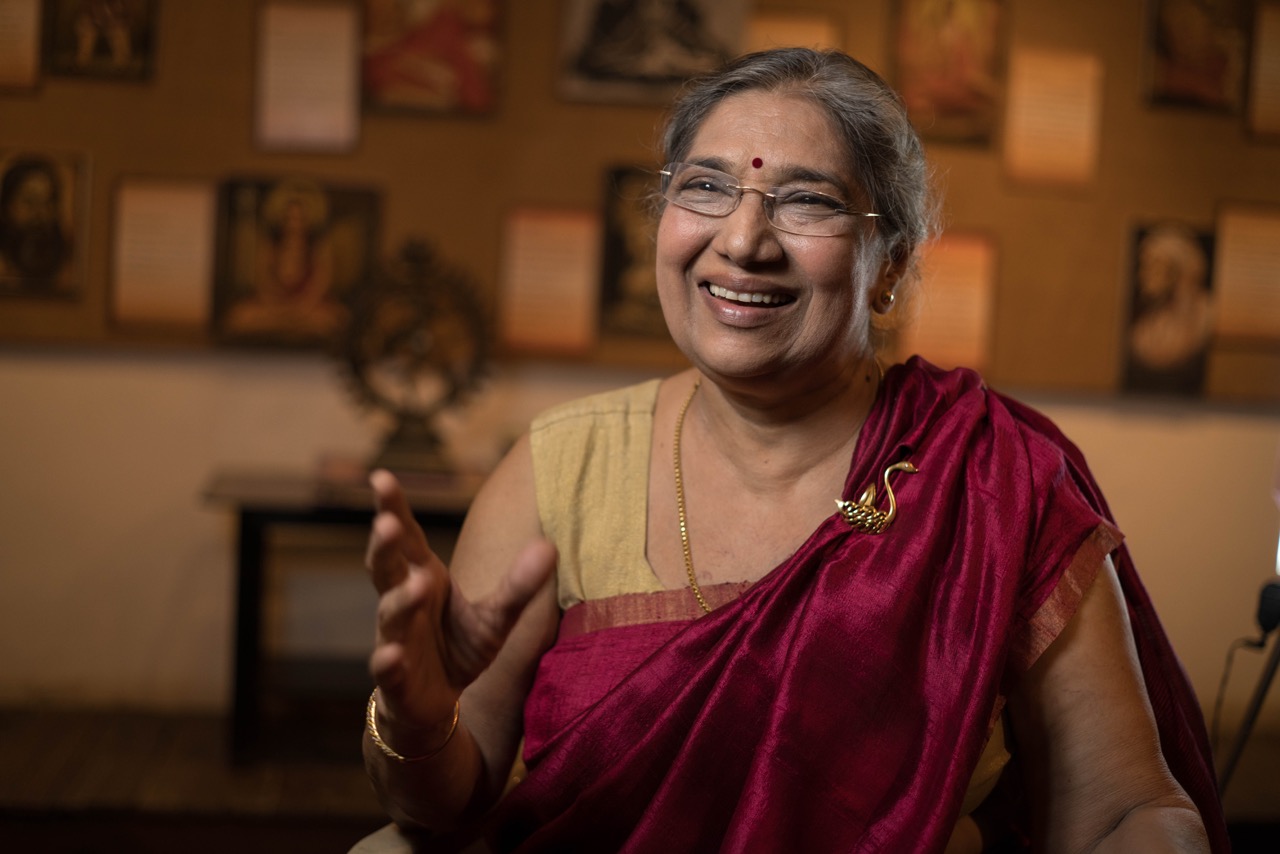
Hansaji has the wisdom of a sage – she is one of India’s leading spokespersons on yoga, of which the asanas (physical postures) are only a very small part.

Yoga Lady-3

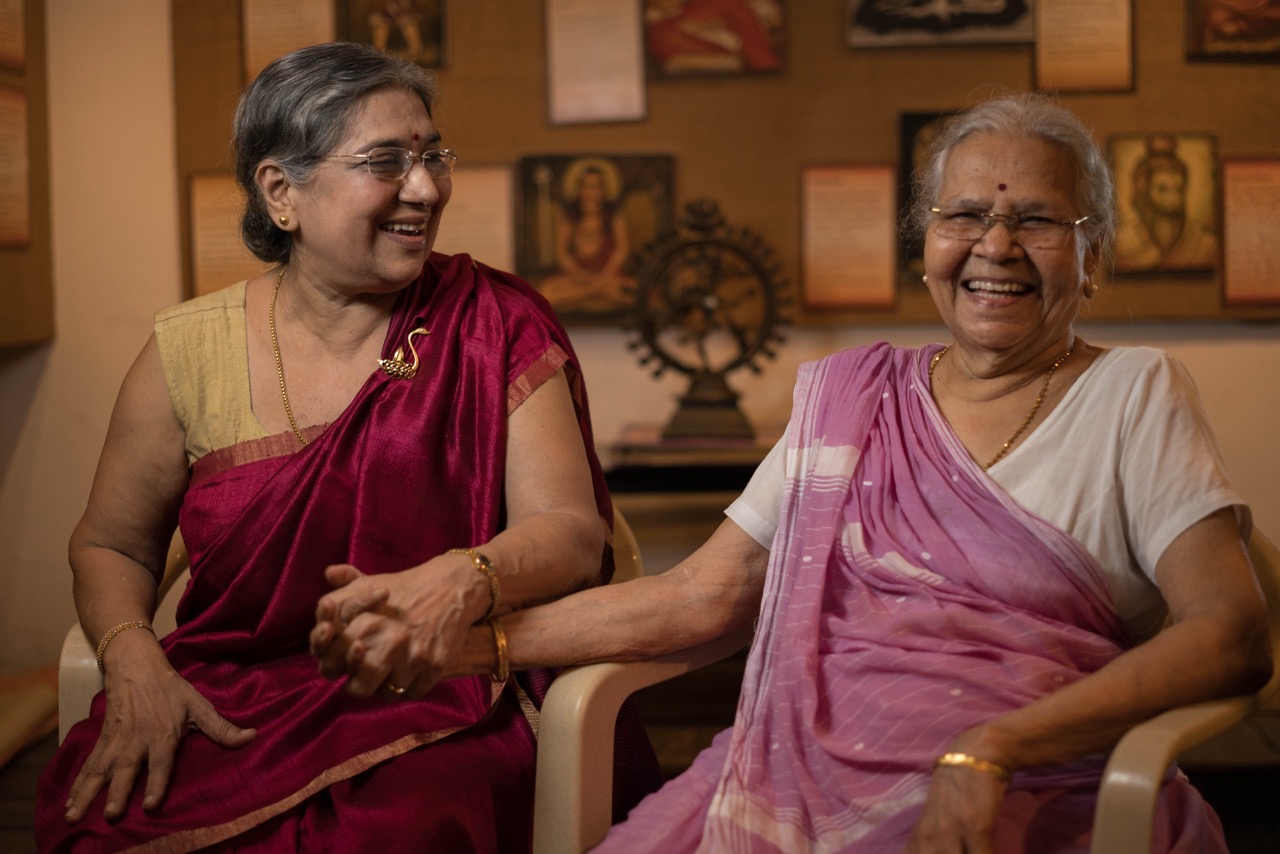
And there can be no greater advertisement for the benefits of yoga in maintaining youth and energy than this photo below – Hansaji, aged 69, with her mother, aged 89. Both are remarkably fit and full of life –

Yoga Lady-4

Tomorrow we return to Australia – and ahead of me is the huge task of reviewing what we’ve got, and what we need to complete filming, and commence post production.

So I’m signing off for now, for a bit…


Bombay / last day filming ~

Today we completed filming on this phase of production.

We went back up to the Yoga Institute in Santa Cruz, Bombay, and I re-did an interview with Hansaji – the Director of the Institute.

I say “re-did” because I interviewed her last year, and in fact she was the very first interview  I did for this production.

Why do it again?

Not for content, because she was very strong last year, and equally strong in the interview I did today. No, it was because now we’re aiming for a theatrical release for the film, and the interview last year was shot on 2K.

Pieter, Cameraman Extraordinaire, has a camera extraordinaire – the Sony FS7 – which shoots 4K at a withering bit rate, and so I wanted to get the interview again at the higher resolution, remembering just how good she was on camera last time.

And again she didn’t disappoint.

There will be several very good grabs to take from her interview, but one story she told is worth recounting here…

She told of a young man who climbed a very high and dangerous mountain. He almost reached the top, and then he fell. He believed he would die. But then he was pulled up by his safety rope.

He dangled at the end of the rope, unable to pull himself up. He was helpless. It was night, it was freezing, and a snow storm raged around him. He could see no way his life could be saved. And so he called out to God: God please help me. Please save me. 

And God finally answered, and said to the young man: Are you sure you want me to save your life? 

And the young man said: Yes, please save my life. 

And God said: Well, take your knife and cut the rope. 

The young man’s intellect said to him: If you cut the rope, you will fall to your death. If you don’t cut the rope, then perhaps someone will come to your rescue.

And so the young man didn’t cut the rope.

In the morning. rescuers came, and found the young man dead, dangling at the end of the rope. He had frozen to death overnight.

The rescuers saw that only ten feet below him was a drift of soft snow, and a way down the mountain. Had he cut the rope, he would have lived.

The lesson from this?

Intellect, ego, the rational mind, are the biggest obstacles to the innate wisdom of your intuition, but it requires courage and trust – “faith” Hansaji preferred to call it – to listen to and act on your inner voice.

It was a terrific interview.

Tomorrow is a wrap day, and the following day we return to Australia.

You won’t hear much from me for a while – I have a huge amount of work to do now on the film. We still have more filming to do, in the US and Hawaii principally, and a massive post production job ahead of us.

So I need to hunker down and focus on what needs to be done.

What fun!

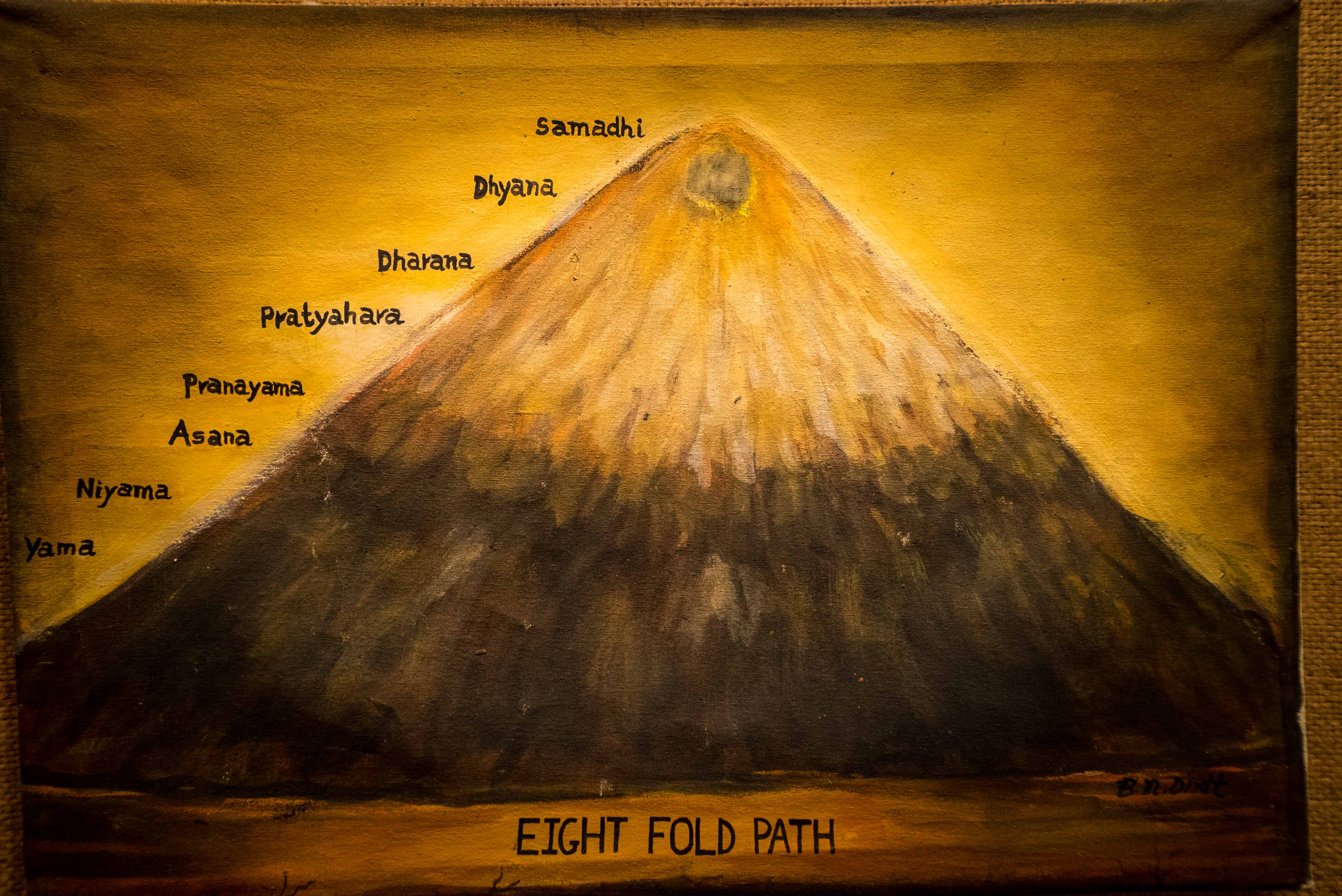
Eightfold yoga path


India – Pieter’s fav 12 pics ~

Pieter de Vries, Cameraman Extraordinaire, joined us in Delhi a few weeks ago to continue filming my PGS – Intuition movie.

Pieter and I first worked together in the early 80’s, when I was a producer/director on the ABC flagship documentary show, A BIG COUNTRY. Pieter even in those early days had a potent reputation as a superb visualist.

He’s always been a fabulous stills photographer as well as a cinematographer – and he’s been taking pics during this current filming assignment in India and Bhutan .

I posted my favourite 12 shots a couple of days ago, and now I’m posting Piet’s…


best of India Bhutan-1-2 best of India Bhutan-2-2 Raju Baba (1 of 1) best of India Bhutan-8 best of India Bhutan-7 best of India Bhutan-6 best of India Bhutan-5 best of India Bhutan-5-2 best of India Bhutan-4-2 best of India Bhutan-3 best of India Bhutan-2 best of India Bhutan-3-2

India & Bhutan / my fav 12 shots ~

I’ve been away nearly 7 weeks now, and I’ve shot a lot of images.

I’ve now selected my twelve favourites.

They’re not necessarily technically perfect, and they’re not necessarily very good photographs. They’re probably not shots you would have chosen…

But they’re just pictures that sing to me of people and place…

Chandni Chowk Market, Delhi © Bill Bennett

Woman on train to Amritsar © Bill Bennett

Lotus blossoms in market Dharamsala © Bill Bennett

Sikh at Golden Temple, Amritsar © Bill Bennett

Wagah Border Ceremony Guard © Bill Bennett

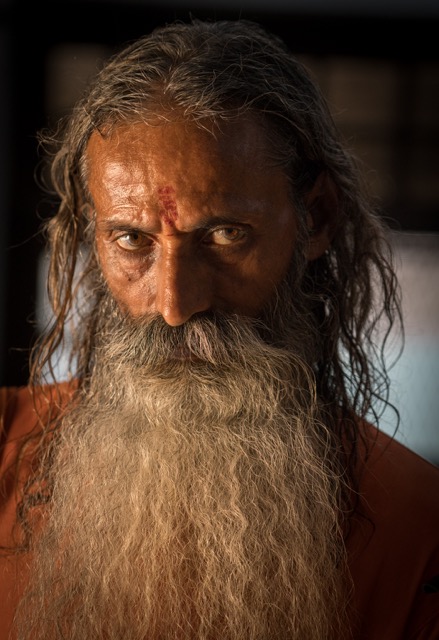
Sadhu by banks of Ganges, Rishikesh © Bill Bennett

Sadhu at Parmarth aarti, Rishikesh © Bill Bennett

Boy at Parmarth aarti, Rishikesh © Bill Bennett

Tin worker, slums Bombay © Bill Bennett

Thimphu Markets, Bhutan © Bill Bennett

Ladies in alley, Varanasi © Bill Bennett

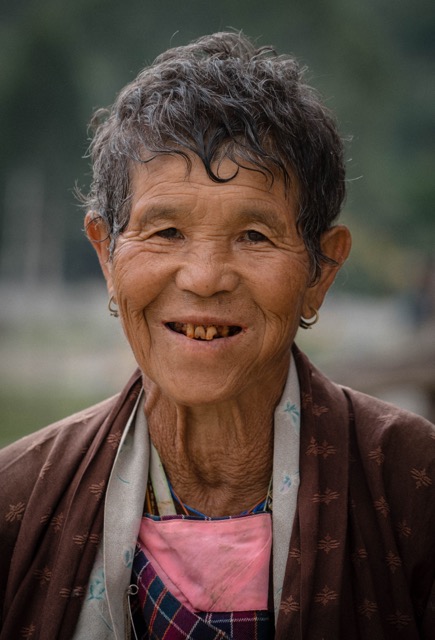
Buddhist Master, Bhutan © Bill Bennett

Varanasi to Bombay ~

Today was a travel day – leaving Varanasi to head to Bombay.

But before we left, we shot one more sequence. We got up at 5am, well before dawn, to shoot our artist painting a Third Eye onto a block down by the water, as the sun came up.

My photos don’t show the true splendour of this sequence – Pieter’s cinematography certainly does.

After completing the shooting we quickly packed up and headed off, with five porters carrying our luggage and film equipment cases through the narrow alleys and out onto the streets already chaotic with the ceaseless cacophonous flow of humanity that is Varanasi.

We said our goodbyes to Rachit. It was sad. He is a very smart young man with a huge heart and enormous compassion for all. He’s done a terrific job for us – and I know we’ll be seeing him again, and working with him again, very soon.

© Bill Bennett

We’re now in Bombay.
A day off tomorrow.
It’s been non-stop since Pieter arrived.
For Jen and me, it’s been non-stop since we landed in India nearly six weeks ago!

With the time spent in Varanasi though, each of us looks back on the period with enormous fondness. It is a complex yet subtle city, chaotic yet calm, aggressive yet deeply spiritual and at peace.

It’s not a simple place. Yet it’s been doing what it does for three thousand years. And what it does is bring those that seek it closer to God.

© Bill Bennett


Varanasi / d4

We spent the day getting some iconic imagery for the film –
We hired a painter to put this picture of the Third Eye up on a wall…

© Bill Bennett © Bill Bennett

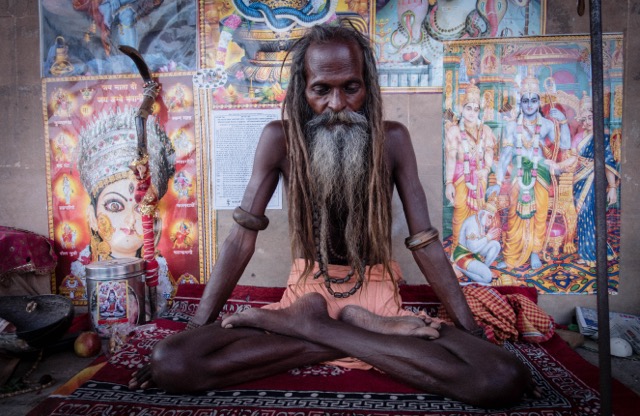
We also shot a sequence with a sage reciting ancient texts…

© Bill Bennett © Bill Bennett

We also shot with Raju Baba in a very old private library containing Sanskrit books hundreds of years old…

© Bill Bennett

© Bill Bennett

When the light went lousy Jennifer and I went and had a reading from a famous astrologer and palmist.

© Bill Bennett

I had asked Rachit to call him up cold for an appointment. He knew absolutely nothing about Jennifer and me when we walked in. He didn’t even know our names.

He got our birth dates and time of birth, and place of birth, and fed them into his software programme – and then read our palms.

© Bill Bennett © Bill Bennett

He was unerringly accurate in what he told us had already happened in our lives, and what was coming up.

For me, he said “name and fame” was approaching – that the world would soon know my name, and I would be famous. And that prosperity would follow. He said that I would travel extensively, and meet important people.

This is consistent with what the Bombay astrologer told me this time last year, and what Joni Patry in Dallas told me late last year.

He said I had to be careful of a health issue – respiratory, he said.

How did he know about the cough I’ve had?

And said that Jennifer had “occult powers” and she could read the psychology of other people.

How did he know that Jennifer has occult powers and can read the psychology of other people?

He gave us some warnings about things coming up – things we should look out for – and it was only when I was leaving did he tell me he was writing a book about astrology and intuition.

How does that happen? That I’m drawn to someone who’s writing such a book?

After the reading Jennifer and I found a little hole in the wall chai place where we did a debrief. It was a cool place.

© Bill Bennett

We sat on a little bench inside, and this person sat opposite us –

© Bill Bennett

This was what was on the walls –

© Bill Bennett © Bill Bennett

This was the wiring –

© Bill Bennett

This was a tea-chest full of clay cups, which are thrown on the ground and smashed once you’ve had your chai.

© Bill Bennett

Tomorrow we fly to Bombay to continue filming – but first we have to shoot a dawn sequence which I’m hoping will be a knock out.

Here’s my personal favourite shot of the day…

© Bill Bennett

But I also like this shot –

© Bill Bennett

Varanasi / d3

I’ll start this post off with a quote from Mark Twain about Benares – or Varanasi, as it’s now called:

Benares is older than history, older than tradition, older even than legend, and it looks twice as old as all of them put together!” 

The Buddha is said to have preached in Kashi, as it was then called, in the 6th century BC. Kashi is the permanent home of Shiva, one of Hindu’s most important and revered gods.

© Bill Bennett

According to the book Benares – City of Light: 

Here Shiva dwells in order to bestow the enlightening wisdom of liberation. Although Shiva is omnipresent, there are a few places that are especially transparent to his luminous presence. And of these few, Kashi, the City of Light, is the most brilliant of all. 

People come from all over India to die here. for “death in Kashi is Liberation. From Kashi one makes the great “crossing” to the far shore. Death in Kashi is death known and faced, not feared. Death is faced, transformed, and transcended. 

Varanasi is the most sacred and holy city in India. Yet for a first time visitor, it can be overwhelming. It’s not an easy place for a westerner.

© Bill Bennett

It’s crowded, filthy, and there are plenty of touts and scammers, paradoxically.  And yet it also has a subtle energy that rises above all that. And that energy comes from the sacred Ganga.

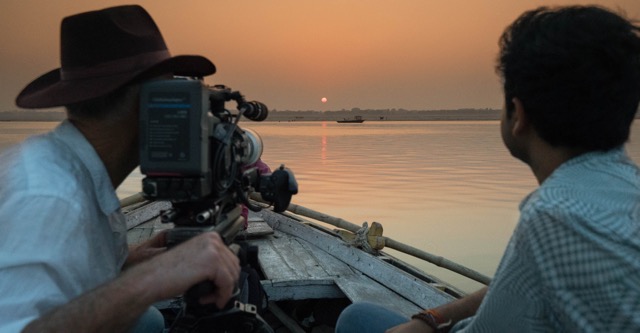
We got up well before dawn this morning to get some shots on the larger camera that Pieter shoots with – the Sony FS7. We wanted to get the sunrise, and also to get more shots of the worshippers at the ghats.

© Bill Bennett © Bill Bennett

© Bill Bennett

As we drifted along the shoreline, shooting, I noticed that other boats were passing us, full of tourists taking photos.

© Bill Bennett

It must be very disconcerting for these worshippers to come down to the sacred Ganges at daybreak to pray and do their rituals, only to be gawked at and photo-opped by hundreds of tourists sitting metres off shore in boats.

© Bill Bennett

Mind you, that’s what we were doing too – except our camera was bigger.

But it occurred to me that this had become something of a sideshow – like a zoo. And it’s a shame really. There’s an undercurrent of tension here in Varanasi. The locals don’t like the tourists invading their sacred space, their reverential privacy – and I completely understand that.

This is the only place I’ve been to in India where I’m constantly told I can’t take photos – not of sacred places, of which I’m respectful, but of regular activities, and even of people in the street. Today I took a shot of a person walking past, and he aggressively bailed me up and demanded money.

© Bill Bennett

Normally if I take a photo of someone I ask their permission first, and usually that permission is given, but here I’m constantly told no – or if it’s a yes, it’s conditional upon a payment.  Even some of the sadhus – the holy men – demand money if you take their shot.

© Bill Bennett

This man didn’t though –

© Bill Bennett

… he just wanted me to buy something from his stall. There was nothing there I wanted to buy, so I offered him some money because I had imposed on his time taking photos. He refused, but I insisted – and he was very grateful.

Getting back to our day – after the early morning shoot we went back to our hotel. Pieter had to do some admin work, Rachit had to line up tomorrow’s filming, so Jennifer and I went for a walk through the labyrinthine system of tiny alleys, jammed full of fascinating stalls.

We stopped for a chai, made fresh and served in the traditional clay cups.

© Bill Bennett © Bill Bennett © Bill Bennett

Late in the afternoon as the light became more interesting again we reconvened for more filming – this time it involved various shots of moi walking along the ghats.

© Bill Bennett © Bill Bennett

We also shot some more pretty pretty footage.

Tomorrow we shoot some staged sequences – and then the next day we’re flying out to Bombay for some shooting there.

It’s taken me a little while to slip into the energy of this ancient city, but now I understand what all the fuss is about…

© Bill Bennett

River of Life

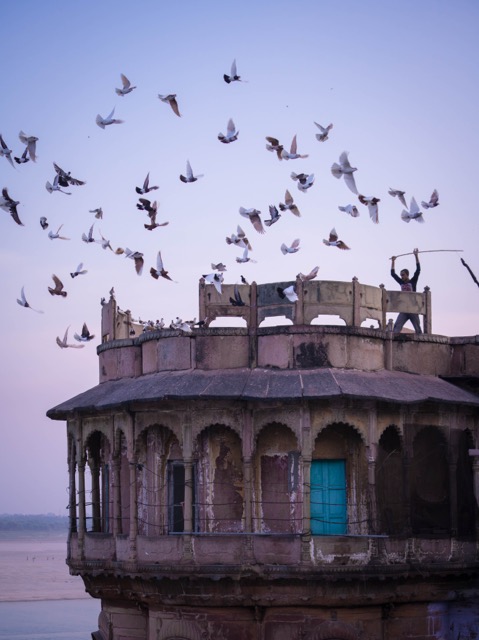
Steve McCurry’s work always humbles me… he is a master of color, light, and capturing the essence of the human experience.