Bushfires, good deeds and bad…

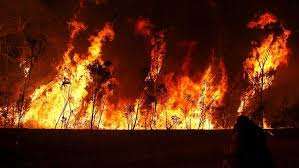
As many of you might know, the bushland behind Sydney is currently ablaze.

We’re being told it’s the worst bushfires in nearly 50 years. Certainly there have been a lot of houses lost, tragically – although thankfully I’m not aware of any loss of life.

Jennifer and I live in Mudgee, about 300kms NW of Sydney. We’re not under threat. We’re about 100kms from the nearest blaze.

The media here are beating up the story. Tomorrow is evidently going to be “catastrophic.” They’re expecting high temperatures, raging winds, and the various fire-fronts to join and create a “mega-fire” which could sweep through Sydney’s outlying suburbs.

I suspect none of that will happen.

As a former journalist, I’m well aware how the media creates stories that are intended to incite fear. The Rural Fire Services and the various emergency services help create this fear, to make us all more compliant.

The trouble is that when you cry wolf, as the media has done on so many other occasions, no-one believes the reports when they are genuine, and when life and property could be in very real danger.

Tonight I was watching the news. They played CCTV footage of some kids stealing donation boxes from stores in the Blue Mountains – the affected area. People have been very generous in donating cash, which they have put into these boxes on the front counters of various stores. These young men stole a box which contained about $300.

Not very charitable.

However the tv news report played up their ethnic background, thus implying it was “not Australian,” and hence inciting racial hatred.

That was also not very charitable.

People have been incredibly caring and compassionate during this difficult period – donating everything from cash to food to bedding to furniture – intended for those who have lost their houses and belongings.

And those fighting the fires are extraordinary people. Many of them are volunteers. They are working incredible hours and putting their lives at risk to save property and keep the fires under control.

Today, many more firefighters came from interstate to tackle what might be an horrific few days coming up. I hope not. Embers from the blazes are known to travel 50km-70km and start spot fires in unaffected areas.

Under the right conditions, these bushfires can travel fast, and be truly lethal.

The day after tomorrow I have to drive down to Sydney, through these bushfire areas, to attend a doctor’s appointment – my neurologist – to check on the numbness in my left foot. This numbness appeared during the Camino, and has stayed with me since, although now it’s fading.

I hope that I can get through on Thursday. I will have to drive through the heart of the main bushfire area. Given the geography of the area, there’s no other way to get to Sydney. It’s the only road.

I’ll take my camera…
Bushfires

Guest Blog – Donna

Jennifer and I met with Donna and Greg in Brisbane this past week. Two lovely people, very keen to walk their first Camino.

In Donna’s case, she’s been considering family commitments, and she was considering some time way way in the future – but it was clear to me that the Camino bug had bitten her well and truly, and I told her I did not think she would be able to hold out that long!

As we were leaving I asked her if she would write a guest blog. She’s been giving this some thought, and here now is her post. Oh, and I think she’ll be walking the Camino within a year!

Donna’s guest blog

As the regulars on here will know I had the pleasure of meeting Bill and Jennifer last week.  I can assure you all they are even more beautiful in person than they are on the printed screen.  Bill asked me if I would consider writing a guest blog.  Panic immediately set in and I’ve pondered what to write now for almost a week.

I was lucky enough to camp on the beach at Double Island Point, Qld over the weekend.  It’s a beautiful white sandy beach just north of Noosa. You need a 4WD to get there and you literally camp up in the sand dunes.

It makes it very easy put in tent pegs.

When you camp on the beach your arrival and departure times are governed by the tides.  As we had other things to do on Sunday afternoon we had to leave very early on Sunday morning to head back home.

As we left my daughter asked if we could go to the bakery so she could have a meat pie.  It was 5:45 in the morning.  When I didn’t respond immediately she said “It’s tradition Mum – we always have a meat pie when we come up here.”

That got us talking about traditions and we noted that most traditions for us revolve around food:  birthdays, Easter, Christmas.  Thanksgiving in America. Sure there is sometimes gift giving in there but more often than not there is food.  I wondered if I even had a tradition that didn’t involve food.  I thought about this on and off all day.

On Sunday night fellow blogger Greg and I walked up Mt Ngungun. It’s one of the Glasshouse Mountains about an hour north of Brisbane.  It’s a steep and sweaty 20 minute walk to the top but the views are amazing.

We went up on Sunday to watch the sunset and to see the almost full moon rise.  The views from the top are amazing.  It was a very busy night with about 20 people up the top until well into darkness.

It was while we were walking up that I realised I do have a tradition that doesn’t involve food.  And it’s one of my favourite traditions.  After every hike I do I always play k d Lang’s version of Hallelujah.

I play it quite loud in the car and if you are in my car you must adhere to two rules – you can sing along but you must not speak until the song is over.  I’ve been doing this for a number of years now and my walks don’t feel complete unless I do this.

What are the Camino traditions? Leaving a stone at the Cruce de Ferro and placing your hand on the pillar in the cathedral in Santiago are two I know of.  Are there others?

Do you have any walking/hiking traditions?  Or any other traditions that don’t involve food?

meat pie

Lessons learned from the Koala Capital…

You’d think I would have learned a thing or two from my Camino…

Traveling back by car from the week’s work up in Queensland, I wanted to stay at Gunnedah – principally because I wanted to stay in the Koala Capital of the World.

Gunnedah - Koala Capital

I don’t like koalas – every time I’ve tried to cuddle one I’ve come away requiring first aid.

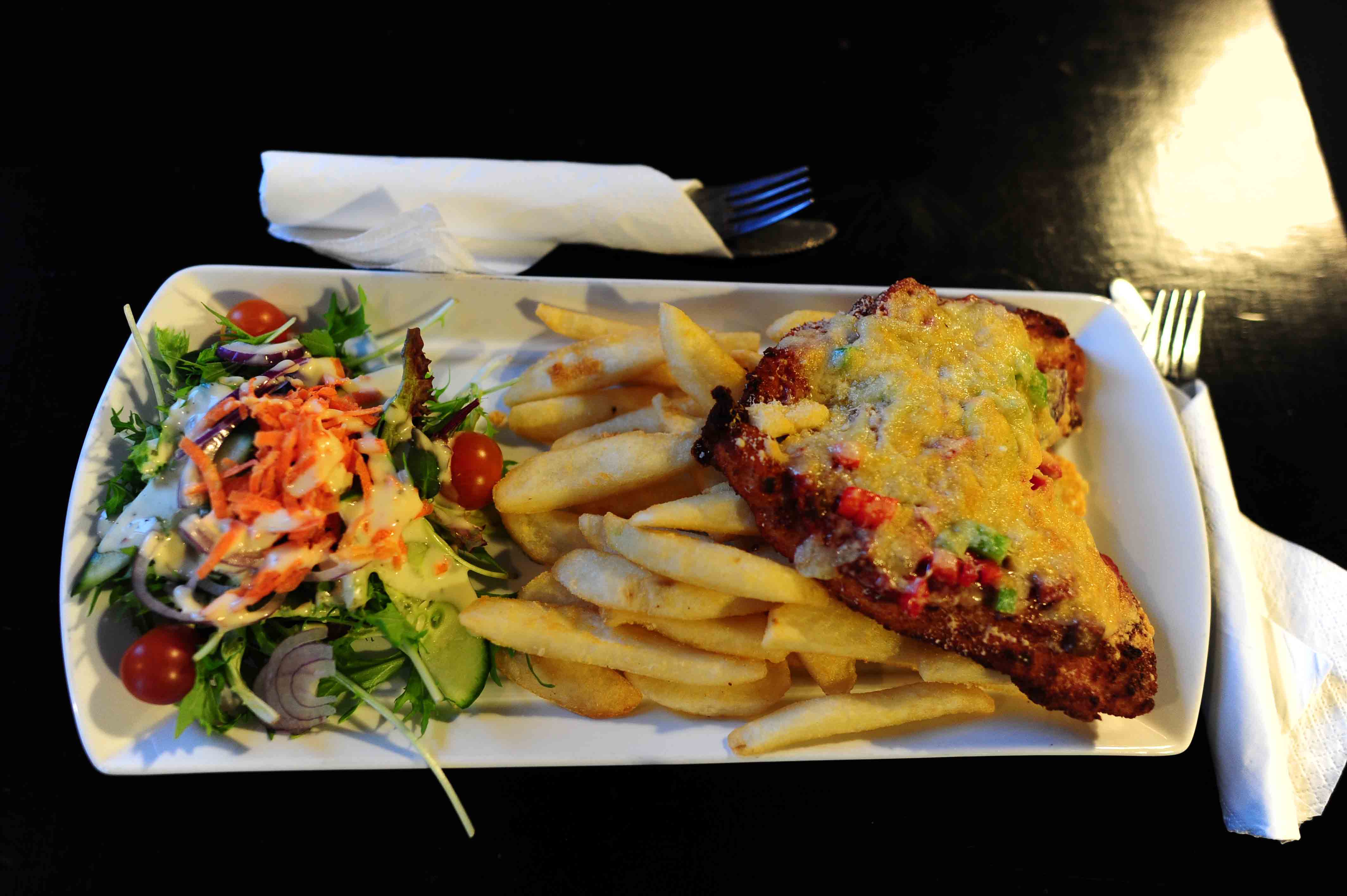
That’s not the point though in deciding to stay in Gunnedah. There’s something wonderful about the extravagance of the claim – the Koala Capital of the World – that appealed to me. The fact that there was not one koala to be seen, other than on bullet riddled road signs, only made the trip more memorable.That, and the Spanish “parmi,” which was part chicken schnitzel, part pizza, part decaying vegetable matter purporting to be salad.

The previous night, I’d gone online to book in Gunnedah. There was only one motel available, and it was $130 a night. Pretty damn stiff, I thought, for a country motel, even if it was in the Koala Capital of the World.

I doubted there was a Koala convention on in town, or that it was mating season for koalas, in which case Gunnedah would most probably be full of gawky onlookers wanting to take photos of koalas copulating. I’m sure that if you video-ed two koalas copulating, particularly in the fork of a gum tree, and you put it up on YouTube, you would go viral.

Nope. No mating season. No bonking koalas. It was just a regular Sunday night, and a standard double room would cost $130. So, I booked, somewhat regretfully.

We drove in and the motel, despite saying that it was ideally located, was actually about fifteen minutes walk into town. Twenty minutes if you’re a pilgrim and you’ve got a crook knee. It was ideally situated to Deepka’s Indian Restaurant next door, and Central Chinese  next door to that. It seemed we were in Gunnedah’s Restaurant Row.

Our motel room was cramped and right beside the highway. Eighteen wheelers rumbled past, trembling my cheeks. Both sets. The advertised flat-screen tv was on a drooping tilt, as though it had just had a stroke. The airconditioner, when you turned it on, sounded llke a Spitfire just about to take off from an aircraft carrier.

Did I say the room was cramped? Double bed, not Queen sized, but still  big enough to take up 85% of the floor area. The other 15% was not large enough to do a Downward Dog.

The bathroom: I’ve seen better bathrooms in municipal albergues where if you donated €5 for the night, you’d think you were being generous.

All this for the grand sum of $130.

Jennifer and I took a walk down towards the town. As we walked, I counted half a dozen other motels, all closer into the centre of the town, all with Vacancy signs out front. Why hadn’t they been on Booking.com and the other websites I checked?  I know why. They charge too much in commission.

Courthouse hotel

We found a pub and had our celebrated Spanish parmi, which lifted our spirits but lowered our stomachs. Then we walked back. I decided I would ask at one of the other motels what their prices were.

I spoke to Evan, who ran the Billabong Motel. Evan said his rooms were $99 a night. And he told us proudly that he had the cleanest rooms in Gunnedah. This presumably to clean out koala poo each morning.

We chatted to Evan, and it turned out he was a serious traveler himself. He said he never minded where he slept. It was only a bed. He always chose the cheapest place. Hostels and YMCAs. More money to spend on other things, like meals and transport, he said. And most times the cheapest places gave you the best experiences.

The cheapest places give you the best experiences. So true.

We looked at the Courthouse Hotel, which is where we had our celebrated Spanish Parmi. They had rooms. $45 a night, bathroom down the hall. That’s where we should have stayed. That would have been an experience.

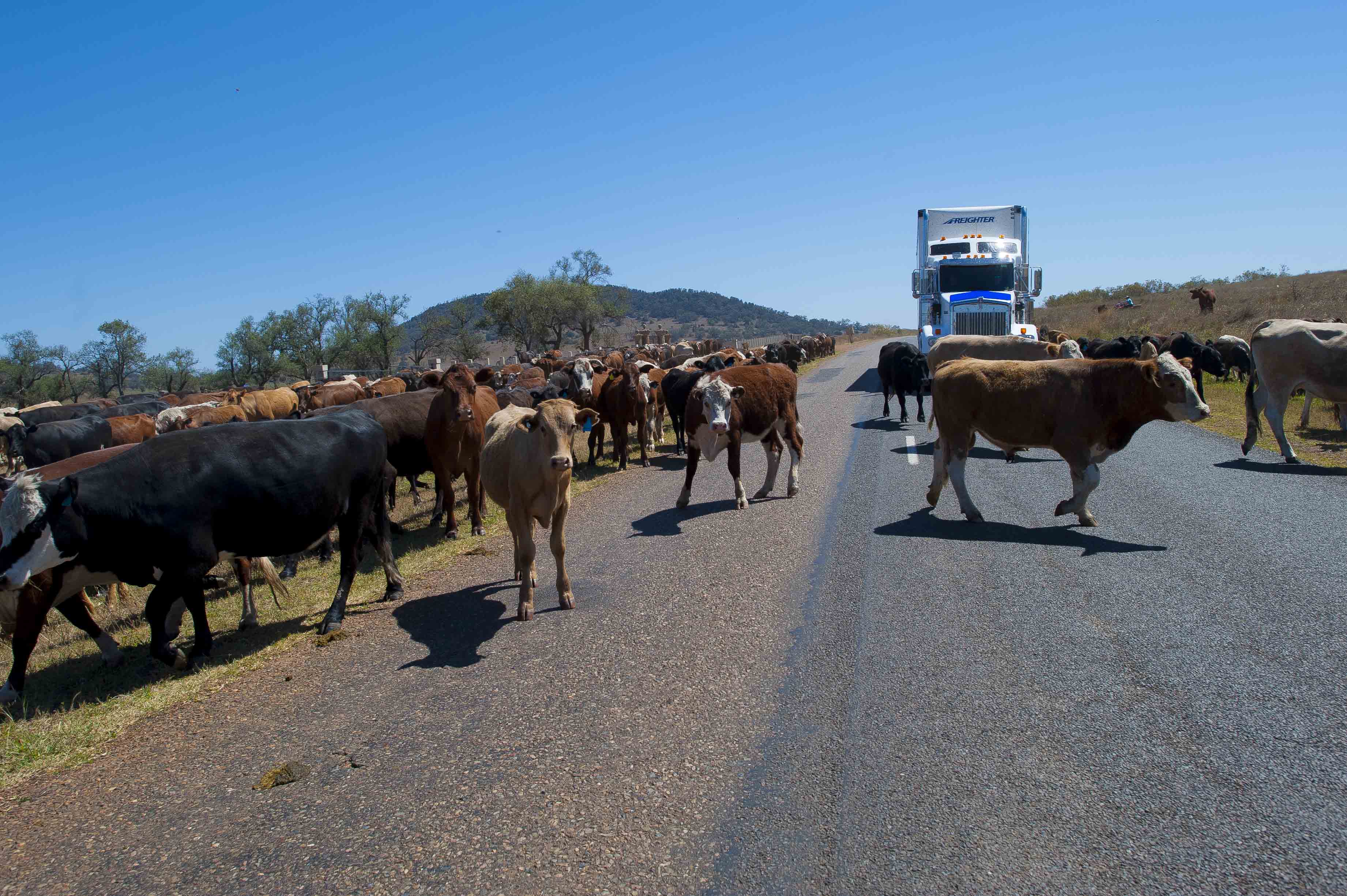
Driving back to Mudgee, we saw cattle on “the long paddock.” The long paddock is a bushie term for the grass beside the road. Evidently the stockmen are moving the cattle some two and a half thousand kilometres from Queensland down to Victoria, to richer pastures. There were about 1200 cattle in 4 separate mobs.

Cattle on road

Now back in Mudgee – I reflect on the lessons learned. Don’t be afraid to just rock up to a town and wing it. I did that all the time on my Camino. I let my PGS guide me. There will always be a room. There will always be a bed.

Even in the Koala Capital of the World…

Koala sign

The Koala Capital of the World

Tonight we’re staying at Gunnedah, a country town in Central New South Wales that boasts that it’s the Koala Capital of the World.

Given that Australia is the only country that has koalas (little furry “bears” that have razor sharp claws), it’s fair enough to say it’s the Koala Capital of the World. The problem is, there are no koalas in Gunnedah.

If you go to the Koala Capital of the World, you expect to see koalas.

Driving in we saw none. Checking into our motel we saw none. Walking to the pub we saw none. We didn’t necessarily expect to see koalas cavorting naked down the centre of the street, or scurrying up telegraph poles looking for gum leaves, (koalas are not particularly intelligent creatures) however today we drove 650kms to the Koala Capital of the World, and we expected to see at least one damn koala!

We felt ripped off.

Admittedly, koalas are notoriously shy creatures. It’s not often you see them in the wild, unlike kangaroos that hop around everywhere, often into the paths of oncoming vehicles, causing extensive damage and sometimes death or serious injury to the drivers.

If you hit a koala you’d just squash it flat. Or it would bounce off your car like a hairy soccer ball. A squealing hairy soccer ball.

I believe you can find a recipe on the internet for koala stew. First though you would have to skin it, and that would be tough. They may look like cute little critters, but koala fur is like steel wool. And like I say, they can be vicious with their sharp claws. You would have to be very hungry to want to eat koala stew.

Before we got to the Koala Capital of the World however, Jennifer and I had a disturbing little episode when we went to buy lunch.

We went into a bakery in a small country town called Casino. Everywhere throughout the bakery were signs: WE WON’T SERVE YOU IF YOU ARE TALKING ON A MOBILE PHONE.

There were three of these signs placed prominently on the front counter, and several on the walls. A young lass came up to serve me. I felt like pulling out my mobile phone and asking directory assistance if there were any other bakeries in Casino.

There’s no doubt that some people can be thoughtless, and sometimes rude, when they are conducting a transaction in a shop and they’re on their mobiles. But there was something very aggressive and confrontational about these signs that made both Jennifer and me want to turn and walk out.

The signs were angry, and they emanated an energy that made us feel angry. But that’s what they, the people running the bakery wanted, in a sense. They expected rudeness, and in getting the rudeness, they would feel absolutely justified in displaying their signs.

Energetically, these people were out of balance. We looked at the servers behind the counter. They all had a dark vibe about them, as if they’d been conditioned to expect bad behaviour from their customers. So Jennifer and I were sweet and charming, even though the signs had made us feel quite affronted.

Then I noticed a tip jar. A large glass jar where customers could leave a tip, in coins. Presumably these were people who had not used their mobile phones. The thing about the tip jar though, it held some coins, but the jar was also full of a bright blue liquid. It looked like acid. I figured this was so no-one would steal the coins out of the jar. If they tried, they would get the flesh burned off their thieving little fingers.

I’ve never seen a tip jar booby trapped with acid like this before. There would have been about $1.80 in coins in the jar.

Despite the bakery’s food looking good, the signs and the acid filled tip jar were disconcerting, so Jennifer and I walked out and found another bakery further up the street. It was smaller, less salubrious, but when we walked in we were greeted by the manager with genuine warmth.

As I put my lunch order in I made a call on my mobile phone, just to check to see if I’d get acid thrown in my face. Thankfully, I didn’t.

I left a tip.

We ate dinner tonight at the Gunnedah Courthouse Hotel. We ordered a Spanish “parmi.” Crumbed deep friend chicken breast covered with chorizo sausage, red and green peppers, tomato and cheese, put under a griller. Spanish parmigiana in an Australian  country pub – for $15.

The wonders of globalisation.

Spanish parmi

Defiant

I've mentioned a couple of times that I hope to soon be making a film in India, called DEFIANT.

The background is this – nearly six years ago now Jennifer and I went to India to celebrate our 25th wedding anniversary. We'd never been to India before, and I must admit I was a little nervous.

I was worried that we might get very sick, that we might be robbed or attacked, etc. In fact none of that happened, and we found the Indian people to be warm and delightful and generous.

The first morning in India though, I was sitting down to breakfast in our hotel in Bombay (Indians call Mumbai Bombay still!) and I read a newspaper story – buried away on a back page.

The story detailed an horrific murder of a young couple who had fled their village to get married. It was called a “double honour killing.”

What made this story particularly horrific for me was that both parents of the couple had murdered their children. They had got together a mob from the village, including brothers and uncles, to hunt their children down and kill them.

I knew then and there, sitting in that hotel breakfast room, that I had to make this movie, and bring this barbaric practice to world attention.

I subsequently discovered that this was not an isolated incident. The reason the story was buried in the back pages of the Times of India was not because the newspaper was ashamed of what had happened, it was because these honour killings are so prevalent in modern India.

Around about a thousand such killings happen each year in India – and of course many more happen in other countries as well.

Writing a screenplay though daunted me, because I knew that I would have to immerse myself in Indian culture to fully understand the nuances of their social and religious mores before I could write a word.

I wanted the film script to be accurate, and truthful, and brutal. I didn't want to get anything wrong, because I didn't want the film to be dismissed as being overblown, or an inaccurate representation of Indian village life.

I subsequently joined forces with a producer, Anupam Sharma – an Indian by birth but now living in Australia. Together we formed a company to make this film – Honour Killing Productions. Since reading that newspaper article I have been back to India more than a dozen times.

Anu and Jennifer (a co-director of the company) and I have traveled thousands of miles through the “badlands” of India – Harayana, Uttah Pradesh, Punjab – interviewing honour killing victims and perpetrators, as well as Government officials and village elders who tacitly sanction these killings, and parents who have condemned their children to death.

It took me several years, and over twenty drafts of the script, before I was happy enough to send it out to cast. The feedback I got from Indians who read the script was that they believed it was written by one of their fellow countrymen, not a westerner. That pleased me. After all that research and work, I'd got it right.

I write about this today because the Sunday NY Times has published a photo essay on Indian girls leaving their villages to study in larger cities, and the pressure they're under from the men of the village. Here is the link to the story-

http://www.nytimes.com/2013/10/20/world/asia/policing-village-moral-codes-as-women-stream-to-indias-cities.html?emc=edit_tnt_20131019&tntemail0=y&_r=0


Work while you walk?

Should you work while you walk your pilgrimage?

Ideally not.

But sometimes, it’s not possible to take 4-5 weeks off completely.

For those who have regular jobs where you can take holidays, it’s possible. Some might have long service leave. Sigrid, whom I met and walked with enjoyably for a while, was a teacher on a year long sabbatical.

There were a couple of people I met on my walk who’d just sold their businesses and were cashed up and looking around for something else to do. They were using the Camino to think about things. And of course there were all the retired folk I met who didn’t have to bother about work. They had all the time in the world.

For me, it wasn’t possible. I had to keep working while I walked. I’d decided to walk the Camino relatively spontaneously, even though I’d been training for some time, yet I had various work commitments which I couldn’t step away from altogether.

I did however suddenly have a chunk of time that had opened up to me. I could spare 5 weeks out of the country. But I would have to take my work with me.

This meant carrying an iPad, two phones, chargers and batteries, and I had to organise Dropbox and other online resources so that I could access my work when needed.

I remember one time, walking out of Burgos, I got a phone call from my office and it required all my attention. I kept walking while attending to the call, but then I realised I hadn’t seen any yellow arrows in quite some time.

I finished the call then retraced my steps. Because I’d been on this work phone call, I’d completely missed a crucial arrow directing me down a small lane, and so I ended up walking about 3kms more than I should have.

I mention this now because one of the things that was occupying my mind during the Camino was a global short film competition that I’d just launched. Called picSeeder.com, it  called for aspiring filmmakers to submit a one minute video pitch of the film they wished to make, then six international judges would select a winner.

picSeeder was at a crucial stage when I decided to walk the Camino, yet I was fortunate in that a very clever lass named Rebecca largely ran it in my absence. My web designer guru Natacha also took a big load off me. They both allowed me to walk and keep my mind on what was important to me – the Camino.

Yesterday we announced the winner, and I feel very proud to know that Jennifer and I are now helping to launch the career of a smart young filmmaker in the Philippines. Here is a story which appeared in the trades:

http://if.com.au/2013/10/18/article/PicSeeder-rewards-Filipino-filmmaker/QWAILIXUTD.html

All this was happening while I was walking the Camino.

Would my pilgrimage have been any more profound, or more spiritual, had I not been working? I don’t think so. I believe I was able to compartmentalise my work commitments. And the time zones certainly helped.

But I do look forward to the time when I can walk again, and have my mind completely free to concentrate and contemplate without worry and concerns.

Track and sign

Natural Storytellers…

Sorry if I’ve been Missing in Action on the blog these last couple of days – it’s been very hectic, and quite intense, this work I’m doing for QUT – Queensland University of Technology.

QUT is a huge campus – it’s the state’s largest university, and their Creative Industries faculty, of which I’m an Adjunct Professor, is very highly regarded.

Donna, whom Jennifer and I met the other day, wanted to know what an “Adjunct” Professor was – in my case it’s someone working in the industry who comes in from time to time and teachers, and gives Master Classes to students to give a “real world” perspective on their curricula.

It’s a part time gig and from my perspective, I take the time to do it for two reasons: firstly, I want to “give back” some of what I’ve learnt in the trenches over the years; and secondly, I want to learn from these young kids. I want to keep in touch with what they’re thinking, and the way they’re doing things.

I would not be so on top of new distribution models and advances in digital production if it weren’t for my work at QUT. I’m mentoring three recent graduates, and I’ve learnt so much from them about social media, trans-media, and new world distribution and marketing.

But the one thing they can’t teach me, and which I teach them, is to how to tell a story.

What these kids are yet to learn is that story telling is a craft and a science. Yes to an extent it’s innate, and it’s intuitive, but there are highly complex craft skills involved in storytelling, and you need to know and understand these before you can hope to tell an effective and original story.

Shakespeare knew them, so did Dickens and the Bronte Sisters and Melville and Jane Austen. Stephen King, himself a former teacher and academic, knows these craft skills – read his non-fiction book about the history of horror writing, called Danse Macabre. It’s required reading for anyone wanting to know how to write, whether it be horror, or any genre of writing.

These last couple of days I’ve been on an industry panel judging student “pitches.” A pitch is when a student comes in and tells us all about the film he or she wishes to make. The student has five minutes to convince us that we should “greenlight” development of the pitch into a screenplay, and eventually into production.

Pitching is hard. I have to pitch all the time – to financiers, distributors, investors. I find it extremely difficult. Pitching requires that you’ve not only worked out the whole film, and the major narrative beats and character arcs, but you then have to articulate this in an effective and engaging way.

Sometimes the best writers are the worst pitchers, because they don’t have the communication skills to properly express verbally what’s in their heads, and what they can put on the page. But unfortunately pitching is an essential part of the film industry, and you have to learn how to do a great pitch if you want to survive, much less prosper.

Yesterday we heard about forty pitches. Each pitch comprised a team of writer, director and producer. Out of all the students we saw, there were only three who were natural and gifted storytellers – who grabbed us from the get-go and left us asking expectantly: What happens next?

So many wanted to give us a reworked version of Breaking Bad, or The Walking Dead, or Dexter. Very few – only one or two – had an original idea.

You could argue that they’re young, and are still learning – but I would argue that an innate storyteller is born, not made. The craft skills are made and learned, the gift of storytelling lies within the mysteries of the DNA.

Today I do the same again – this time for documentaries and trans media. I hope I hear a story that truly excites me. There is nothing I love more than a good yarn well told…

man with pen

The Secret of a Long Marriage

At lunch yesterday, I was asked: what’s the secret to you and Jennifer being married for 31years?

I said it was three things –

Patience

Forgiveness

A short memory…

Cakes

A work day…

The Master Class with the students went well yesterday.

I impressed on them those personal qualities that one needs to successfully inhabit the film industry:

  • Reliability – do what you say you’re going to do.
  • Punctuality – be early, don’t be on time.
  • Discretion – don’t gossip or speak badly of others.
  • Communication – don’t hide behind emails or text messages. Pick up the phone. Better still, go meet the person.
  • Fitness – you need to be fit and healthy. You need to have stamina when others around you are falling from exhaustion.
  • Rigor – you need to be rigorous in all things.
  • Money – get comfortable with money. Filmmaking is an expensive exercise. Learn how money works, and don’t be shy about money
  • Become entrepreneurial.
  • See yourself as a brand
  • Always do your homework
  • Be curious
  • Be respectful
  • Understand that everything begins and ends with story.
  • Get out and live in the real world.
  • Don’t follow rules
  • know that there has never been a more exciting time to be a filmmaker

Today, my day started at 6am going through what landed overnight on the blog, and responding to comments.

I then had three double espressos before a 7am conference call to Los Angeles – with two possible investors for the PGS film. They said it would be a film that could have a huge beneficial impact on the world. I liked them immediately.

I told them that the right investors would come to the film at the right time with the right amount of money, and when that happened, it would be perfect. It was a film where everyone had to play by the rules, and the rules are you have to listen to your PGS. That includes the investors.

I then had a breakfast meeting with an Executive Producer who wants me to write and produce a musical – a film then a stage version based on a terrific story about an iconic mid 60’s rock band. It’s something I will do.

I had another double espresso with breakfast. So far that’s four doubles for the day, and it wasn’t even 10am.

Jennifer and I then has a working lunch with an extraordinary man – a former green beret commando who set up a non profit NGO to battle the under-age sex trade in South East Asia. This is the film that I am currently writing a treatment for.

This man, let’s call him John, has recently been ordained as a Zen Buddhist monk, and is working as an anthropologist deciding on aboriginal land rights claims. As I say, an extraordinary man. His wife accompanied him to the lunch and she too was quite remarkable – a beautiful Japanese woman who writes a very popular blog about anorexia amongst Asian women.

What an amazing couple!

Jennifer and I then drove to Brisbane’s Southbank to wait for our next meeting. I had a cappuccino while I talked to my travel agent about the tour.

We then met two people who have been following the blog for quite some time – Donna and Greg. Truly wonderful people – and we had a great afternoon together at a funky Turkish restaurant. We laughed a lot.

I had two strong Turkish coffees.

Donna said she was going to walk the Camino in 2022 but I told her that wasn’t going to happen – she’d been bitten by the Camino mosquito, she now had a virus in her bloodstream and soon she would break out into an uncontrollable fever and she would discover that the only way to get better fast would be to walk the Camino earlier – I estimated that she will become a Compostela pilgrim within five years.

I was a bit hyper with Donna and Greg, probably because the Turkish coffees were very strong – and my caffeine level by that stage was well over my Plimsoll line.

Donna asked how was I able to fit so much into a day, and when she saw me ordering the second Turkish coffee, she knew.

Greg left our meeting considering the April tour – apart from his pilgrimage hankerings, he also responded strongly to my stories of delicious Portuguese chicken for €6.

It was fantastic for me to meet these two wonderful people whose names I had seen so many times on the blog. It impressed on me what a powerful tool a blog can be, and what an inordinate responsibility comes with it.

Jennifer and I walked back to the car and I looked around for another coffee shop to get a take-away for the trip to my sister’s house, where we’d be staying the night.

Couldn’t find one. Damn…

Tour update

Just to let you know that we have two more confirmed for the Portuguese Camino Tour in April – a Melbourne based couple that I met on the first day of my walk up the Pyrenees, then in Roncesvalles (a wonderful dinner together), then later in Zubiri.

I’m thrilled that they’re coming on the tour.

So we now have 5 confirmed out of the six places allocated for PGS people – Duncan Ford my travel agent has deposits for another two, and he’s confident he has another three who will also commit. If so, that means we now have 10 people out of the 15 required.

If you’re thinking of joining us, I’d suggest you make a decision quickly.

Jennifer and I are doing a full scout of the route in three weeks – arriving in Porto on November 7th, and working our way through to Santiago to check out hotels, restaurants, and the route itself.

I will be blogging during this time to let you know what I find!

Arrow near fort