A talk on happiness ~

I don’t often post other people’s stuff here – not because I think anyone else’s opinions or thoughts are inherently inferior to mine, although there could be an element of that – (just kidding folks!) – it’s that there are plenty of opportunities to read other people’s stuff elsewhere.

However I came across this TED Talk on happiness, by Shawn Achor, a Harvard trained scientist and author of The Happiness Advantage and thought it was worth sharing.This particular TED Talk has been viewed nearly 20 million times, and I can see why – his views on working hard, achieving success and being happy are quite unconventional.

Here is a précised transcript of his talk – and here is the video link too –
Shawn Achor TED Talk on Happiness

TED Talk – Happiness

When I was seven years old and my sister was just five years old, we were playing on top of a bunk bed. I was two years older than my sister at the time — I mean, I’m two years older than her now — but at the time it meant she had to do everything that I wanted to do, and I wanted to play war. So we were up on top of our bunk beds. And on one side of the bunk bed, I had put out all of my G.I. Joe soldiers and weaponry. And on the other side were all my sister’s My Little Ponies ready for a cavalry charge. 

There are differing accounts of what actually happened that afternoon, but since my sister is not here with us today, let me tell you the true story — which is my sister’s a little on the clumsy side. Somehow, without any help or push from her older brother at all, Amy disappeared off of the top of the bunk bed and landed with this crash on the floor. I nervously peered over the side of the bed to see what had befallen my fallen sister and saw that she had landed painfully on her hands and knees on all fours on the ground. 

I was nervous because my parents had charged me with making sure that my sister and I played as safely and as quietly as possible. And seeing as how I had accidentally broken Amy’s arm just one week before — heroically pushing her out of the way of an oncoming imaginary sniper bullet,  for which I have yet to be thanked, I was trying as hard as I could — she didn’t even see it coming — I was trying hard to be on my best behavior. 

And I saw my sister’s face, this wail of pain and suffering and surprise threatening to erupt from her mouth and wake my parents from the long winter’s nap for which they had settled. So I did the only thing my frantic seven year-old brain could think to do to avert this tragedy. And if you have children, you’ve seen this hundreds of times. I said, “Amy, wait. Don’t cry. Did you see how you landed? No human lands on all fours like that. Amy, I think this means you’re a unicorn.” 

Now, that was cheating, because there was nothing she would want more than not to be Amy the hurt five year-old little sister, but Amy the special unicorn. Of course, this option was open to her brain at no point in the past. And you could see how my poor, manipulated sister faced conflict, as her little brain attempted to devote resources to feeling the pain and suffering and the surprise she just experienced at contemplating her new-found identity as a unicorn. And the latter won. 

Instead of crying or ceasing our play, instead of waking my parents, with all the negative consequences for me, a smile spread across her face and she scrambled back up onto the bunk bed with all the grace of a baby unicorn — 

What we stumbled across at this tender age of just five and seven — we had no idea at the time — was going be at the vanguard of a scientific revolution occurring two decades later in the way that we look at the human brain. We had stumbled across something called positive psychology, which is the reason I’m here today and the reason that I wake up every morning. 

The key to understanding the science of happiness is understanding the way your brain processes the world. What I’ve found is that only 25% of job successes are predicted by IQ, 75 percent of job successes are predicted by your optimism levels, your social support and your ability to see stress as a challenge instead of as a threat. 

For instance, the absence of disease is not health. Here’s how we get to health: We need to reverse the formula for happiness and success. 

Most companies and schools follow a formula for success, which is this: If I work harder, I’ll be more successful. And if I’m more successful, then I’ll be happier. That undergirds most of our parenting and managing styles, the way that we motivate our behavior. 

The problem is that it’s scientifically broken and backwards for two reasons. Every time your brain has a success, you just changed the goalpost of what success looked like. You got good grades, now you have to get better grades, you got into a good school and after you get into a better one, you got a good job, now you have to get a better job, you hit your sales target, we’re going to change it. And if happiness is on the opposite side of success, your brain never gets there. We’ve pushed happiness over the cognitive horizon, as a society. And that’s because we think we have to be successful, then we’ll be happier. 

But our brains work in the opposite order. If you can raise somebody’s level of positivity in the present, then their brain experiences what we now call a happiness advantage, which is your brain at positive performs significantly better than at negative, neutral or stressed. Your intelligence rises, your creativity rises, your energy levels rise. In fact, we’ve found that every single business outcome improves. Your brain at positive is 31% more productive than your brain at negative, neutral or stressed. You’re 37% better at sales. Doctors are 19 percent faster, more accurate at coming up with the correct diagnosis when positive instead of negative, neutral or stressed. 

Which means we can reverse the formula. If we can find a way of becoming positive in the present, then our brains work even more successfully as we’re able to work harder, faster and more intelligently. We need to be able to reverse this formula so we can start to see what our brains are actually capable of. Because dopamine, which floods into your system when you’re positive, has two functions. Not only does it make you happier, it turns on all of the learning centers in your brain allowing you to adapt to the world in a different way. 

We’ve found there are ways that you can train your brain to be able to become more positive. In just a two-minute span of time done for 21 days in a row, we can actually rewire your brain, allowing your brain to actually work more optimistically and more successfully. We’ve done these things in research now in every company that I’ve worked with, getting them to write down three new things that they’re grateful for for 21 days in a row, three new things each day. And at the end of that, their brain starts to retain a pattern of scanning the world not for the negative, but for the positive first. 

Journaling about one positive experience you’ve had over the past 24 hours allows your brain to relive it. Exercise teaches your brain that your behavior matters. We find that meditation allows your brain to get over the cultural ADHD that we’ve been creating by trying to do multiple tasks at once and allows our brains to focus on the task at hand. And finally, random acts of kindness are conscious acts of kindness. We get people, when they open up their inbox, to write one positive email praising or thanking somebody in their support network. 

And by doing these activities and by training your brain just like we train our bodies, what we’ve found is we can reverse the formula for happiness and success, and in doing so, not only create ripples of positivity, but a real revolution. 

The lies we tell ~

I called my accountant the other day.

The call went through to the office reception desk, and I asked to speak to him.

The receptionist, a sweet lady, said: Hold on, I’ll see if he’s in.

It occurred to me – that’s a lie.

I know how that office works, I know the physical layout – I know that the receptionist would know for certain whether he’s in or not.

She knew he was in.
She lied.

She didn’t want to say to me: Hold on, I’ll check to see if he wants to talk to you.

That would have been too confronting. So she lied instead, so that I wouldn’t be offended if my accountant didn’t want to talk to me.

We accept these lies.
We understand that lying is an accepted form of social discourse and interplay.

Another lie we accept, when meeting a friend: Oh, you look great.

When actually, you are shocked at how old / haggard / fat / rundown / stressed out / unattractive they look.

A little lie is better than saying: Jesus, you been hit by a truck?

What’s the difference between a little lie and a big lie?
Dare I say it, a Trumpian lie?

We lie all the time.
Even those of us who value truth above all else.
Moreover, we accept that people lie to us.

Could we ever live in a world which lives by:
You want the truth? You can’t handle the truth.

Wouldn’t it be good if we were that strong…

Intuition for kids ~

I just wanted to pass onto you a message I got overnight from someone who’d seen my film PGS – Intuition is your Personal Guidance System. 

I just wanted to compliment you on producing a beautifully executed movie on what is an elusive subject for many. I have three children (Freshman, Junior & Senior) that all attend separate private schools in the suburbs of Philadelphia and I sent each head of school a screen shot of the movie asking them to show it to the juniors and senior. Of course I think every kid (and adult) should watch no matter what their age. Anyway I REALLY think you all should promote this movie to schools. Again well done!

It’s interesting because when I made the movie, I thought it would really only appeal to an older audience – but from the screenings we’ve had I’ve been surprised at how strongly it resonates with millennials, and even younger.

It would be great to get the movie into schools. If you have any ideas on how we best to that, please contact me at: billpgsblog@gmail.com

If you haven’t seen the film, here’s a link:
www.pgsthemovie

And you should check out the book:
Amazon link to PGS the Book

Oscars – not quite the seismic shift ~

Well, this year’s Oscars wasn’t quite the seismic shift I – and a lot of others too – were hoping for.

Roma missed out on Best Picture – the largely staid, conservative, white, male, Academy voters just couldn’t bring themselves to give the big gong to a black and white foreign language film made by a Mexican about Mexicans.

Mind you, producer/director.writer/cinematographer/editor Alfonso Cuaron – who is entitled to call himself an auteur – came away with some impressive hardware – three Oscars; for Best Director, Best Cinematographer, and Best Foreign Language Film.

So how did I go with my predictions?
Not as good as in previous years.
But not bad either.

You decide –

Best Picture
Roma
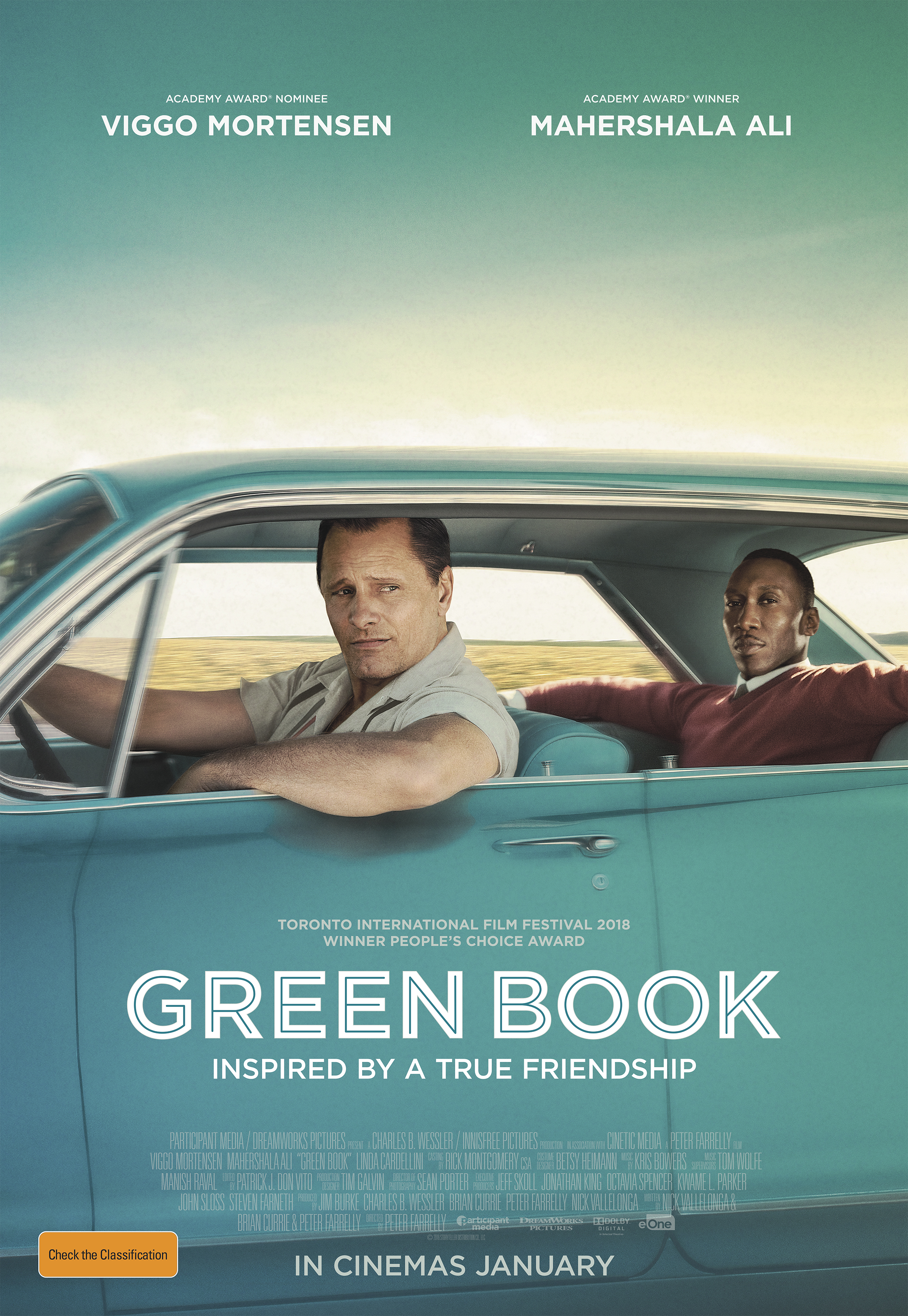
NUP – GREEN BOOK

Best Director
Alfonso Cuaron
Roma
YEP

Best Actor
Rami Malek
Bohemian Rhapsody
YEP

Best Actress
Glenn Close
The Wife
NUP – OLIVIA COLMAN, THE FAVOURITE

Best Supporting Actor
Mahershala Ali
The Green Book
YEP

Best Supporting Actress
Marina de Tavira
Roma
NUP – REGINA KING, IF BEALE STREET COULD TALK

Best Documentary
Hale County This Morning
NUP – FREE SOLO

Original Screenplay
Green Book
YEP

Adapted Screenplay
Can You Ever Forgive Me?
NUP – BLACKKKLANSMAN

Foreign Language Film
Roma
YEP

Cinematography
Roma
YEP

Film Editing
Bohemian Rhapsody
YEP

Production Design
Black Panther
YEP

Visual Effects
Avengers: Infinity Wars
NUP – FIRST MAN

Original Score
If Beale Street Could Talk
NUP – BLACK PANTHER

Original Song
A Star is Born
YEP

Sound Mixing
Bohemian Rhapsody
YEP

Sound Editing
Bohemian Rhapsody
YEP

Costume Design
The Favourite
NUP – BLACK PANTHER

Makeup & Hair
Vice
YEP

Animated Feature
Spider-Man: Into the Spider-Verse.
YEP

So of the 21 I called, I got 13.
Pretty pathetic if you ask me…

Oscars 2019: a seismic shift ~

Each year, as many of you who follow this blog might know, I make my Oscar predictions.

I’m normally pretty good, with a strike rate usually in the mid 90%.

This year it will be more of a guess, because I haven’t seen many of the films, in part because of my living in Mudgee where sadly there is no working cinema – but also very few of the films have compelled me to get in my car and drive 4hrs to Sydney to sit in a cinema and watch them.

Bohemian Rhapsody was one such film, and it was well worth the total of 8hrs driving.

This year will see a seismic shift in the power of Hollywood. The Netflix film Roma will take out Best Picture and a slew of other awards, including Best Director for Alfonso Cuaron – and deservedly so. His black and white forensic detailing of his early upbringing in Mexico is an exquisite piece of craftsmanship and artistry.

Most punters though, if they’ve even seen the film at all – or had the patience to sit all the way through it – would think it a boring load of crap and wonder what all the fuss was about.

Oscars celebrate the epitome of craftsmanship and cinematic art, not popularity.
So punters – suck it in.

Why a seismic shift?
For two reasons –

Firstly, I think this will be the first time that the Oscars will be host-less. Because of a twitter controversy involving the formerly chosen host, comedian Kevin Hart, both Hart and the Oscar organisers figured it was best he step down from being host.

But the real seismic shift will be the enveloping power of Netflix.

Not only is the streaming giant represented by Roma, but also the Coen Brothers brilliant and crazed metaphysical ode to Death, The Ballad of Buster Scruggs. Recently Netflix was admitted to the MPAA – the Motion Picture Association of America, an organisation reserved for the traditional movie studios only. This was seen as a huge political move.

Netflix now has a yearly purse of more than $8 billion to spend on production – more than any of the studios. So it’s at the cutting edge of change in Hollywood. And when Roma picks up Best Picture in a few hours, it will give it even more leverage to shift the creaky old power levers of Hollywood.

Thing is – Netflix is producer, distributor and exhibitor of content – and by law none of the studios are allowed to own cinemas to screen their movies. So Netflix has a major advantage. The other advantage is that its long term viability doesn’t depend on the mercurial nature of box office revenues – having hit movies – but on subscription numbers.

It’s a whole new ballgame, and for those of us that relish innovation and change, it’s exciting times ahead.

So, here are my predictions / guesses –

Best Picture
Roma

Best Director
Alfonso Cuaron
Roma

Best Actor
Rami Malek
Bohemian Rhapsody

Best Actress
Glenn Close
The Wife

Best Supporting Actor
Mahershala Ali
The Green Book

Best Supporting Actress
Marina de Tavira
Roma

Best Documentary
Hale County This Morning

Original Screenplay
Green Book

Adapted Screenplay
Can You Ever Forgive Me?

Foreign Language Film
Roma

Cinematography
Roma

Film Editing
Bohemian Rhapsody

Production Design
Black Panther

Visual Effects
Avengers: Infinity Wars

Original Score
If Beale Street Could Talk

Original Song
A Star is Born

Sound Mixing
Bohemian Rhapsody

Sound Editing
Bohemian Rhapsody

Costume Design
The Favourite

Makeup & Hair
Vice

Animated Feature
Spider-Man: Into the Spider-Verse.

Them’s me picks – in part from having seen some of these films, and also based on heat from the respective guilds. Irrespective, it will be seen as a watershed year for the Oscars.

The Camino as equaliser ~

We each walk through this world and we form certain opinions about others based on their appearance, their trappings.

That person has a Rolex, they must be rich.
That person has sneaky eyes, they must be untrustworthy.
That person lives in a caravan park, they must be destitute.

These are judgements we have made based on very superficial factors.

The person with the Rolex might be bankrupt.
The person with sneaky eyes might have cataracts.
The person who lives in a caravan park might have millions in the bank.

The Camino is one of the few places I know where it’s very hard to make those kind of judgements, because there’s often very little to make judgements on, other than attitude and behaviour.

Most pilgrims don’t take expensive jewellery or watches on the Camino. Most pilgrims wear the same kind of hiking clothing. You can’t make judgements on them based on what car they drive, or what house they live in.

Often you meet a pilgrim and you have no clue if they’re a judge or a janitor.

The Camino, in that sense, induces a base level of status. Very few come to the Camino with their status on display. And if they do, often the Camino strips them of that status in very humbling ways.

That’s not to say pilgrims don’t immediately judge. They judge the “trueness” of the pilgrim, often by asking the seemingly innocent question: Where did you start?

That’s far from an innocent question.

If the pilgrim being asked that question states Pamplona, or Burgos, then the pilgrim asking the question, having walked from Le Puy or Seville, can puff themselves up a bit and think they are a “truer” pilgrim, whatever that means.

Of course, like any form of judgement, it’s based on ego, a need to feel superior, which in turn stems from lack of self worth, and ultimately fear.

Largely, and I say largely, the Camino is a leveller. People who, in their lives back home, might be famous, might be rich, might wield enormous power over others, sit down at communal tables, eat €10 pilgrims meals, and you’d never know.

And in the end, what does it matter? It’s who we truly are that matters, not what resources we might have accumulated elsewhere.

The Camino helps us find out who we really are…


You are all intuitive. “I’m not!”

Reminds me of that classic scene in Monty Python’s The Life of Brian.

Brian is addressing a huge crowd that is mindlessly following him, thinking he’s the messiah. He tries to impress on them that they should think for themselves – and tells them they are all individuals. They are all different. And then a meek voice comes from somewhere in the crowd: I’m not.

Life of Brian 45sec clip

You are all intuitive. You were born with intuition – it works as a legitimate functioning system within your body, connecting to energetic systems outside your body.

I call it your Personal Guidance System. 

Jennifer and I have started doing workshops. Teaching people how to become more intuitive. We emphasise the word more, because everyone is intuitive, irrespective of whether they acknowledge it, or trust it, or deny and suppress it.

What our workshops do is teach you how you can become more intuitive, and bring forth these nascent skills and powers so that you can begin to make better choices in your life. Because in the end, that’s the purpose of intuition – to help guide you along your journey through life.

One of the things we do in the workshops is detail the thirteen steps you can take to prepare yourself for intuition. These steps are a necessary precursor to embracing your PGS.

If you want to host a workshop, get in touch: billbennett.pgs@gmail.com
To view the film, go to http://www.pgsthemovie.com
To buy the book, go to Amazon – PGS Book page

Do what matters ~

At this time of the year, I start to think about how I should best use the next twelve months.

Being someone who has been self-employed since 1982, running a film production company, the decisions I make impact directly on my wife, my family, and my own personal and professional circumstances.

The times when I’ve made these decisions rationally, and based out of fear, have been the times when those years have been tough.

The times when I’ve made the decisions intuitively, and had the courage to follow through with those intuitive choices – well, things have worked out.

Lately, I’ve been thinking of how I can be in service to others.
And by that, I mean: what can I do that ultimately will matter? 

There’s a lot I could do that wouldn’t matter.
And it might well make me a lot of money.

But I’ve learned through hard experience that when I’ve gone down that path, often it hasn’t led to the financial rewards I was expecting, it’s only ever led to difficulties and disappointments.

I’ve learned that if I act in service, then the rewards will follow. And if they don’t, then that’s cool too – at least I’ve contributed something. At least I’ve done something that matters. 

And that’s reward enough for me.

To be in service doesn’t necessarily mean you have to do big things – service can lie in the little things that light up someone else’s life. It’s an energetic transaction.

The energy you get back is the pleasure from giving.

This coming year, think about being in service.
About doing what matters.
The rewards will be wonderful.

Crux de Ferro – Camino de Santiago

End of year audit and hopes for 2019 ~

As followers of this blog know, at this time each year I do an audit of what I achieved this past year, pegged against what I said I wanted to achieve – and I set out what I hope to achieve the coming year.

How did I go? I did some, didn’t do some. Here’s what I wanted to achieve in 2018, and what I did achieve –

  • PGS the movie will release globally and be a success.
    Yes it was released and yes it was / and is a success.
  • Jennifer and I will travel and help market and promote the film.
    Yes, we traveled extensively, met some remarkable people, had many sell-out screenings.
  • PGS the book will be published.
    Yes, I wrote and published PGS the book – an expansion on the film. It’s available here on Amazon – PGS the Book
  • JOURNAL OF A JOURNEY – the book on the making of the film – will be published.
    NUP – didn’t get around to this one. The book is largely written – 120K words or so – it’s a big book – but it needs editing and this year I had other priorities.
  • The first two PALACE OF FIRES books – INITIATE & UNHOLY – will be published by Penguin Random House to great commercial success!
    Yes – INITIATE was published in February, UNHOLY in September. INITIATE has gone into several reprints, and UNHOLY looks like it will go the same way. 
  • I will complete and deliver the third in the PALACE OF FIRES series – BEAST – to Penguin Random House.
    Yes, I completed this on time – 104K words delivered by the end of October. It was a huge task to tie up all the narrative threads from the first two books, but BEAST promises to deliver a fitting (and suitably scary) ending to the trilogy.
  • BUEN CAMINO, the feature film, will be cast and set for filming in 2019
    This didn’t happen, however the distributor in Australia, the sales company out of the US, and our co-producers in Spain now want me to make a film based on my Camino memoir, THE WAY, MY WAY, so I’ll be writing that this next year, and getting that off the ground.
  • I will walk 3000kms from my front door to the end of the world.
    This didn’t happen either. I simply had no time, and quite frankly by the end of October when I was due to set off I was so knackered by the writing of BEAST, plus all the travel and stress of the earlier months, that I wasn’t able to do it. 

What do I have planned for this coming year – 2019?

  • Continue the marketing and promotion of PGS the movie.
  • Shift into the educational side of PGS, through workshops, and online training. 
  • Write the screenplay of THE WAY, MY WAY – and begin casting and financing. 
  • Complete the manuscript of the third in the Palace of Fires trilogy – BEAST.
  • Penguin Random House will publish BEAST.
  • I will write my next book, a thriller called Again, I Die.
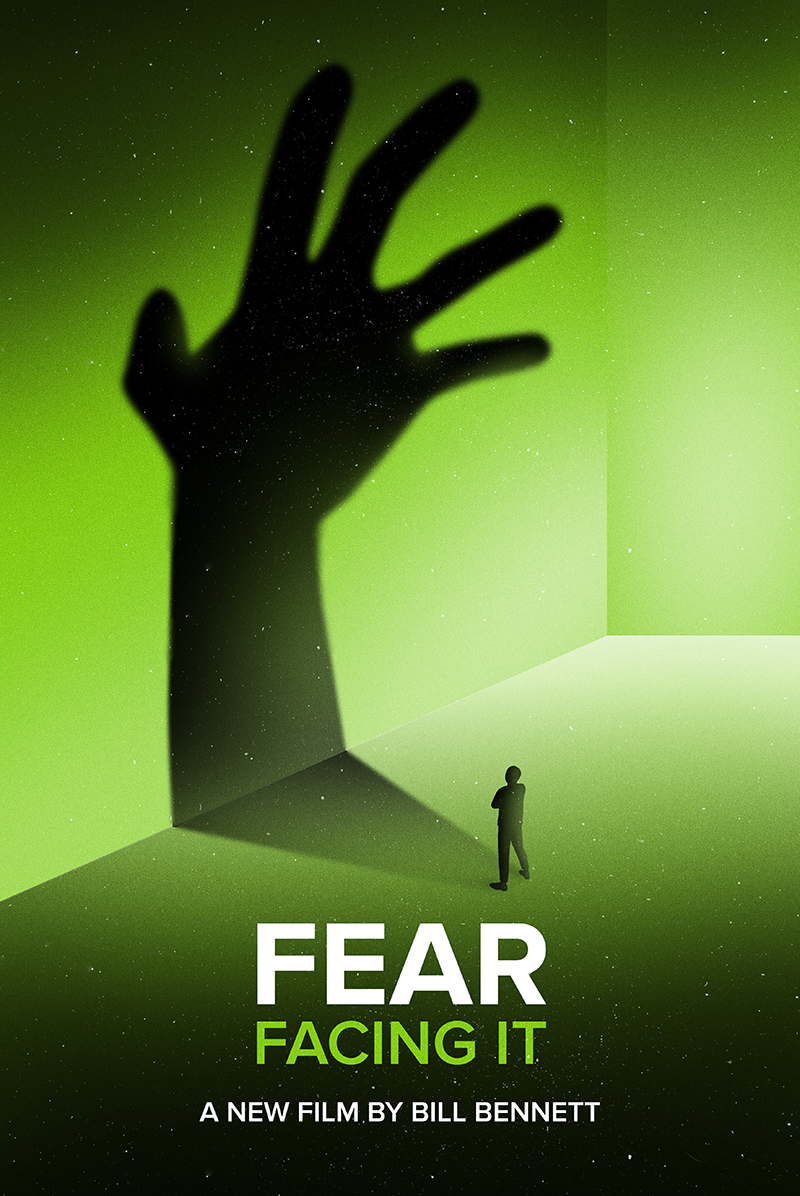
  • I will commence production on my theatrical feature documentary on fear. 

I’m not going to put my “Front Door” walk of 3,000kms on the list – if I have time, I’ll just do it. One day without any fuss I’ll simply walk out my front door. I would like to find the time, but I need about 4 months. 

I have interest from the Adult Commercial Fiction division of Penguin Random House for Again, I Die. They loved my treatment and now they want me to submit what’s called a “partial” – some chapters for them to consider. The pitch for Again, I Die is a cracker. 

Once again there’s a lot on my plate for this coming year, but I’m actually going to focus on doing one thing at a time, doing it as best I can, and finding time in amongst it all to relax, and think about things. 

My health this year is going to be a priority.