Donald Rumsfeld, the United States Secretary of Defence from 2001-2006, famously said to a news briefing in 2002:
Reports that say that something hasn’t happened are always interesting to me, because as we know, there are known knowns; there are things we know we know. We also know there are known unknowns; that is to say we know there are some things we do not know. But there are also unknown unknowns — the ones we don’t know we don’t know. And if one looks throughout the history of our country and other free countries, it is the latter category that tend to be the difficult ones. The absence of evidence is not evidence of absence, or vice versa.
Now what I find interesting is the last sentence, which normally isn’t quoted:
The absence of evidence is not evidence of absence, or vice versa.
Let’s take that concept out of a militaristic and political context, and apply it to our life more generally.
The unknown unknowns.
The ones we don’t know we don’t know.
Science is based on evidence. It’s based on a theory being provable time and again. We in the West live in a quantitative age. We believe what we can see, measure, and what is validated by scientific research.
We know what we know.
And to an extent, we know what we don’t know.
But we also live in an age where we don’t know what we don’t know.
Let me give you some examples –
It was less than 140 years ago that we discovered germs caused disease. Something so basic – that we take for granted now – that’s so much a part of our understanding of how the world works – yet, what? only seven or eight generations ago our forebears would have died from cholera or typhoid because physicians did not know that these diseases were caused by certain microorganisms.
Robert Koch, in the mid 1880s, came up with his “Four Postulates” which led to the discovery that a disease was caused by a particular organism. That groundbreaking work won him the Nobel Prize for Medicine in 1905.
1905
That’s only 110 years ago.
Let’s go back further, and look at something even more fundamental –
The earth revolving around the sun.
It was less than 500 years ago that the common belief was that the sun revolved around the earth. It took astronomer, mathematician and Catholic scholar Copernicus to come up with a theory that in fact the earth and other planets revolved around the sun.
This was blasphemous at the time, and the church reacted strongly.
Later, Kepler and Galileo would further warrant that Copernicus’s theories were correct. But they enraged the Church, which was firmly of the belief that according to scriptures, the earth was the centre of the universe. They cited Biblical references:
Psalm 93:1, 96:10, and 1 Chronicles 16:30, that include text stating that “the world is firmly established, it cannot be moved.”
Psalm 104:5, which says, “the Lord set the earth on its foundations; it can never be moved.”
Further, Ecclesiastes 1:5 states that: “And the sun rises and sets and returns to its place.”
Galileo had to face the Spanish Inquisition in Rome to defend his theories.
Now that was only five hundred years ago.
In the whole timeline of human history, that’s nothing.
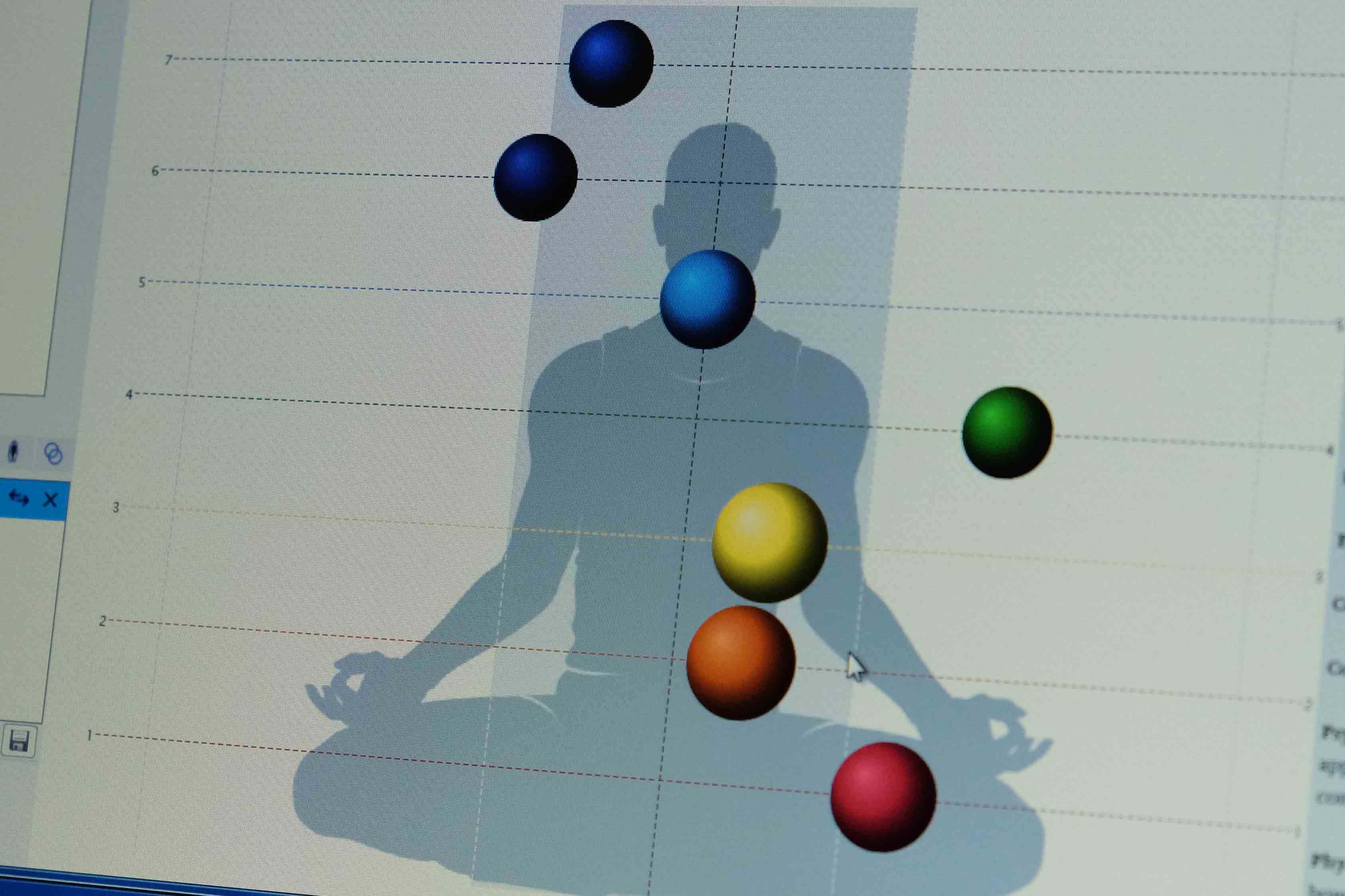
For several thousands of years, Eastern philosophy, religion, and medicine has acknowledged and accepted that the human body has energetic channels, including a system of nodal points called chakras.
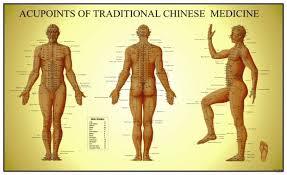
This notion that our bodies are full of energetic pathways and meridian points is what Chinese medicine is based on, and how acupuncture works. The Chinese have used acupuncture and herbs and massage for more than two thousand years – working in accordance with their understanding of this energetic system.
Hindus, Buddhists, Taoists, Yogis, and others, all hold beliefs in an energetic system within each of us. They call these energies by different names, but they’re the same thing. We’re talking billions of people here who believe this – India has more than a billion people alone, and then there’s China, and Asia –
Yet in the west, science and medicine won’t acknowledge the existence of these energetic pathways, or of chakras. Their belief is that if it’s not in Gray’s Anatomy, the definitive medical textbook, it doesn’t exist. If you can’t find it in an autopsy, then nah – it’s not there.
I find this astonishing – that chakras aren’t acknowledged in the west by science. Chakras and chi and prana are such an integral part of life in the East.
Western doctors know that our bodies run on electromagnetic transmissions. Electrical impulses.That’s how our brain gets messages to our organs and limbs. That’s how our heart pumps blood. Surely then there must be some way these energies are disbursed throughout the body, beyond the central nervous system.
Perhaps in five hundred years science will “discover it”, and then once validated by it will be accepted by the West.
Full disclosure:
I started off doing Medicine at Queensland University. Both my mother and father were dentists. My brother is a veterinary surgeon. My elder sister has three degrees in medical related fields. My youngest sister is head of a Social Work department at a huge hospital.
I’ve been brought up to believe that science has an answer for everything. I’m only now starting to see that science is playing catch-up, and not doing a very good job of it. And hasn’t been for a while.
In researching this post I discovered that it was the ancient mystics in India, long before the birth of Christ, that originally came up with the theory that the earth revolved around the sun – over a thousand years before our scientists. But they could never prove it.
Back to Uluru –
Kryon, through his “partner” Lee Carroll, says some pretty weird and whacky stuff. I used to dismiss it as New Age white noise.
I don’t anymore.
I listen, and I listen carefully.
So the biggest thing I’ve learned coming away from Uluru is that I’m now prepared to be more open minded about things. I won’t immediately discard a concept, no matter how weird and whacky it might be, just because it doesn’t fit into what I know.
I know I don’t know a lot, but I’m starting to realise there’s also a lot that I don’t know I don’t know…


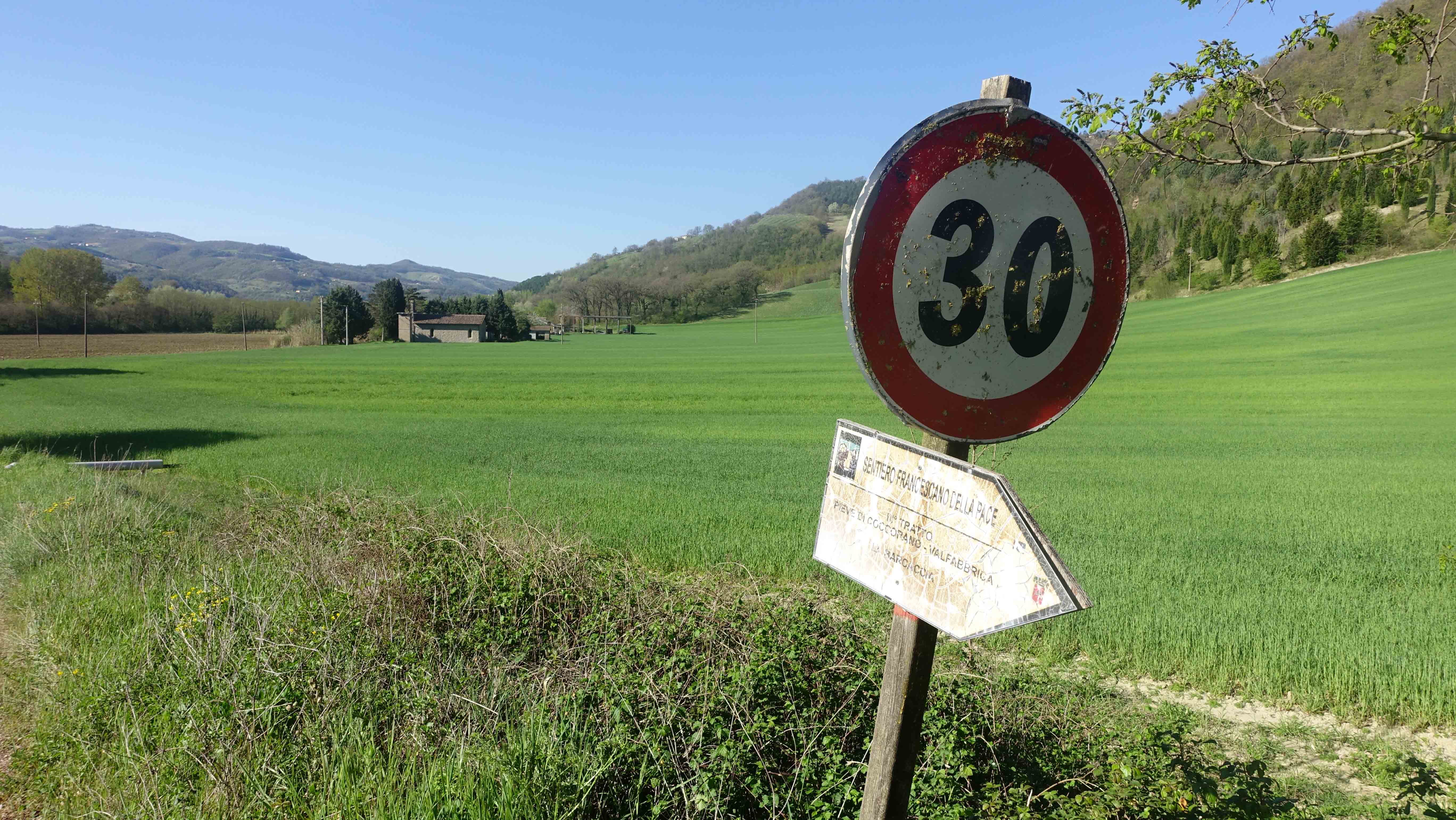
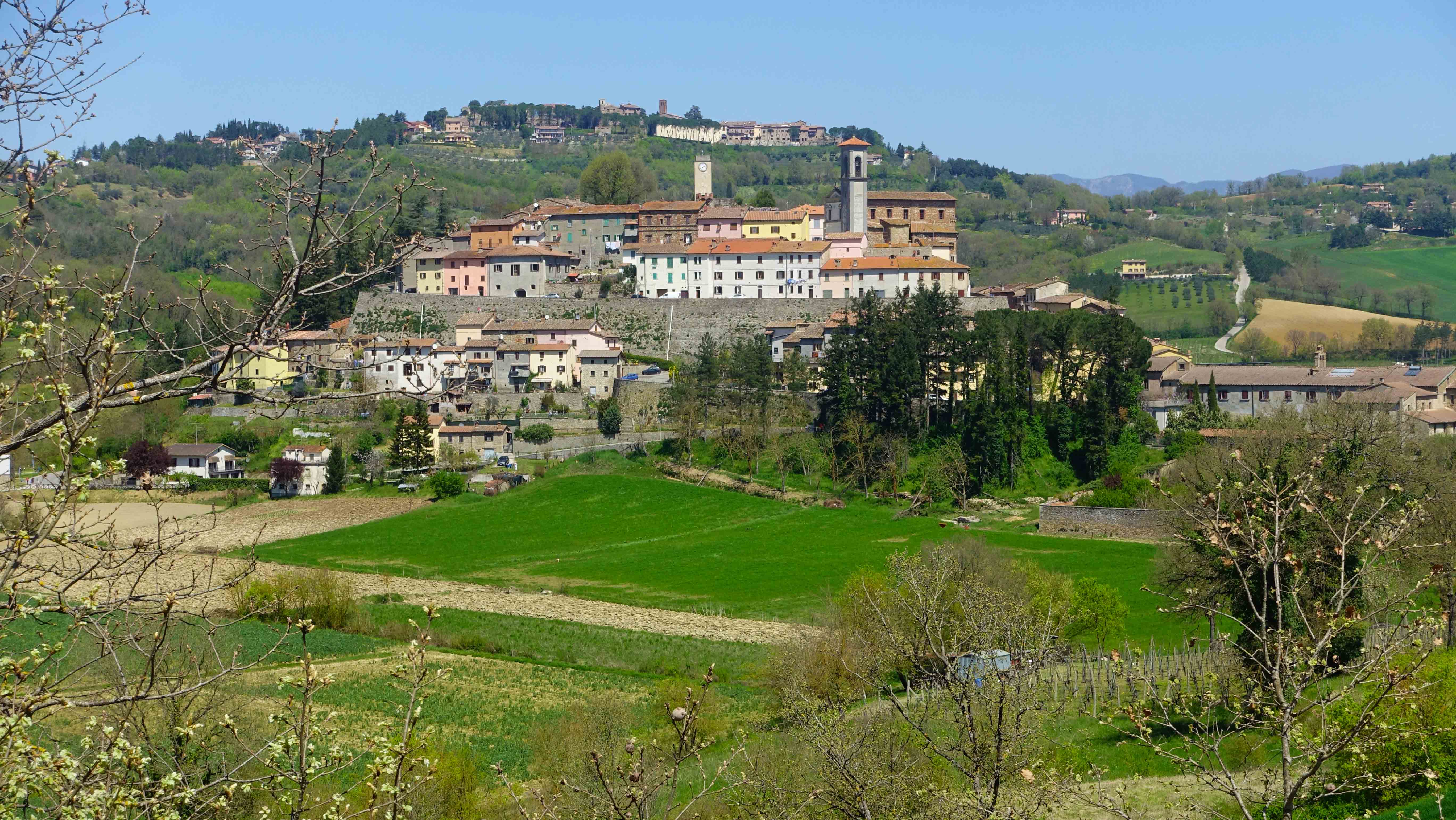 It was another glorious day – blue skies, sunshine all day, and the fields rich in colour. A perfect spring day in Italy – at stark variance to the savage storms which are currently lashing Sydney.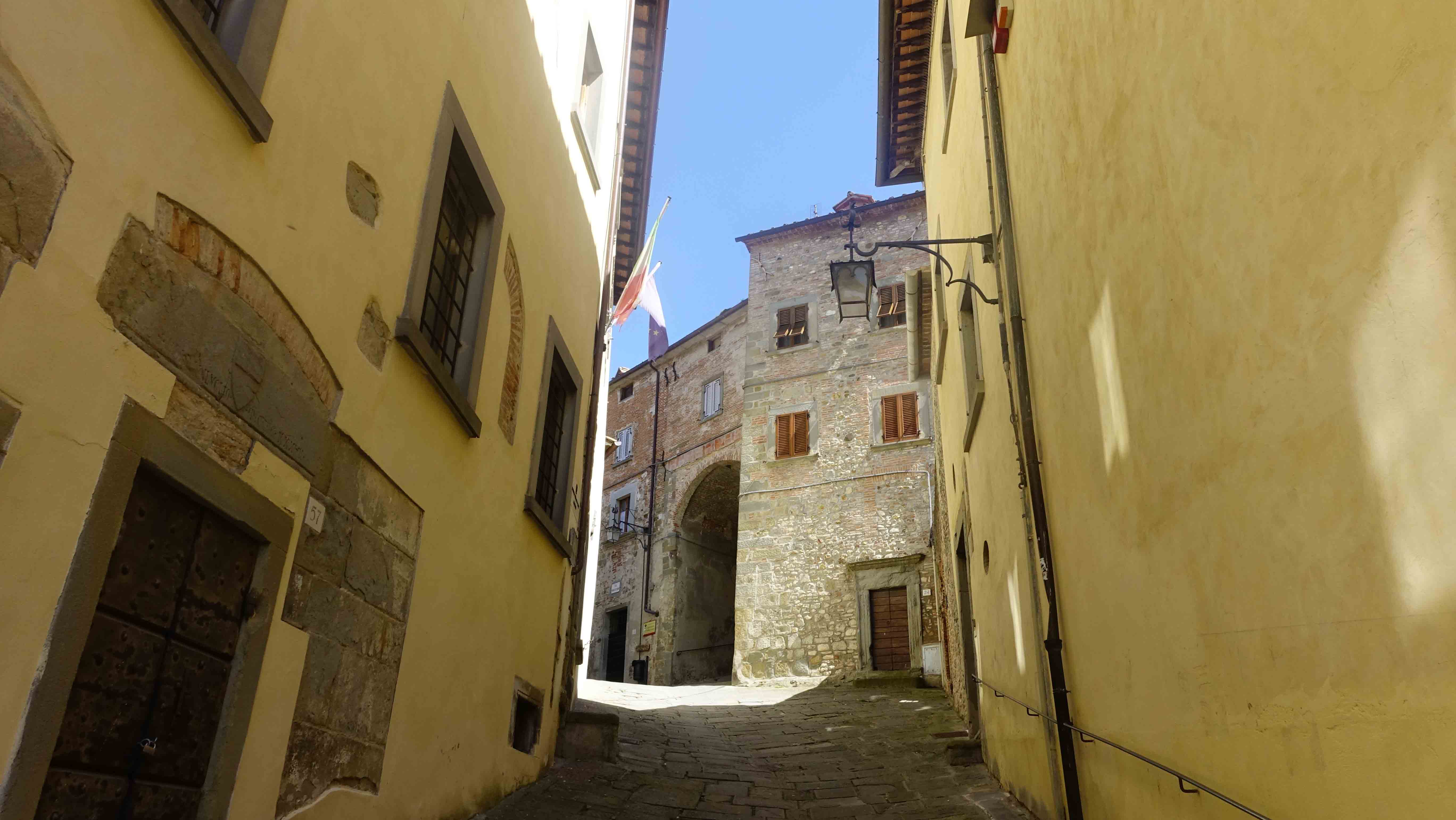













 PGS - The Way
You must be logged in to post a comment.