But on those few occasions when it has happened, invariably I’m surprised, and grateful. Grateful because I’ve tasted failure many times. And so my reaction to success is now the same as my reaction to failure:
So what…
Success doesn’t mean anything, nor does failure. They’re flip sides of the same coin.
You need to fail to achieve success. In many ways failure is a prerequisite for success. My experience is that to succeed, you need to step outside the box, to stand uncomfortable, to risk humiliation. To be prepared to be crushed.
I’ve been crushed many times. It’s not pleasant, let me tell you. But to achieve anything in this life you have to get back up, spit the blood from your mouth, and go back to work again.
My success is this recent film I’ve made.
For me, the success the film has achieved isn’t its box office or the acclaim it’s received, it’s that people have gone to the cinema and come away feeling good. Feeling inspired. Feeling empowered.
That to me is success.
Some kind people have said I deserve this success.
They’ve seen me struggle. They’ve seen me hurt. They’re seen how hard I’ve worked, for so many years, without any apparent benefit.
They say I deserve all these good things now and I say thank you, but silently I say no I don’t. I don’t deserve anything. The world, the Universe, doesn’t owe me anything.
No matter how hard I’ve worked, what risks I’ve taken, I’m not entitled to success.
Just as I’m not entitled to failure.
I’m very suspicious of this word deserve.
The word lacks humility. It lacks grace. It speaks to me of ego-based entitlement. Of expectation. Of sought-for outcomes. That’s a space I don’t wish to inhabit.
I don’t deserve anything.
Is success preferable to failure? To answer that I have to ask myself: What is success?
For me, it’s that I finished the film and it’s the film I wished to make. How fortunate am I?
This is a question that I’m being constantly asked. So let me explain how it works.
For starters, the film is, in Johnnie Walker’s words, brand new. It was only finally completed about 4 weeks ago.
For the film to be screened in the US, and in other territories outside Australia and New Zealand, it needs to be acquired by distributors in those territories.
This is a film that needs to be seen in a cinema, and so a fundamental requirement with buyers is that the film must have a guaranteed theatrical release.
We are in no rush to have this film go out on a streaming platform.
We’re looking for distributors who will handle the film with the care, skill and commitment that Marc Wooldridge and his team at Maslow Entertainment have brought to their release in Australia and New Zealand.
Our strategy?
Simon Crowe, our foreign sales agent based in the UK, screened the film at the recent Cannes Film Festival in the Marché. Already he’s had offers.
The outstanding success of the film in Australia and New Zealand ($1m+ in the first two weeks) has caught the attention of foreign buyers. So we’ll wait and see.
Don’t sit at home thinking that it’s going to come to Netflix or another streamer anytime soon.
That’s not going to happen.
If you want to see the film, go to a cinema. That’s where this film should be seen – shot in wide-screen format and with an exceptional soundtrack, it really is a big screen experience.
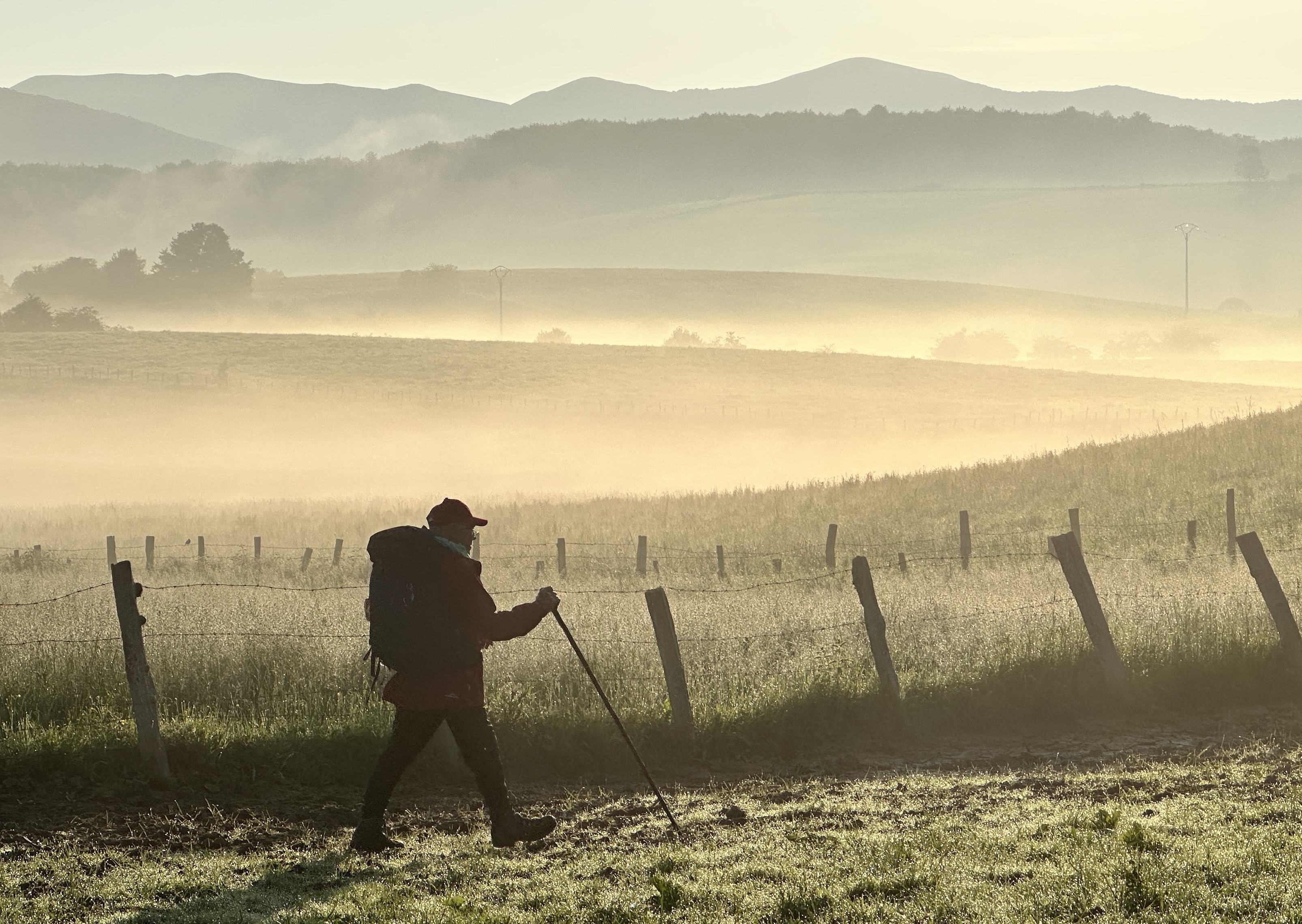
And the Camino – the star of the movie – really needs to be experienced in its full glory.
It’s very pleasing that a lot of people are turning up to see The Way, My Way. In a few days we’ll be at $1m in box office returns.
Reviews are coming out, mainly positive, and I’m being contacted by friends saying: Oh you must be so thrilled etc.
I’m not. Nor is Jennifer. We’re rock steady.
Over a forty year period we’ve made films that have gone nowhere, and we’ve made films that have made a dent. I’ve ceased to predict how a movie we’ve made will work. I’ve been surprised at those that have connected with an audience, and shattered at those that haven’t.
I don’t read reviews anymore. Or listen or watch them if they’re on radio/podcasts/YouTube/whatever…
It doesn’t matter to me what a reviewer thinks. I’m only interested in what the audience thinks. They’re who I made the film for – not critics.
I see younger actors get peeved that a critic said this or didn’t say that. It doesn’t matter didly squat. The only thing that matters is the work. The views of a critic are meaningless and transitory. What lasts is the work. And that’s where the focus needs to be. Solely on the work.
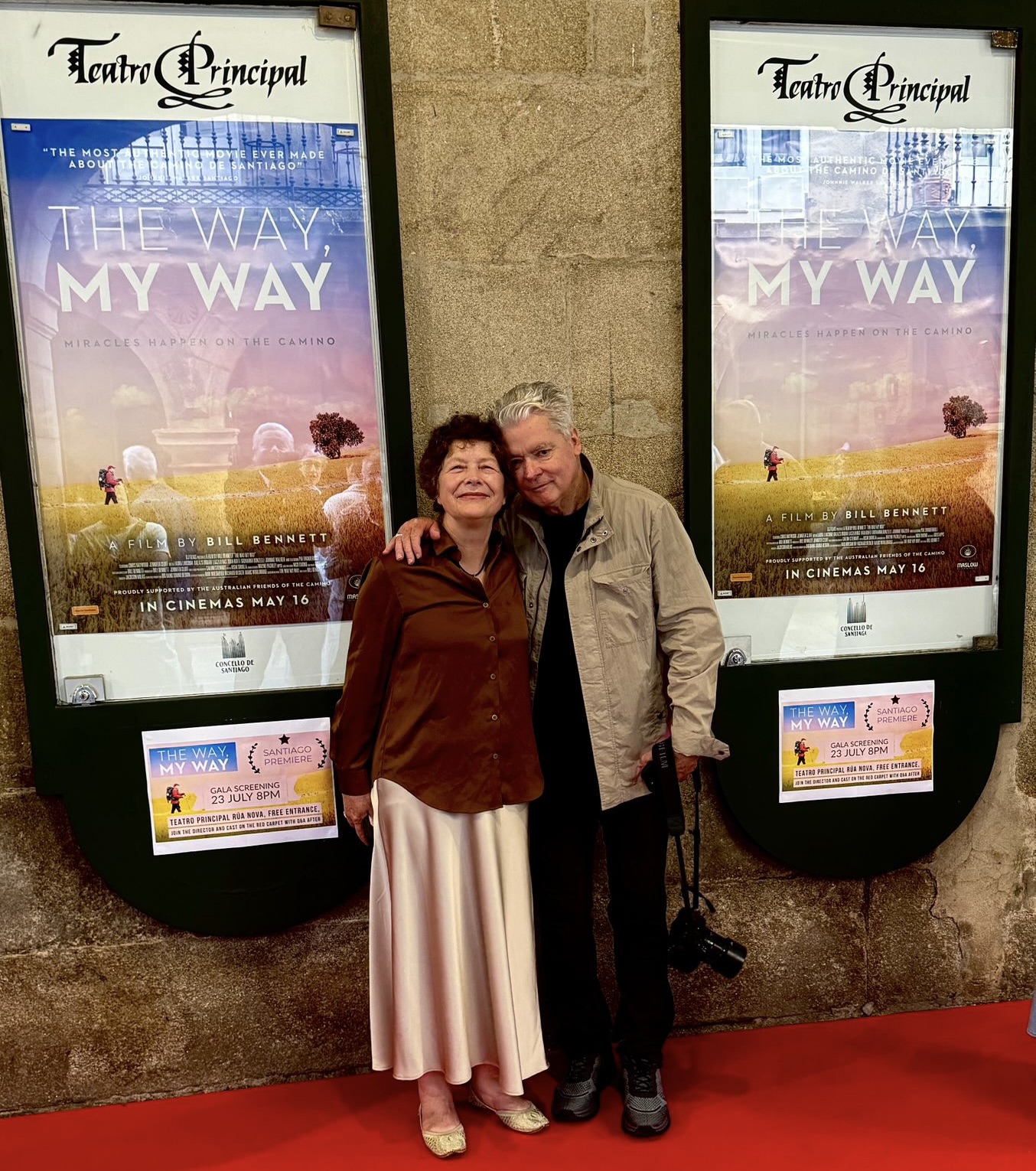
Right at the outset, when we had our first conversation with our distributor Marc Wooldridge, head of Maslow Entertainment, after Marc had seen the movie, he asked me: What would success look like for you with this film?
I said to Marc: Success is here right now. We’ve made the film. That’s success.
Sometime in the next week, the film will cross the $1m mark.
I asked veteran screen pundit Paul Brennan why it’s doing so well – and I posted his response earlier. But there’s another reason –
We have a very smart, very committed distributor in Marc Wooldridge and his team at Maslow Entertainment.
Marc and his partner Karen saw an advanced cut of the film. They liked it but they had a few quibbles. Jennifer and I fixed those quibbles. Immediately the film played better.
Seen the trailer? If you haven’t, here it is. This is Marc’s work –
Marc has approached the distribution and marketing of this film with passion and full commitment. He’s discovered the whole world of the Camino, a world that initially he knew nothing about – but he very quickly immersed himself in it.
It was always our strategy to ensure that the film worked for the core Camino audience, and then hope that word of mouth would bring non-pilgrims to the cinema.
To that end, Marc sought the support of The Australian Friends of the Camino and Janet Leitch, who swung her endorsement behind the film. Similarly, Marc bought Camino legend Johnnie Walker out from Santiago in Spain to do advance Q&A screenings here in Australia.
John’s unwavering support has been crucial in this film’s success as well.
Jennifer and I are very fortunate that the film landed in Marc’s hands. Just as we have handcrafted this movie, Marc and his team have handcrafted the distribution and marketing.
We’ve brought Marc on as an Executive Producer and in that capacity he will work with Simon Crowe, our foreign sales agent based in the UK, to oversee the international rollout. And if the response overseas is anything like it is in Australia, we have exciting times ahead of us.
By the end of the first week up to Friday 24th, The Way, My Way had a box office gross of nearly $750,000 – from Australia and New Zealand.
That’s phenomenal.
I asked Paul Brennan, highly respected film industry veteran on the exhibition side of things, why is it working so well. Here’s what he wrote back:
THE WAY MY WAY is one of those rare events in screen success in that the feature is appealing to enthusiastic baby boomer audiences who still like to attend the cinema as well as the cinema owners and programmers who delight in screening to crowded sessions, especially Sunday to Friday in what would normally be considered off peak times.
Seeing THE WAY MY WAY is an elating passive emotional cinema experience which celebrates the humorous human condition for educated adults still wishing to be included in social life. It is also an inspiring sports film…it might be walking and learning and feeling, and that experience for mature adults is a valid part of their healthy lives.
THE WAY MY WAY validates how older people still see themselves, and especially the ache and repair of relationships. Even with their own body. By experiencing the journey as a screen vision, it certainly uplifts the viewer to participate in nature, effort and emotion to the point of heartfelt release by the 100th minute.
Few films pass from maker to viewer with enthusiastic intergenerational audience result. Anyone from 25 to 85 can see themselves on screen, and often wish parents and relatives to reconnect. The word of mouth, essential for return visits and good conversation is a solid strike rate. Many viewers return, bringing neighbours and family with them. And on attendance multiplies.
While mainstream blockbusters and exhausting cinema crowds dominate evenings and Saturdays, THE WAY MY WAY is the humble blockbuster providing profitable sessions at the counterbalance times of matinees and weekdays, a schedule which sees both ticket-buyer and cinema owner delighted at the access and the experience.
THE WAY MY WAY is not competing with any movie in the market; it is the competition itself in a parallel orbit. And everyone is happy. Hiking businesses would cheer and promote both the topic and the supply materials as working examples of their business aesthetic.
Similar rare unique release titles would be AS IT IS IN HEAVEN and THE WORLD’S FASTEST INDIAN.
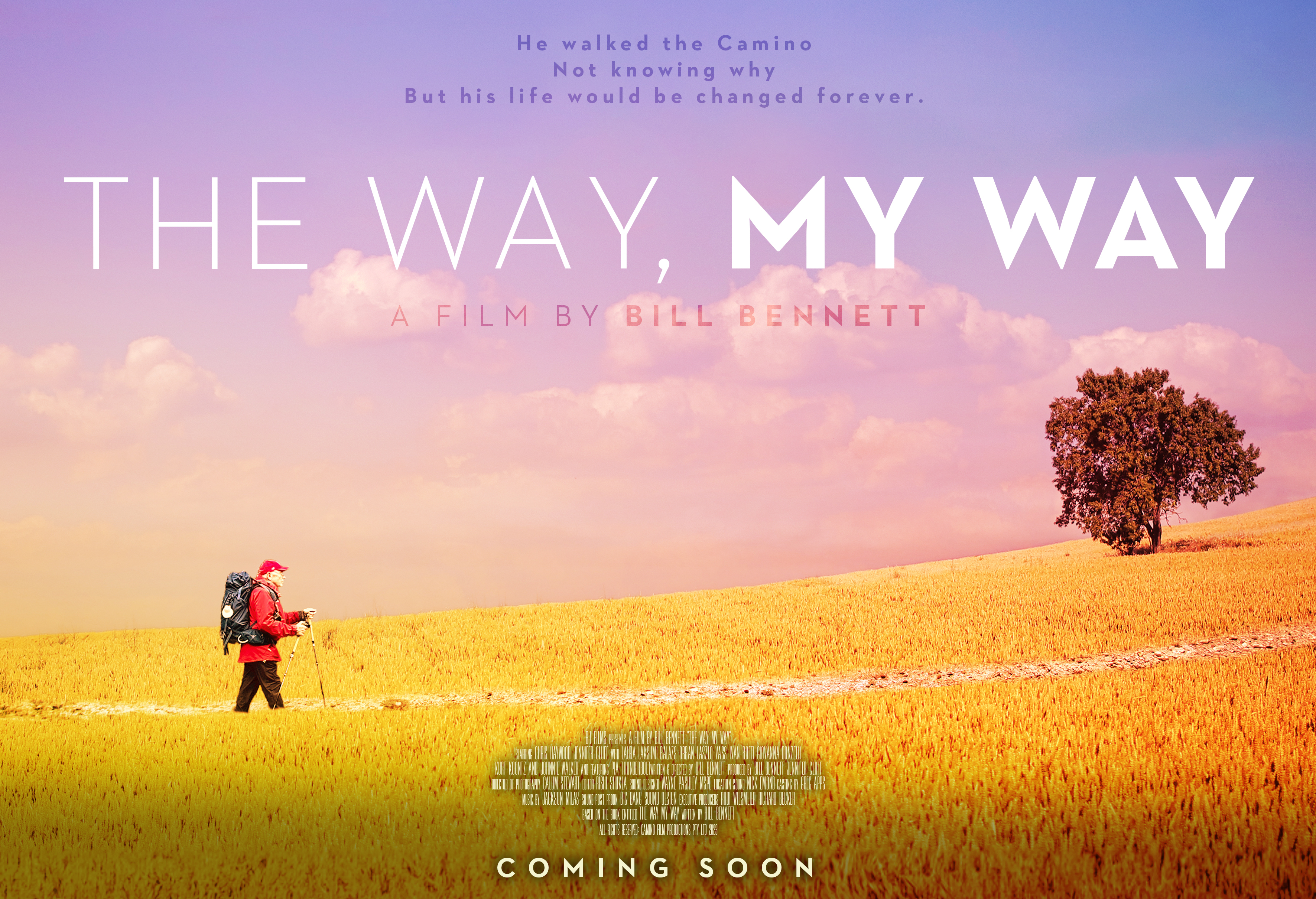
You’ll notice a new look to the blog – I’m using the key art from the film – the poster artwork, which is interim artwork until a distributor comes on board – but more on that later… oh and by the way, I notice from the analytics that this blog has been getting a lot of traffic recently, so I’m going to eat my bran and be more regular, I promise!
Firstly, there’s been a lot of interest in the film lately so I thought I would use my blog to update you all on what’s really happening, as against what’s purported to be happening.
QUESTION: What stage is the film at right now?
The film is now at fine cut stage. What that means is that after nearly six months of editing, we have locked off the picture cut. It´s running time is 103 mins, without end credits. I’m finally happy with the cut – at least, I’m happy enough – for if truth be told, I could spend another twelve months or more in the editing room fine fine tuning with Rishi Shukla, my trusted editor, but to what end? At some point I have to let go of my baby.
QUESTION: What happens next?
The next stage is sound post-production, which is probably even more complex than picture post production.
Fortunately I have the best sound team in the country, and indeed one of the best in the world in Wayne Pashley and Libby Pashley and their team at Big Bang Sound. They were Oscar nominated last year for their work on Baz Luhrmann´s Elvis. Their previous credits include Mad Max Fury Road, the Babe movies and Happy Feet for George Miller.
Wayne and Lib have done all my movies since Kiss or Kill in 1996, for which they won the AFI Award for Best Sound.
Sound post will take us up to next February, So the film won’t be completed until end of Feb earliest.
QUESTION:What’s happening with distribution?
Now that the film is in sufficient shape to show distributors, we’re beginning to have screenings. We’ve already had interest from one major distributor here in Australia, and we’re hoping that an offer might be forthcoming.
Once we have an Australian distributor locked in we´ll then seek a foreign sales agent. This has to be done linearly, step by step. I’ve been producing movies now for forty years and I know my way around distribution and exhibition enough to know that you can’t rush these things.
I’ve brought on veteran distributor Richard Becker to act as consultant in these matters. Richard is retired now, but he’s been a huge fan of this movie right from the getgo, and he’s providing invaluable advice. Distribution and marketing is a minefield, and even someone with my experience needs someone like Richard to guide the film through this minefield.
QUESTION:When am I going to be able to see it? And where?
That’s the key question, and the answer is I don’t know, and the decision isn’t mine anyway – it will not even be the distributor´s decision most likely – it will be the exhibitors´. They’re the ones that call the shots. If a distributor can’t get the screens, then they can’t release the movie.
If everything falls into place, then I’m hoping – and I emphasise the word hoping – that the film will be in cinemas in Australia in the first half of 2024, and internationally sometime after that.
Streaming then will follow – and as for the timing on that, it will depend on the distributors, because they’ll most probably hold those rights.
But you know, there’s another scenario:
The film gets invited into Official Selection at the Cannes Film Festival, the film gets a ten minute standing ovation in the Palais, after the screening there’s a bidding war between Netflix, Amazon, A24 and a bunch of others, Netflix offers us US$20m and it takes us all of five seconds to accept their offer, they give the film a short theatrical release to qualify for the Oscars, then a quick window to streaming – meanwhile the film goes on to take out Oscars for Best Picture, Best Director, Best Actor and Best Screenplay – I accept the three Oscars with practiced humility, the film then gets another run in the cinemas, and I´m then signed by Warner Bros to direct a Marvel spinoff movie for a directing fee of $7.5m with 5% from dollar one.
I like that scenario.
haha
The reality is that first we have to finish the movie then we have to get distribution then we have to market the film very carefully. I’ve seen too many good films fall through the cracks to be complacent about all this stuff. It´s a delicate and complex process making a movie – it´s even more delicate and complex selling it.
If you have anymore questions contact me at: CaminoFilmProds@gmail.com
Oh and by the way, I am going to be blogging more regularly so please follow me here to ensure that you get these incredibly witty and insightful missives.
After five weeks of filming in Spain then a few days filming in Mudgee, Australia, we’ve now completed Principal Photography for my Camino film, The Way, My Way – based on my memoir of the same title.
Now the fun starts.
Everything comes down to editing. All the decisions you make as a director on location are based on how it´s all going to cut together in the editing room.
Given the way this film was shot, the editing process will be even more crucial than normal.
As per my style in such films as Kiss or Kill, Malpractice, Tempted, or Backlash – this is a film that has a high degree of improvisation. This was necessary for when we came to shoot with the “actuals” – the actual pilgrims that I met and walked with on my original Camino ten years ago.
They’ve come back to play themselves in the movie.
Their involvement dictated a certain style of performance from the actors, but also it influenced the shooting and hence the editing style. The actuals were real, they were authentic, so the surrounding performances had to match their verisimilitude pitch-perfectly. A more formal, “dramatic” visual style would have been totally out of kilter with the authenticity of the actuals´ performances.
To keep the location crew size down to a minimum, I had no continuity person on set, however I had two cameras on just about everything we shot, so I know I’ve got the coverage to get me out of trouble if needs be,
Rishi Shukla is my editor. He cut the two theatrical feature documentaries I’ve done lately: PGS – Intuition is your Personal Guidance System, and Facing Fear. Editing a dramatic feature film is a whole other ballgame though. The rules are totally different, and this will be Rishi´s first movie as a feature editor. But I’ve seen his choices in the assembly so far and I know he’ll do a mighty fine job, like he’s done with everything else we’ve worked on.
I look forward to the next 12-15 weeks or so in the editing room with him.
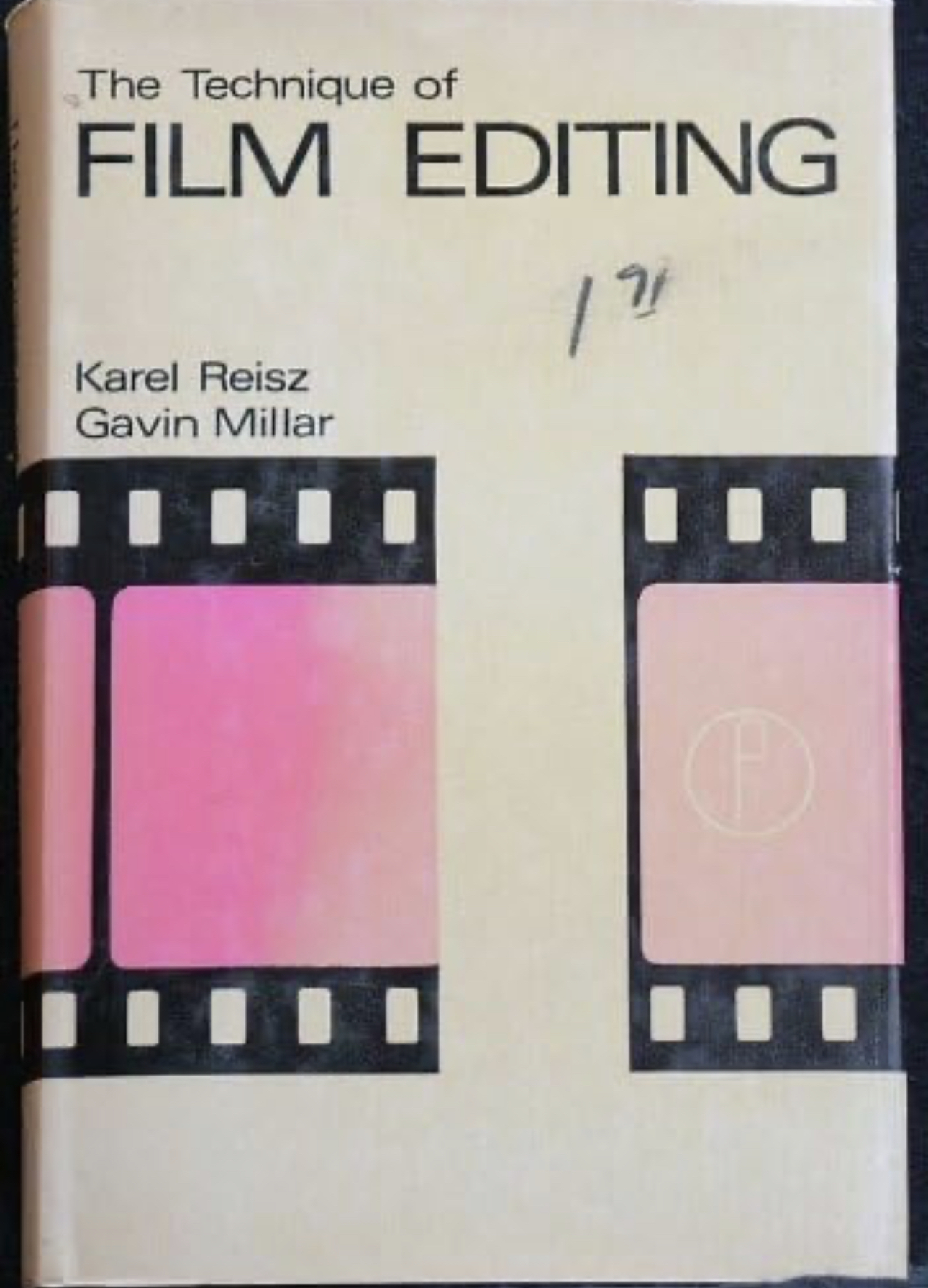
Going back some fifty years – yes, fifty years – when I first determined that I wanted to make films, the first book I read was Karel Reisz¨s classic, The Technique of Film Editing, written in 1953.
As a young cadet journalist working for the ABC in Brisbane at the time, I would read this book in the back of the camera car as we went out each day to cover news stories. I also read Film Sense, by Sergei Eisenstein.
I read these two books over and over.
Everyone – cameramen, journos, the editors – they all thought I was a wanker. But instinctively I knew that if I wanted to learn how to make films, I had to learn editing, and both those books were the definitive works. They’re still as relevant today as they were fifty years ago.
Later, I would enroll in a three year acting course so that I could understand performance.
Editing is the key to film production. And I’m jumping out of my skin to start!
For the past five week I’ve been directing a feature film in Spain, along the Camino de Santiago. The film is called The Way, My Way, based on my Camino memoir of the same name.
I’m heading back home for a further period of shooting in Australia next week. Then comes months and months of post production. Then comes months and months of marketing and publicity.
It´s taken me nearly seven years working on this project to get to where I am right now, and probably more than forty different drafts of the script. I’ve lost count.
I’ve had constant rejections – from actors, from distributors, from financiers, from functionaries in government film offices who weren’t even born when I made my first movie.
They all, for their own reasons, said no. For some, it was too much a risk. For some, they didn’t believe in me. For some, they saw me as a filmmaker that once showed talent, but that talent left the building a long time ago. Thank you and goodnight.
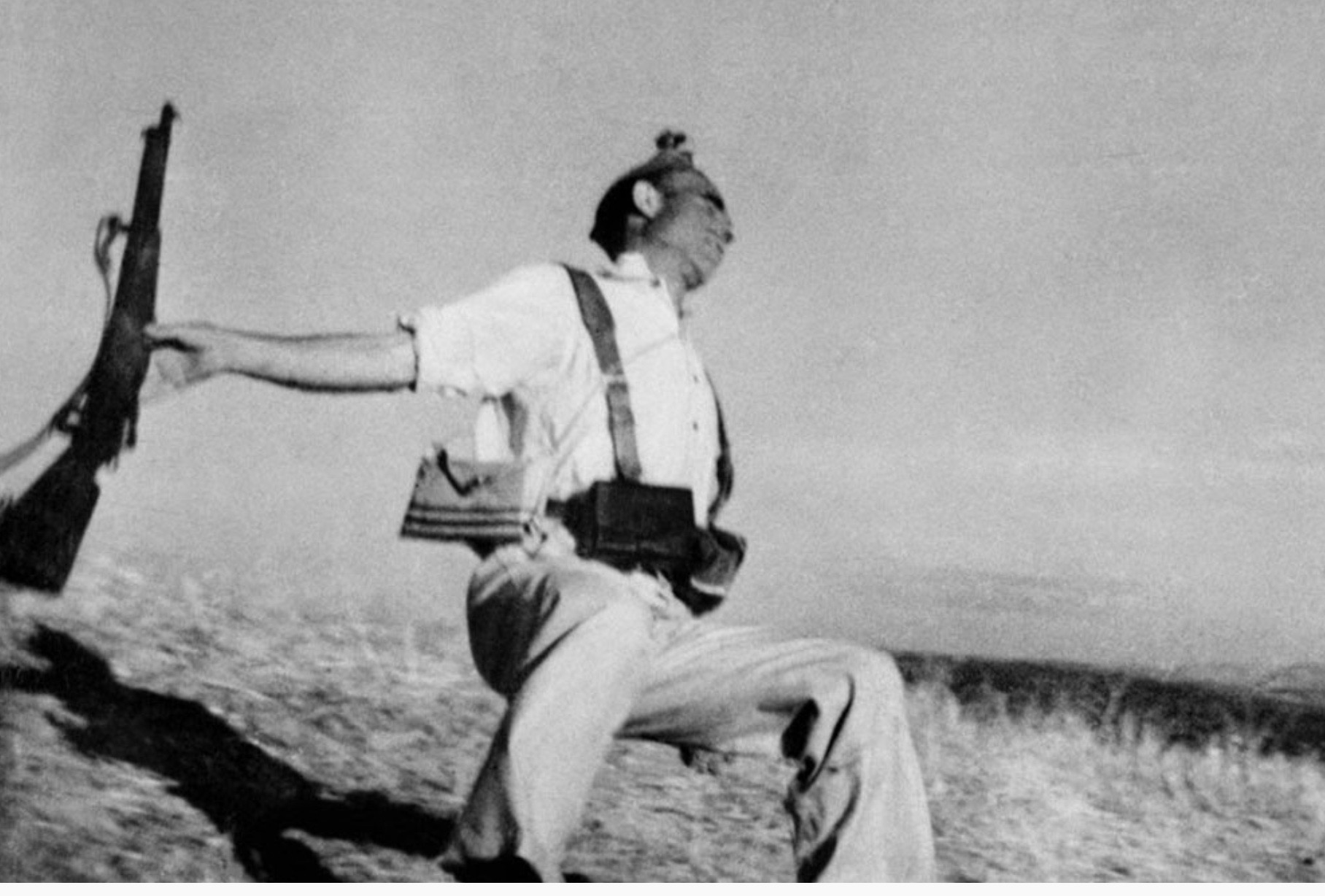
If this were a war and each rejection were a bullet, my body would be riddled by now. It would be lying in the mud in the trenches, a bloody mess. It would be so shredded they’d need my dog tags to identify me.
But somehow I’ve managed to pick myself up after each mortal wounding, and I’ve picked up my weapon, put my armour back on, and I’ve gone back to war, to fight yet another battle, to face further bullets, further assaults, further indignities.
What is my weapon? My weapon is my vision. I see the film already made. There can be no more powerful weapon.
What is my armour? My armour is my implaccable determination. It´s my shield, it´s my suit of kevlar, it deflects most of the ordinance.
Most, not all.
Some of it somehow manages to get through the layers of protection I’ve built up around me over the years, over the decades of fighting, and it wounds me. It hurts, and it leaves scar tissue.
Each war, each movie, extracts its toll. But the fight is worth it.
This latest film – my fourteenth feature film as writer/producer/director, my fifteenth as writer/director, my sixteenth as director only – was also a war, and the war will be ongoing until way after its release, sometime next year.
Who am I fighting? My most powerful and cunning of enemies is myself.
My fears. My willingness to compromise. My unwillingness to compromise. My loss of vision. My sheer exhaustion. My creative inadequacies. My empathy.
To be a good film director you have to be a bastard at times.
But this is war, fuckit.
I have one chance in my life to make this film – a film that will last – and I’m going to do everything I possibly can to make it the best film it possibly can be.
I fight other enemies too.
The budget. There’s never enough money. The weather. There’s never enough days of light. Beautiful light. There’s never enough days of storm and thunder. There’s always too much ordinariness. That’s one of my biggest enemies – weather and light that’s ordinary. Time. There’s simply never enough time to do what I really want to do: People. Invariably in a war situation, people show their true colours. Some shine, some disappoint. That’s human nature.
I’m never alone when I go to war.
I’m surrounded by highly talented, highly experienced veterans, and sometimes rookies too, who share the vision and in their own highly specialised way join me in this particular battle.
For me they are a source of joy and wonderment and they save my life every day. Every day I look around me and I quietly say thank you. Today you saved my life.
By my side is Jennifer. She believes when I lose faith. She takes risks when I’m too scared to. She sees it done when my exhaustion clouds my view. She cops the flak so that I can keep fighting.
Without her, I wouldn’t have the strength to pull myself up out of the bloodied muddy trenches and get back out there to face another day.
Making a movie is like going to war. Sometimes you win, sometimes you lose.
Whatever the outcome, it´s a privilege to have the opportunity to fight for a vision that can hopefully have a positive and uplifting impact around the world.
As I said in my previous post, the casting of the film adaptation of my book, The Way, My Way, didn’t happen overnight.
I mean, how do you cast someone to play me?
I rejected Brad Pitt because he wasn’t buffed enough, I rejected George Clooney because he wasn’t suave enough, I rejected Hugh Jackman because I was concerned he couldn’t do a convincing Australian accent…
So I cast Chris Haywood.
Chris is one of Australia’s finest actors. Theatre trained, with more than one hundred Australian films under his belt, Chris was a natural choice for many reasons.
Firstly, Chris and I go back to 1984, when he played the lead, opposite Jennifer Cluff who played female lead, in my Vietnam veterans drama, A Street to Die. Chris won the Australian Film Institute Award for Best Actor for his performance, and later we worked on other films too.
Perhaps the most memorable was in my Outback noir thriller, Kiss or Kill, where he played a detective chasing down a serial killer. The film includes the now famous “bacon scene,” which won Chris another AFI nomination.
Sometime back I´d made the decision to have the real pilgrims who walked with me play themselves in the movie. I knew that Chris was masterful at working with “actuals,” and he was also unfazed by working on small productions.
I needed this film to be crewed tight and lean because there was no way I could get the real authenticity of the Camino if I had a large crew. I knew that Chris would chip in, become part of the team, part of the family – which he has done with full vigor.
Chris and I have kept in touch over the years and he knows me. That was also an important factor in the casting. If an actor was to play me, then that actor needed to know me. Yes Chris is a few years older, but that didn’t bother me – he has a mischievous and rascally streak in him and a flagrant disregard for rules regulations and authority, which some people claim is what I have.
Personally, I don’t see it, but then how would I know.
There are four other actors in the film, the rest are “actuals,” or non actors.
The first is Jennifer Cluff, who plays my wife in the film. Perhaps I should call her an actual, but she’s one of Australia’s finest actresses with a career that goes back to . She played Chris Haywood´s wife in A Street to Die.
Laura Lakshmi (below) plays the role of Rosa, who was one of the Biarritz Taxi Four, the four of us sharing a taxi from Biarritz airport to St Jean Pied de Port – and forming friendships for life. The real Rosa couldn’t unfortunately join the production because she’s just had a young baby. But Laura has done a stellar job in playing her…
Pia Thunderbolt plays the character of Cristina, who is a mysterious and haunted looking pilgrim who intersects with Bill’s journey to Santiago intermittently. She finally reveals her devastating secret on the mountain top of O Cebriero. Cristina is a composite character of several pilgrims I met on my five Caminos.
Spanish acto Daniel Espuńa plays a pilgrim I met on and off along the way. He told me that when he first met me, I came across as an arrogant wanker (I’m certain he must’ve mistaken me for someone else) but that later on when he met me again, I’d changed.
Then there’s the “actuals,” and the non actors. The actuals include:
Balazs Orban, who was one of the Taxi Four and played a huge role in helping me finish the Camino. He’s Hungarian, and a remarkable man –
Then there’s another Hungarian, Laszlo Vas, who was an inspiration to me during my walk, and to all of us in the crew during filming.
The two pilgrims that make such an impact in my book, and have become dear friends to Jennifer and me, are Ivan the Terrible (Beeel) and His Beautiful Wife Giovanna. (You take taxi, no?) They were on set every day, even when not doing their scenes, and kept me laughing always.
The non actors, those that aren’t professional actors but who have a connection with the Camino and who play roles are:
Kurt Koontz, a dear dear friend from Boise Idaho who plays an American I met who was quite convinced that I made porn. Kurt did a remarkable job playing a skirt-chasing mysoginistic loud-mouth and Kurt told me it was a big stretch for him to play such a role – he had absolutely no idea why I’d cast him – but he’d do his best. His best will be one of the highlights of the film.
Another dear Camino friend is Patty Talbot, who plays a woman whose name I can’t remember. Patty, in her performance, left Kathey Bates in Misery in the shade…
On my Camino, I asked a waiter to take a group photo of myself with my pilgrim friends. The waiter, predictably, took the shot and left in too much headroom. I told him this, gave him the camera back, asked him to do it again. Again there was too much headroom. I pointed this out to him, again asked him to take the shot and this time to get it right – we must have done it five or six times and he nearly knocked my block off.
Marie Dominique Rigaud, another very close Camino friend, played the role with gusto and left us all laughing –
The actuals and non actors have given performances that are real and truthful. And the actors, working with them, have had to fine tune their performances to match their level of authenticity.
Who’s in the movie The Way My Way, and why did I make the casting choices that I did?
To understand the casting, you have to know how this film came about.
This film, like most films that I do, has had a very long gestation period. Like about six or seven years. And let me say here that I never set out to make a movie about myself. That was the last thing I ever wanted to do.
After walking the Camino, I sat down and wrote my memoir for the sole purpose of trying to make sense of why I’d done the walk. I’d arrived in Santiago de Compostela after 30 days of walking in a huge amount of pain, confused as to why I’d put myself through it all.
I’d hoped that in writing the book, the reason would reveal itself.
It didn’t.
The transformative power of the Camino is such that it wasn’t until many years later that I was able to look back with a much deeper realisation of why I’d been so compelled to do that pilgrimage.
Anyway, I self-published the book and had no expectations for it. Ten years later it’s still selling strongly and it now has more than a thousand five star reviews on Amazon. Many say in their reviews that it’s the best Camino book they’ve read.
One of the people who read the book was veteran Australian distributor Richard Becker. The book had a profound impact on him and he urged me to make a film on it.
I said no, emphatically.
I didn’t think there was a film in it, and I certainly didn’t want to make a film about myself. Not for any reasons of vanity or to protect myself from public ridicule – it was more that technically, I couldn’t see a way of writing a film about myself.
And also I wasn’t interested.
I know me, now.
I didn’t then, but now I do.
I’d done the walk, I’d written the book. The Camino, for me, had fulfilled its purpose. There were other films I wished to make, such as my PGS series. But Richard was insistent, and so eventually I told him I’d take a swing at it.
As soon as I disengaged myself from the central character, being me, and began to see myself in the third person as a deeply flawed and humorously self-absorbed control freak who simply didn’t have a clue as to the carnage he left in his wake as he journeyed through life, then the character started to interest me and the screenplay began to take shape.
But the writing took literally dozens of drafts and many years.
At first it was going to be a big budget movie with star casting. Richard brought on a major Hollywood sales agent, and that sales agent required a “name” to play me in order for the film to be financed.
We went out to Mel Gibson, Pierce Brosnan, Ricky Gervais, Ewan McGregor, Rufus Sewell, Eric Bana, amongst many others – they all politely said no.
We didn’t go out to Hugh Jackman because we figured he’d be otherwise occupied – and I didn’t want him anyway because he wasn’t good looking enough.
The only actor, in my mind, who was perfect for the role of playing me was… wait for it…
George Clooney,
of course,
but I believe he was busy doing Nespresso commercials on Lake Como.
This process of going out to big name cast took years. You have to go out with an offer one at a time – at this level you have to make a personal approach, with a money offer, and you have to wait.
Usually that takes several months.
You have to wait for it to get “coverage” through the actor’s agency. Coverage is a process of assessment, usually carried out by low level agency development staffers, who critically evaluate the screenplay and make certain recommendations.
If it gets good coverage it then goes to the next level of assessment, which is the Outer Circle of the actor’s “people.” If it’s passes their more highly skilled and critical eyes, then it goes to the actor’s “responsible” agent who, if you’re very lucky, will read the screenplay him/herself.
Then the Responsible Agent will look over the offer, he/she will do a thorough review of the director, past work etc, review the producers and any distributor or sales agent already attached ( if you haven’t got good distribution or a solid reputable sales agent in place you’re dead in the water) – only if all this checks out will the agent even discuss it with the actor, much less recommend that the actor reads it.
Like I say, this takes months, and you have to go out one at a time.
After several years of going through this frustrating and mind-numbing process, without any name actor saying yes, an actor “meaningful” enough to trigger the financing of a $10m movie, I finally got jack of it. I could see this film never getting made.
Not only that, I couldn’t see how you could possibly mount a big budget movie on the Camino, merely from a production perspective. Dozens of huge trucks, big disruptive lighting set-ups, the massive infrastructure of a major movie in remote and wild locations on the Camino – I just couldn’t see how it could work.
It’s not as if my partner Jennifer and I haven’t done that sort of thing before- we produced In a Savage Land on the Trobriand Islands in Papua New Guinea – an $8m period film in one of the most difficult and inaccessible places on the planet-
But the Camino is different.
Even if I were to snag a “meaningful” actor and secure finance, to do the film as a big budget production on the Camino would require me to fake a whole lot of things – and I didn’t want to do that. Plus there’s no way a big budget movie could ever cover the whole 800kms of the walk. It would be a massive compromise all the way through.
I wanted to make a film that showed the Camino with total authenticity – that traversed the entirety of the Camino, and got to the essence of the transformative power of this unique experience.
I also wanted to film with the real pilgrims I met on my walk. This to me would bring an undeniable truth to the film. I’d remained friends with them over the years and they were prepared to come join me on this crazy adventure.
So that meant rethinking everything – going super low budget, having a very small crew, working “within” the Camino rather than outside it – but what big name actor would be prepared to work this way? And work with the actual pilgrims who’d been so instrumental in making my Camino something so very special ~
There was only one actor I could think of who could play me with total verisimilitude, and be prepared to work within a super small production environment, and who was skilled and proficient in working with “real” people, and that actor was Chris Haywood.
You must be logged in to post a comment.