Guest post: Mark Seidler – soon to walk the Camino…

Mark Seidler has the bug. He’s got it bad.

The Camino bug.

He hasn’t been able to shake it. So he’s walking in July. His first time. I suspect, like others who have been similarly afflicted, that it won’t be his only time.

He’s already bought his boots, and sleeping bag. Next on his list is his backpack. (Osprey Kestrel, 38ltr, I suggested…)

He contacted me not long ago. He’d read my book. He was very kind.

We swapped a few emails and he seemed to have a way with words, so I thought it might be interesting to get his perspective for this blog – principally tackling the hoary question: Why are you doing this? 

So here’s his post. And I welcome him to this blog…

~~~~~~~~~~~~

So, why the Camino? It is, after all, a reasonable question. And the one probably most asked when one mentions that he or she is planning on hiking it.

We are all reasonable adults, after all, have our feet planted fairly solidly on the ground. And yet, we plan on walking 800 kilometers across northern Spain for reasons which are not at all clear. At least, in my case.

 It is more than just planning to go. In some very real sense, I need to do it. Like so many before me, something about it beckons and try as I might, the feeling won’t go away.

 At sixty four, I have lived a wonderful life. Seven years ago, I made this enormous leap after twenty years in the corporate world, and opened, of all things, a restaurant.

It was a gutsy thing to do, scary as all get out, especially so since I had no prior restaurant experience. It was the craziest thing I have ever done, yet with the exception of having my kids, the best. It moved my entire center of gravity, from my head, where it had always resided, to my arms and my chest and my hands.

Though excruciatingly difficult at times, it set me on a course from which I have never looked back.

What I know is that since that day, I have been on a path of internal growth. It is a miracle that I have been courageous enough, lucky enough, to have pulled it off, this new life of mine.

I live now a very happy life for all intents and purposes. It isn’t extravagant by any stretch, but I have figured out a way to make do with less, have gotten my priorities in line with what is important to me, and gotten rid of a whole lot of baggage, both material and emotional.

There have been lapses to be sure. I lapse all of the time. Yet, I have finally finally finally begun to be in charge of the path that my life takes. It is a wonderful feeling, both liberating and exhilarating.

Which brings me full circle to the Camino. Despite my newfound growth, there are so many things I don’t know about still, so many ways that I need to grow.

What has the Camino in store for me? I am not quite sure. What I feel, what I crave, is the opportunity to assess, in beauty and in solitude and on a well worn path, what has gone right in my life as well as what has not.

And most importantly, what lies ahead.

I am not a religious person. I’ve spent the better part of a year now trying to figure out what this life is about; that sort of thing happens when one begins to come to grips with one’s mortality. How did I get here? Where am I going once it is done?

I have turned to reading rather voraciously subjects like cosmology and physics – looking into quantum mechanics in one direction for an inkling about the meaning of life, and the very edge of our expanding universe, some eight billion light years away, in the other.

I don’t expect to find God on the Camino. But I do know that there is a whole heck of a lot of room for looking at life from other vantage points.

There is a wonderful quote from Rumi which says, “Everyone sees the unseen in proportion to the clarity of his heart.”  

And there are a lot of unseens out there.

The Camino beckons…

Mark Seidler

Mark Seidler

iPhone photography on the Camino…

I have been off air these past few weeks because I’ve had my head down working – lining up filming for the PGS film. We move into our next phase of filming very soon now – in the Outback of Australia, and then across to Turkey – and I’ve also been finishing off the PHOTO CAMINO book, which is now prepping for publication.

I thought you might be interested in this link below, posted on the Apple website page, showing recent photos taken with the iPhone 6.

They’re stunning.

In the PHOTO CAMINO book I devote an entire chapter to discussing the pros and cons of using an iPhone or smartphone as your principal camera on the Camino. There’s no doubt they can produce some wonderful images, but there are other factors to take into account when considering the iPhone for a Camino.

Here now is the link to the Apple gallery – it’s worth a look…

http://www.apple.com/iphone/world-gallery/


Who is a Hindu?

Sadhvi Bhagawati Saraswati helps run the Parmarth Niketan Ashram in Rishikesh. She is also the Director of the International Yoga Festival, which is held at the Ashram every year. It attracts thousands of people from around the world, and has an outstanding line-up of speakers and guests.

Those coming on the Mother Ganga Indian tour later this year will be staying at the Ashram, and will most probably meet Sadhviji, as she’s known. She’s an American who converted to Hinduism, after visiting Rishikesh on a holiday.

She was staying in a hotel behind the ashram, and while taking a short cut through the ashram to reach the Ganges (the ashram is right on the Ganges), she heard a voice telling her she must stay. And stay she did. She now helps run the Ashram, along with Swami Chidanand, regarded as one of India’s great living saints.

I interviewed both Sadhvuji and Swami Chidanand for my intuition film – PGS. They both were incredible, and will feature prominently in the film.

Sadhvuji has just written a feature article for the Huffington Post in the US, headlined: Who is a Hindu? I reprint it here, because I think you might find it interesting.

Here is the link, if you want to read the article:

WHO IS A HINDU? 

~~~~~~~~~~~~

Countless people across the world ask me : “Have you converted to Hinduism?” The question is understandable. After all, people don’t often behold an American woman of Jewish ancestry draped in the saffron robes of a Hindu renunciant.

However, although the question is simple, the answer is complex. Hinduism does not convert. It does not exist in a box with borders and boundaries. There are more differences between lineages within Hinduism than there are between Hinduism and some other religions.

If one were to ask several Hindus, “What is the most fundamental tenet of Hinduism?” or “How is God understood in Hinduism?” one would get a wide range of equally viable, equally legitimate answers. In fact, two of the most fundamental teachings of Hinduism are “Let all the noble thoughts come from all directions,” and “The Truth is one but the sages call it by different names.”

So, what exactly is Hinduism, then, that is open enough to embrace an American sanyasi?

“By whatever name and form the devotee worships me with love, I appear to the devotee in that form.”

Nowhere in the Vedas – the foundational texts of Hindu theology – does one find the word Hindu. Rather, “Hindu” is actually the name given to the people living beyond the banks of the Sindhu or the Indus River, in what was known as the Indus valley civilisation. Hindus refer to their religion as Sanatan Dharma, the eternal way of life. This way of life encompasses everything from a philosophical understanding of the nature of the universe and our role in it, to treatises on science, math, music, architecture and medicine.

The “religion” of Hinduism, if one wanted to attempt to neatly box it up, could be said to include several components.

The first of these is inclusivity. Hinduism excludes almost nothing. The arms of Hinduism are immeasurably long and embrace innumerable names, forms and concepts of the Divine. However, worshippers of varying Divine manifestations all agree on one essential component: the Supreme Reality is infinite, omniscient, omnipresent, and knowable by all names.

As God is infinite and all of creation a manifestation of the same Creator, Hindus see the whole world as one family. In fact, the scriptures state clearly: Vasudhaiv Kutumbakam, or “The world is one family.” Hindu prayers are prayers for all; Hindus don’t pray for Hindus or Indians. Rather, Hindus pray,

Sarve bhavantu sukhinah
Sarve santu niraamayaah
Sarve bhadraani pashyantu
Maakaschit duhkha bhaag bhavet

It means, “May all be happy, may all be healthy, may all behold that which is good and auspicious, may no one suffer.”

Another aspect is that of a personal relationship with God. Regardless of the name, form in which a Hindu believes, he or she is encouraged to have a personal connection with that particular form. The God of Hinduism is a God who is knowable, approachable, infinite and yet fully prepared to incarnate in material form, a God to whom our food, water, earnings and lives are dedicated.

One common misconception of Hinduism is that it is polytheistic. With so many images, it is understandable that people would assume that each image is a separate God. However, Hinduism is very much a monotheistic religion, in which that one, infinite Supreme Reality is manifest in all of creation. The first line of the Isopanishads reminds us:

Ishaavaasyam idam sarvam
yat kim ca jagatyam jagat

It means the entire universe is pervaded by the divine. That same all-pervasive Supreme Reality manifests in infinite forms with infinite names. In the Bhagavad Gita, Krishna explains beautifully, “By whatever name and form the devotee worships me with love, I appear to the devotee in that form.”

For this reason, Hindu practices emphasise ahimsa or nonviolence toward humans, animals and Mother Nature. A large majority of Hindus are vegetarians, avoid leather, pray to and for Mother Nature, and have rituals surrounding the ways and times that one may pick flowers, fruits or otherwise injure a living plant.

Stemming from the tenet of an all-pervasive God, one of the core components of the Hindu tradition is service, seva, or karma yoga. Hinduism teaches us to see God in the poor, sick, and needy; the tradition is filled with stories of God appearing as an unexpected guest or a beggar.

Most Hindu organisations have large social service programs engaged in a wide range of charitable activities. Service is seen as one of the highest forms of worship.

As the traditional name of Hinduism is Sanatan Dharma or “eternal way of life” the tenets and principles of Hinduism are not relegated only to worship or prayer. Rather, Hinduism informs every aspect of our lives from the moment we awaken to the moment we sleep. There are shastras and sutras for nearly every component of life, as well as for architecture, medicine, science, math and music.

Hinduism, in the words of Pujya Swami Chidanand Saraswatiji, “is not a weekend business.” A Hindu’s actions are governed by spiritual laws in the home and in the workplace as well as in the temple.

Another central and unique aspect of Hinduism is emphasis on the divine feminine, or Shakti, as the essential energy and force through which creation, sustenance and dissolution are performed. Worship of the Divine Mother – whether in Her nurturing, compassionate form or in Her fierce, fiery form – is a common thread that weaves through the entire tapestry of Hinduism.

However, it is not only the Feminine in Her ethereal, celestial role that is worshipped, it is the feminine in her human form. We are exhorted by the scriptures to hold women in the highest ideal: “Wherever women are adored and respected, there the Gods are happy.”

As news reports cover the rape and abuse of girls and women throughout India, people misconstrue this as a subjugation of the female endorsed by Hindu culture. The abuse of women is a societal evil which must be swiftly eradicated. However, it couldn’t be further from the very tenets of Hinduism.
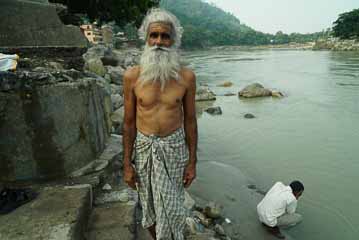
sikh standing

The Camino, a man, his paintings, and Utopia

I’d bumped into him at photographic exhibition in Mudgee, nearly two years ago now.

I knew him and his wife from a monthly dinner group we attended – the Mudgee Food & Wine Society.

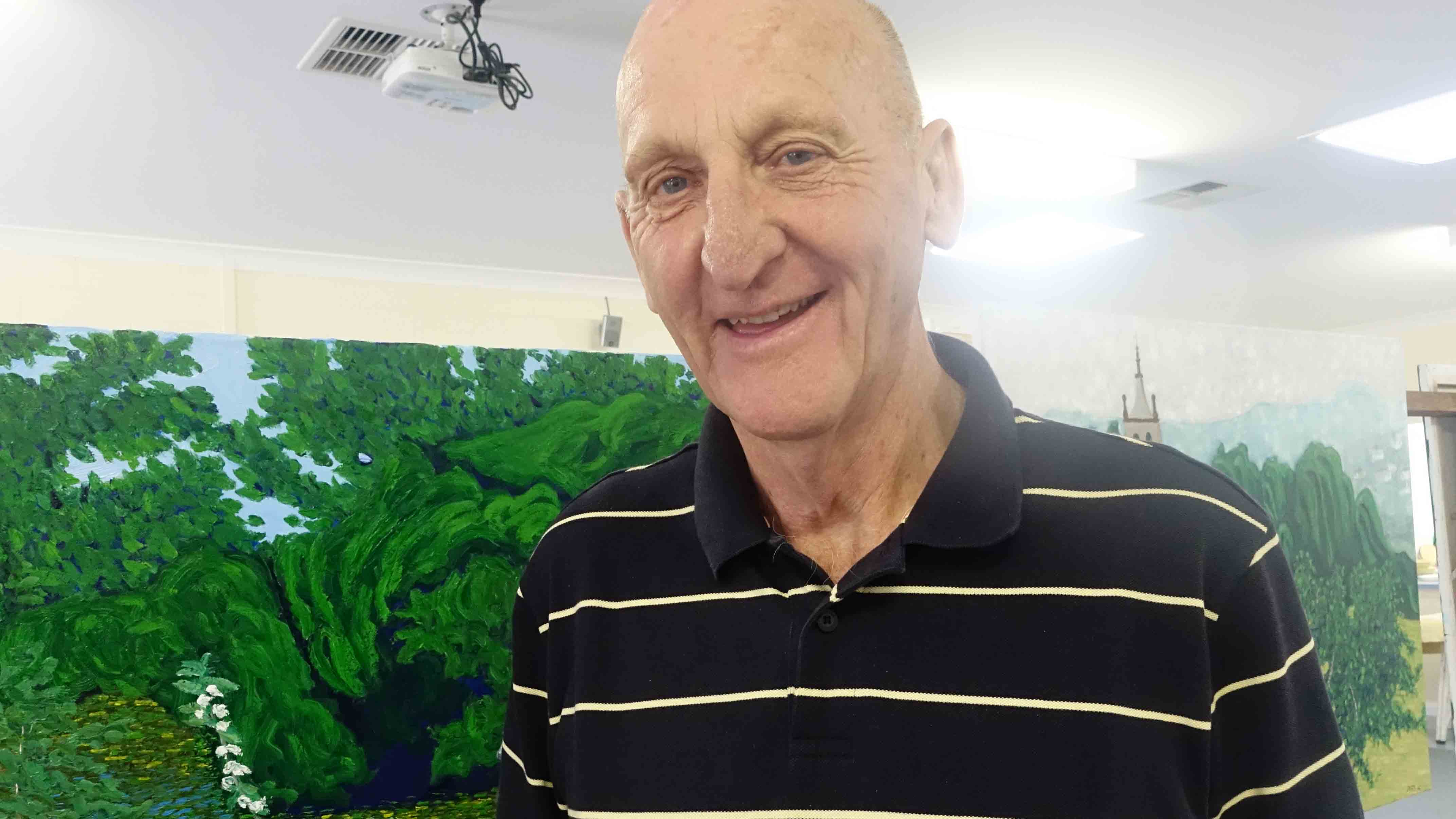
He was tall, elderly (although that word no longer has the meaning it once had for me), and I’d always enjoyed our brief chats. He was a fascinating man – a retired engineer, working with indigenous communities in the far Outback of Australia.

As we stood there in the gallery, looking at the photographs taken by my cousin, he asked me what I’d been up to. I hadn’t attended the last couple of dinners.

I’ve just done a long walk, I told him. In fact I’d just returned from my first Camino.

He was curious. What walk? 

I told him about the Camino de Santiago. He seemed interested, so I kept talking, as you do when you come back from the Camino and you find someone showing even a modicum of interest.

He listened avidly, asked a lot of questions, and then said: You know you ought to write a book.

I have, I told him.

He bought it. And within twelve months he too had walked the Camino.

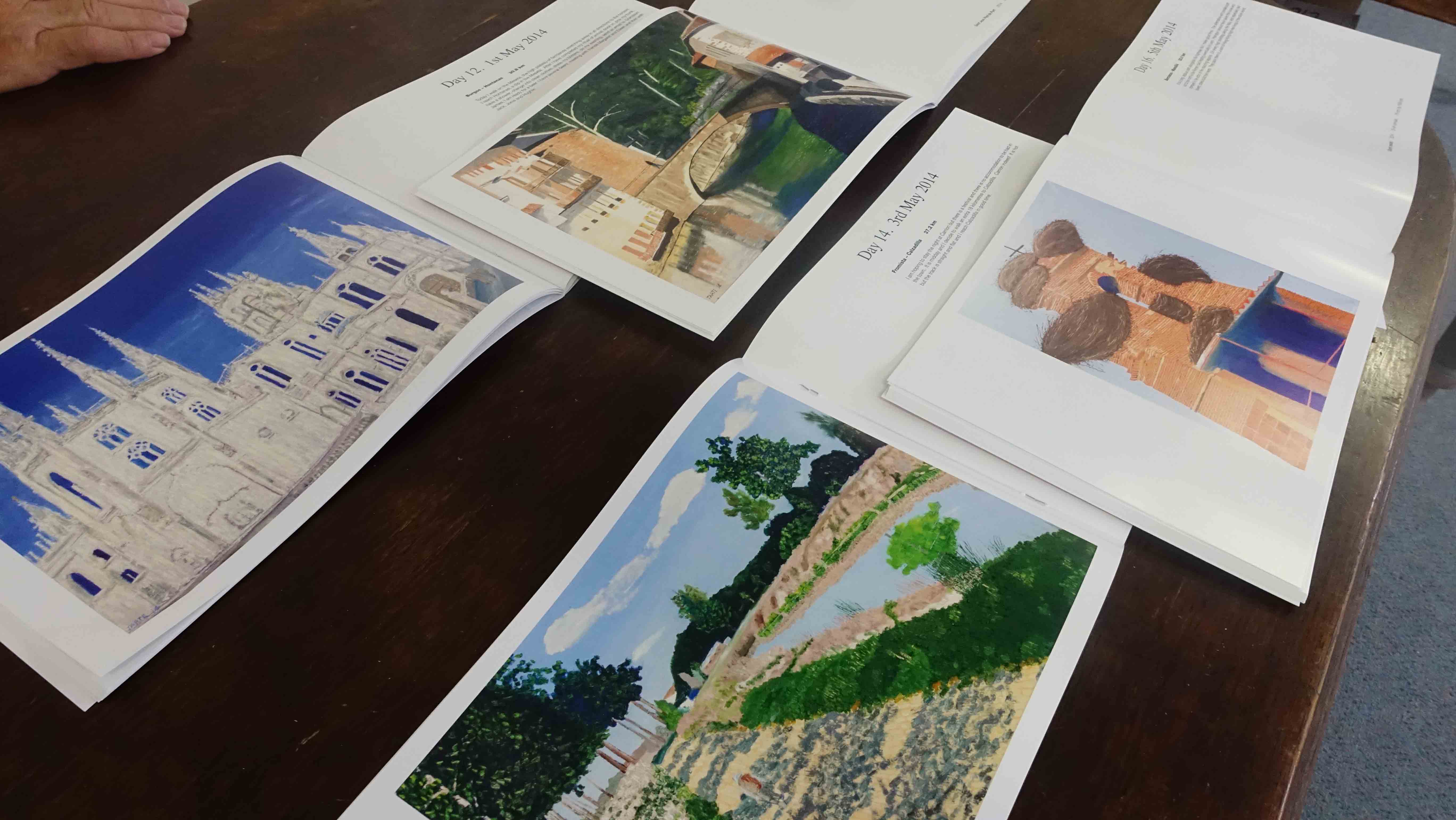
At the age of 72, Michael Tarte walked from St. Jean Pied de Port to Santiago in 29 days, without a rest day. And now he’s planning his next one. Michael MCU This weekend in Mudgee he exhibited a series of paintings he’s since done – one for each day of his walk, plus a painting of St. Jean. Thirty paintings in all.

He’s put them into a book: Camino de Santiago – The Story of a Journey in Paintings.  WS exhibitionbook Book opened I sat down with him and his beautiful wife Anjo yesterday, and we chatted.

He explained that he’d decided to do the paintings before he started the Camino. He took photographs along the way, and when he returned he selected those images that he wished to turn into paintings, and began work.They’re oil on canvas.

As I wandered around the exhibition yesterday, his imagery took me back to those special places with a vivid recall. In his work he’s captured their essence. Which is no mean feat.

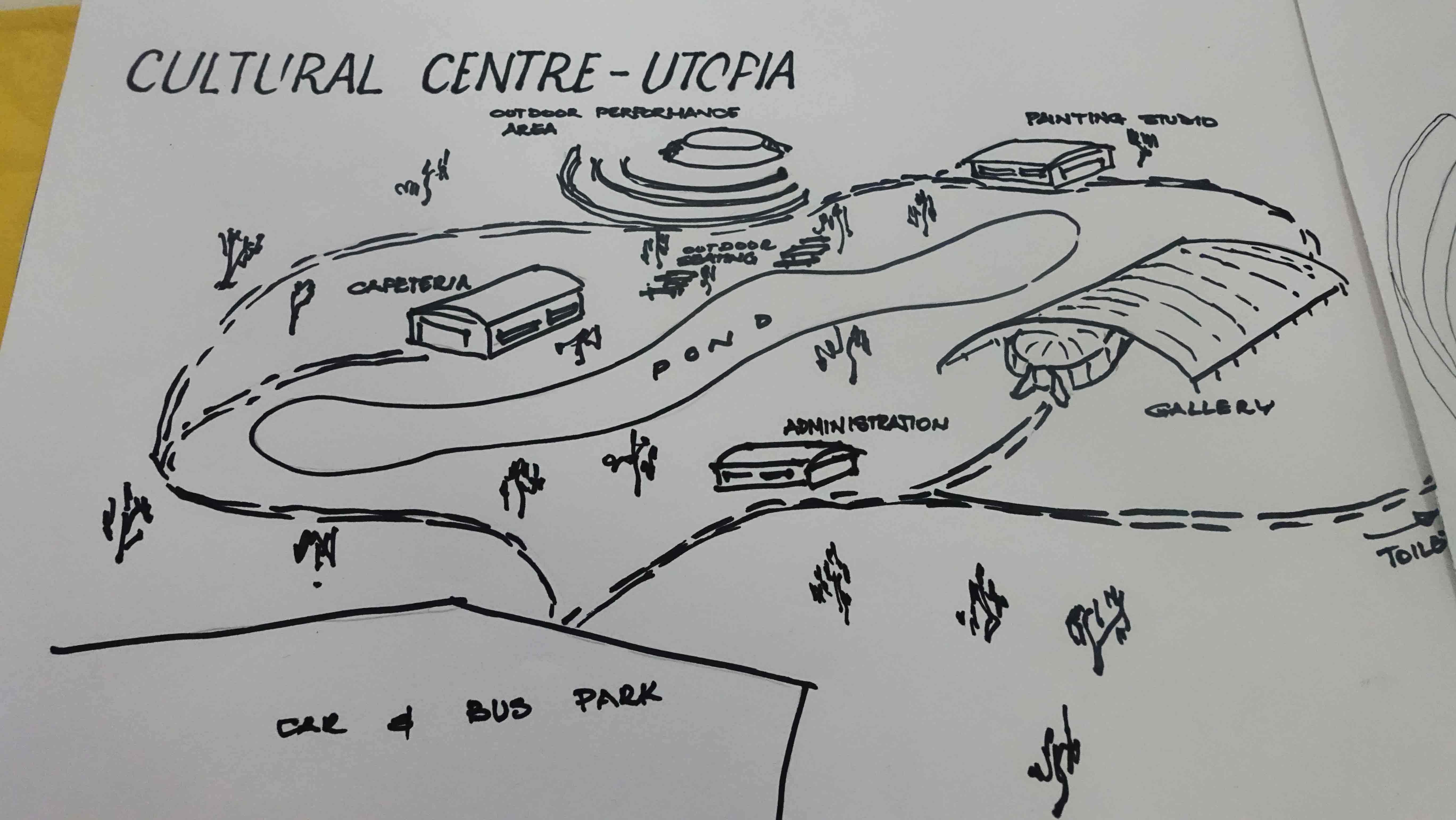
All proceeds of the sale of the book go towards the construction of a Cultural Centre, Art Gallery and Artist Studio complex which he’s helping build for the indigenous community out at Utopia – near Ayers Rock.

Cultural Centre The book is Aus$50 / US$39 / €35.50 + postage.

You can contact Michael direct on: michael.tarte@bigpond.com

I feel proud to have had some small part in Michael walking the Camino. The book will help make more people aware of the pilgrimage route, and that’s a good thing.

He mentioned yesterday that several people had come in, saying they’d walked the Camino too. This is in Mudgee, a small country town in Central NSW, Australia. The Camino’s call has come this far.

Even Jennifer’s mother, Margaret, came in and bought a copy! Jen's mum I walked out of the exhibition yesterday with huge admiration for Michael’s achievement – the walk and the paintings and books. And for the work he’s doing for the aboriginal people in the desert region of our country.

He and his wife Anjo have enormous energy and vitality, and they refuse to allow age to in any way shackle them. They have things to do, and they’re getting on with it. Anjo & michael

Assisi festival ~

I would dearly love to say that this was by design…

That I organised it this way…

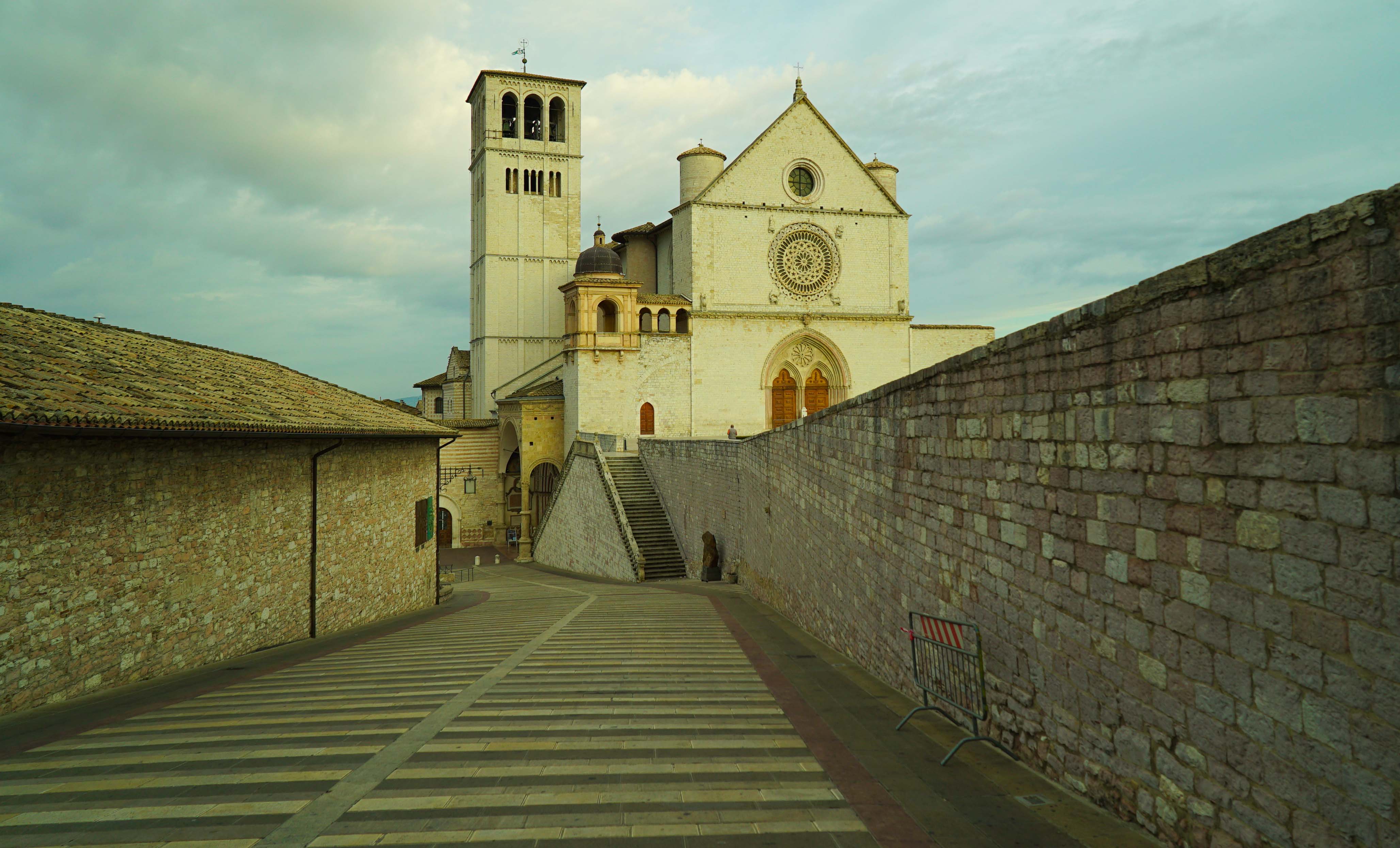
But in checking accommodation for the Via de Francesco tour in Italy, I discovered that we arrive in Assisi on the weekend of a centuries old Spring Festival.

It’s called the Calendimaggio Festival – and it’s an ancient Rite of Spring festival. St. Francis himself was believed to be an accomplished troubadour, and many of the dances and festivities will celebrate the saint.

http://www.annesitaly.com/blog/assisis-glorious-celebration-of-spring/

Last year we finished the Camino Portuguese with the Semana Santa Easter celebrations in Santiago. In September we’ll conclude the Mother Ganga Indian tour with the amazing Ganesh Immersion celebrations on the beach of Mumbai.

And now the Assisi tour will finish with this wonderful Rite of Spring festival.

All meticulously planned, of course!

The tour starts in Florence on April 27th. We still have a few places free. We’d love for you to join us, on what promises to be another wonderful adventure.

Assisi Basilica - @gonetours.com


Guest Post – Julian Lord ~

As many of you might know, Julian Lord (who is a regular on this blog) last year completed another Camino.

Julian walked his first Camino back in 1992, when most of us had never heard of it, and it was nothing like it is today.

He’s since walked several more – each tumultuously, it seems. This last pilgrimage was no different. In fact if anything, it was even more demanding, on many levels.

Here is his guest blog:

~~~~~~~~~~~~

NOT THE END

My 2014 walk was the hardest ever, but at this point I think the worst of it has been after the return.

I’m lingering in the No-Mans-Land of an unfinished pilgrimage, in a manner that is shockingly new to me, and both raw and painful.

Physically, I am simultaneously strengthened and diminished – because whilst my weight is seriously down and my knees far less in pain, my still-healing broken wrist suffered at El Burgo Ranero continues to trouble me and it is a constant reminder keeping me in the then and there of the Camino, not in the hic et nunc of a proper return.

Physically, my motivation for last year’s walk continues to exist – I still need to lose weight ; I still need to build up my muscles ; and that medical need is about 2/3rds done, but the last 1/3rd is still waiting for me, over there, on the Francès.

Practically, the Camino bust my backpack, it bust my boots (and I need the next larger size now LOL), it stole my phone, it stole my camera and virtually all my 2014 photos, and my Staff of 15 years good friendship has just now shivered over nearly its entire length – and yet all of these things simply bring to mind the sheer beauty of that part of the return journey on the Camino that I was able to do, how natural it felt, how proper, so that for the very first time in my career as a Pilgrim of Santiago, I’m feeling myself subjected to the very feeling that I’ve warned so many others about, of feeling “stuck”, over there, yonder on the Camino and detached from the true destination of one’s pilgrimage – Home.

Religiously, last year was a failure. It is quite clearly not insignificant that I found myself unable to perform my ordinary Catholic religious duties at the Cathedral – and I mean physically unable, not religiously – especially given that this physical difficulty has become quite annoyingly persistent on the Sundays.

Financially – LOL what a disaster !!!

Mentally, all I’m doing now is biding my time and trying to kid myself that there’s any other real possibility other than getting back to Santiago to actually complete this Pilgrimage and then to walk back from there to France.

I feel lost – not mentally nor in fact spiritually, but geographically ; as if I’m not where I’m supposed to be, almost as if I’m living my current circumstances as a squatter instead of being where I belong – elsewhere.

I want to walk to the Pyrenees and over them, to France and home, from my favourite city in Spain, and to go and get there all that I lost, all I suffered, and bring it back with me as precious belongings so that I shall at last take them home with me in my heart and body and memory and soul.

I have lost something on the Camino – and I need to go and get it back.

Sus Eia – Sus Eia ; and may God bring me back to what I need

KODAK Digital Still Camera

Photo Camino – draft cover art

My new book, PHOTO CAMINO, is now almost finished. It’s running at just under 45K words, and will be ready for publication in less than two weeks now.

Here is the blurb:

“Before walking my first Camino, I gave a lot of thought to my photographic needs and the challenges ahead. I’ve been taking photos professionally for more than forty years, yet even so I made some big mistakes on that first pilgrimage. I’ve since walked another Camino, and now I wish to pass on what I’ve learnt from those experiences.”

In Photo Camino, renowned Australian film director and photographer Bill Bennett, author of the Camino memoir The Way, My Way, discusses such issues as:

  • The best camera to take
  • The major challenges facing a photographer on the Camino
  • The pros and cons of using your smartphone
  • Power management and security of your gear and images
  • How to best take landscape shots
  • How to protect your camera from bad weather
  • How to blog and post to social media
  • How to use your camera to enrich your Camino experience
  • The twelve Classic Camino shots and how best to take them
  • Bill’s Top 100 Tips for photography on The Way

Complete with dozens of stunning photographs, Photo Camino is required reading for anyone wanting to take photos on the Camino de Santiago, or for those that simply want to discover the wonder of this ancient pilgrimage route.

And here is the work-in-progress cover art –

Photo Camino draft cover.1

Guest Post – Angie ~

I have two guest posts which I’ll be posting over the weekend – the first from Angie, who accompanied us on the Portuguese Camino Tour last year.

She and her husband Ken have become solid friends. We have a big year ahead with them this year – they are coming on both the Assisi Tour in April / May, and the Indian Tour in September.

Julian Lord, the Quintessential Pilgrim, has also sent me a guest blog, which I will put up late today.

Here is Angie’s blog…

~~~~~~~~~~~~

“It was meant to be!” we all agreed as we discussed the Camino Portuguese last year. The words were uttered a couple of days ago when both Donna and Greg, our Camino friends came for dinner at our new home in Marcoola at the Sunshine Coast, Queensland.

Donna and Greg visited us a few times when we lived at Tannum Sands in Central Queensland. Since our very memorable pilgrim walk in Portugal and Spain the friendship continues to flow in a natural and easy way.

Putting the ‘meant to be” into context is about a particular group of people who came together to walk the Camino Portuguese organised by Bill and Jennifer. Since our walk along the Way there has been a lot of communication through blogging, Facebook, emailing, phone chatting, and social get togethers. And more excitingly we genuinely like each other!:)

There were wondrous connections and bonding of friendships on the Camino. It was evident very early on that we were all individuals from diverse backgrounds with varied personalities and with different reasons for walking the Camino.

We all had our own unique physical, emotional, mental and spiritual experiences on the Way. As we walked together, dined together and drank together, we got to know each other and this I believe has formed the basis of strong and lasting friendships.

Individuals in our group were the coming together of like-minded beings with like-minded energies engaging in a like-minded walking experience. There was without a doubt an acceptance of everyone. As walked together we not only chatted and enjoyed lots of laughs, we also took on the role of confidential listener and supporter.

As I reflect on my role as a pilgrim in this group it was about respecting and trusting and just knowing that what was said on the Way would always be private. There were days we enjoyed companionship and some days when there was a preference to be solitary. Interestingly and not surprisingly a relaxed balance evolved, unsaid and accepted by all.

Having said all this, it makes sense that we as a group have stayed together as friends still enjoying laughs, still enjoying meals and drink when possible, given our locations in the world and still talking through phones and social media.

So it was meant to be that we all came together as a group to walk and experience the Camino. What is even more exciting is that we want to walk together again with Bill and Jennifer and those of us who can and are able to walk the Italian Assisi have committed to the tour.

Why am I committing to such a walk with so many high inclines and steep declines? Obviously the sore feet, the horribly stingy blisters and exhaustion is a long and distant memory.

The individuals who come on The Via Di Francesco Tour in April/May will be another ‘meant to be’ group and I look forward to catching up with my like-minded friends from the Camino Portuguese and getting to know new like-minded friends in Italy.

Maybe I need to confess right now that a reason for me walking again is that I have been bitten by the Camino bug too, just like Jennifer and my gosh I have a great sense of joy that I have been bitten! And just like Jennifer, I only realised this when I felt the great need to walk in Italy.

Bill: there are some spots available on the Assisi tour if you’re interested. 
Contact me on bill@gonetours.com

(below – Angela & Donna)

Angie & Donna

Mudgee walk – 10km route…

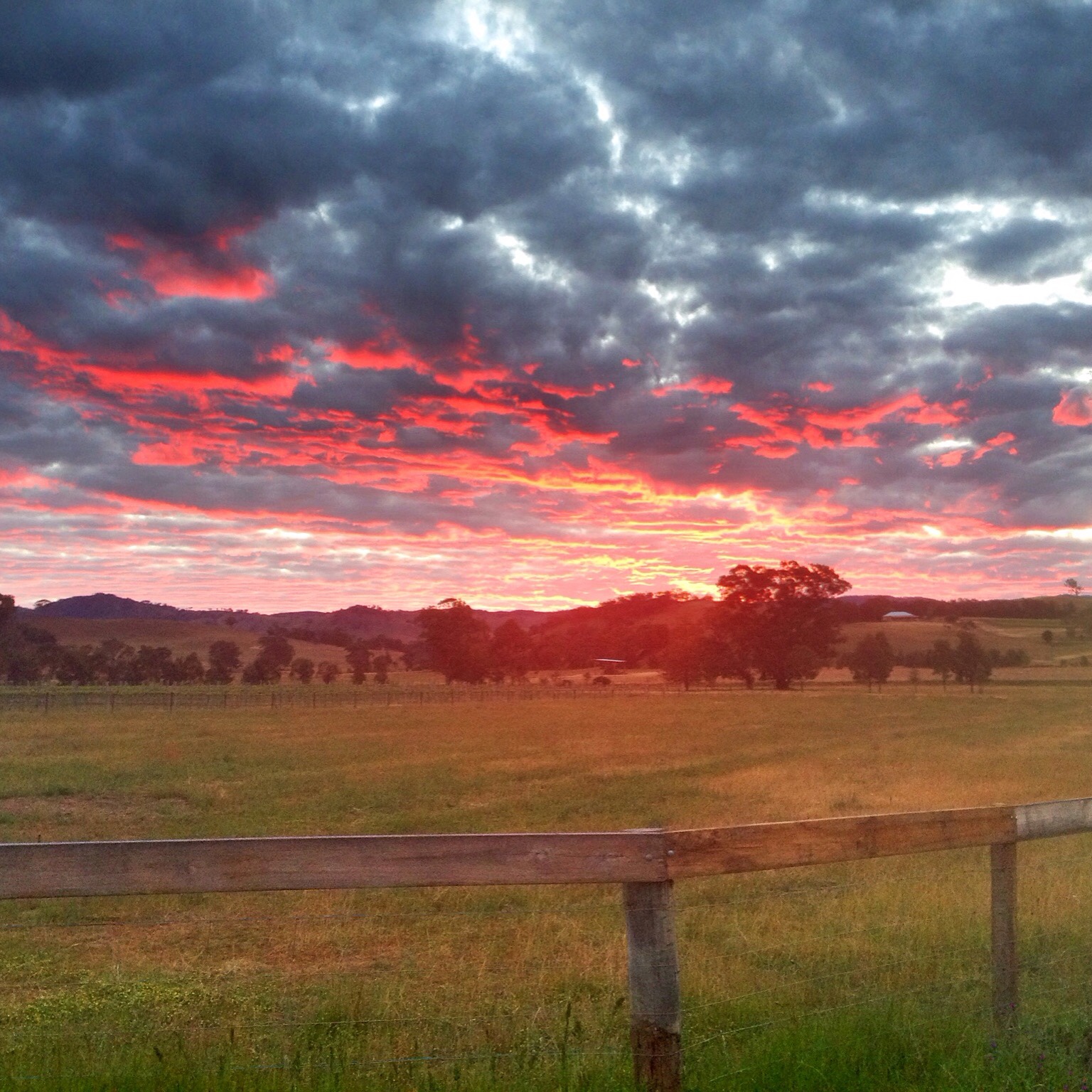
When I’m short of time, or I’m feeling unmotivated, I do a 10 km walk – which takes me out through the vineyards around Mudgee.

My 15 km walk follows the same route – I just go further out to one of the wineries.

This morning I was short of time so I headed out just on sunrise –

Birds on wire

I walked past the town’s two major churches – the Catholic church…

Church 1

And the Anglican church.

Church 2

Opposite is the town’s old cinema, which has recently been re-opened and is now screening movies on the weekend.

Regent

I then head out past Lue Rd, past the town’s racetrack –

Clock Racetrack ws Race track stand

As I begin walking up a hill I pass a luxury resort –

Resort sign Resort entrance

And an upscale restaurant and wine / cheese tasting venue.

Cheese factory

At the top of the hill there are signs and maps detailing all the tourist trails and wineries…

Tourist sign wine country

And then at the 2.5 km mark I turn down Henry Lawson Dve – there’s that name again – and walk out of town past some vineyards, cyclists passing me as I walk…

Horse bathtubs Cyclists

In amongst the vineyards are small farms –

house distant road past winery

And a sign that advertises Mudgee’s only Ice Wine. I find it amazing that in the bush, which is what we Australians call our countryside, there could be a winery making ice wine. Ice wine

At the 5 km mark there’s a wonderful old windmill.

windmill & gate


I then turn around and walk back home.

I do this walk most days – sometimes I do the 15 km walk – and I have people wave to me all the time. I guess I’m a regular.

Some stop and ask me, concerned, if I’d like a lift. I laugh, thank them, and tell them I’m training. Confused, they drive off.

It’s a very beautiful walk, and even though I’ve now done it hundreds of times, literally, I never tire of it. I always see something new when I walk.

winery & tree

Old people are frail, evidently…

It’s 6am and I’m about to go out on my walk and I did a quick check of the papers.

A story caught my eye.

It was about how much sleep we need, broken down into age categories.

I’m 61 yrs old – evidently I need between 7-9 hrs sleep a night.

If I got between 7-9 hrs sleep a night I’d be doing jigs down the street.

I get between 5-6 hours a night. Last night it was 5 ½ hrs sleep. And now I’m about to walk 14 kms.

Here’s the thing though that got my goat – take a look at the graphic below, the picture that accompanied the news story. Take a look at the pictures at the bottom of the graphic, and how people 65+ are pictured.

They’re pictured with a walking stick!

Is that the common representation of people over the age of 65? That they’re so old and frail they need a walking stick?

Why not give them TWO sticks and show them climbing up the Pyrenees!

Screen Shot 2015-02-06 at 6.11.49 am