Theme of Indian tour ~

Jennifer and I are getting ready to travel again – we leave for India next Tuesday.

We’ll spend nearly two weeks doing a pre-tour scout, up to Amritsar and Dharmsala sorting out final details, before returning to Delhi to meet our guests when they arrive.

Jennifer yesterday asked what the “narrative” of the tour should be.

It was an interesting question.

The narrative of the Assisi tour was the life of St. Francis.

I thought about this and figured the narrative of the Mother Ganga tour should be –

Many many Gods.

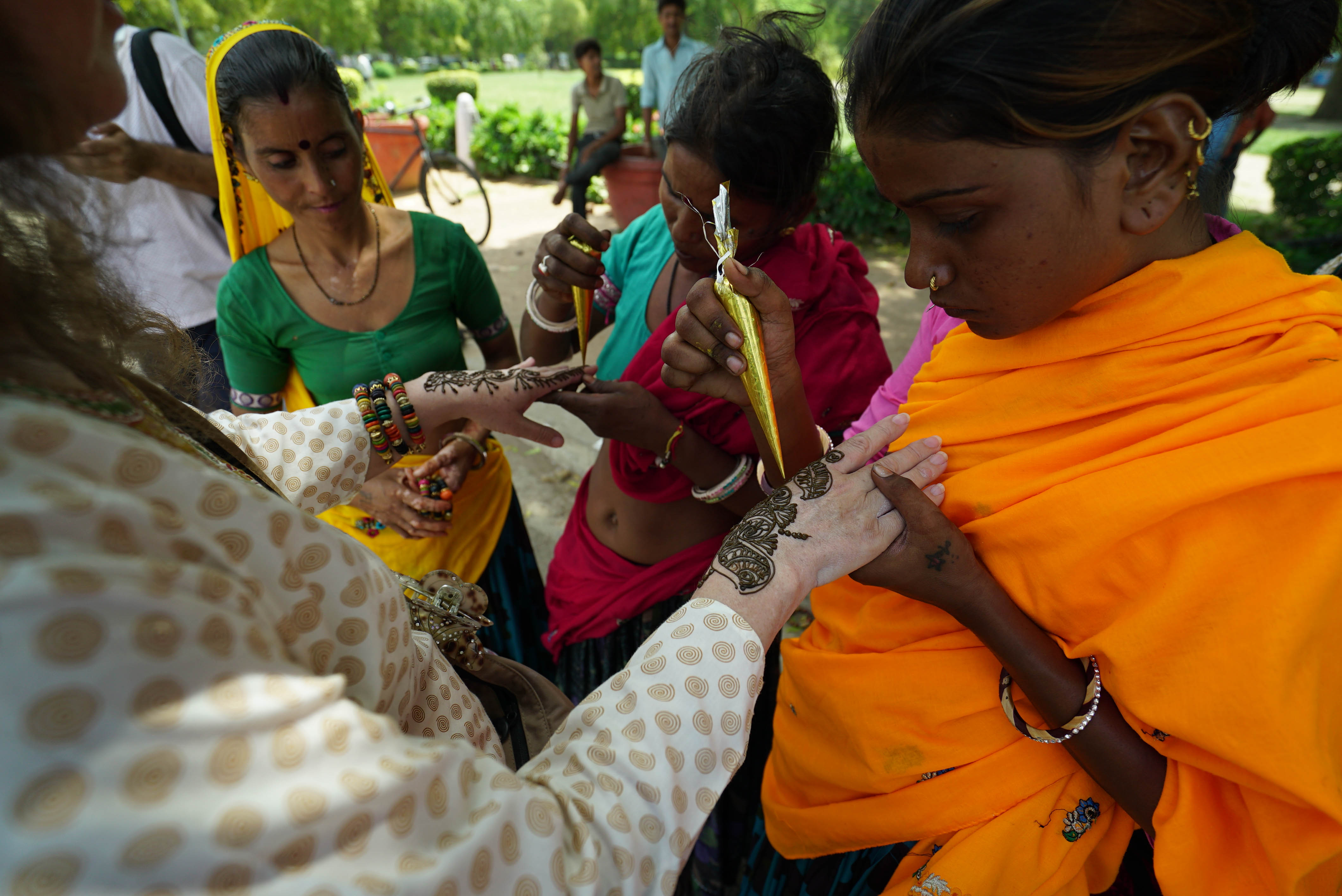
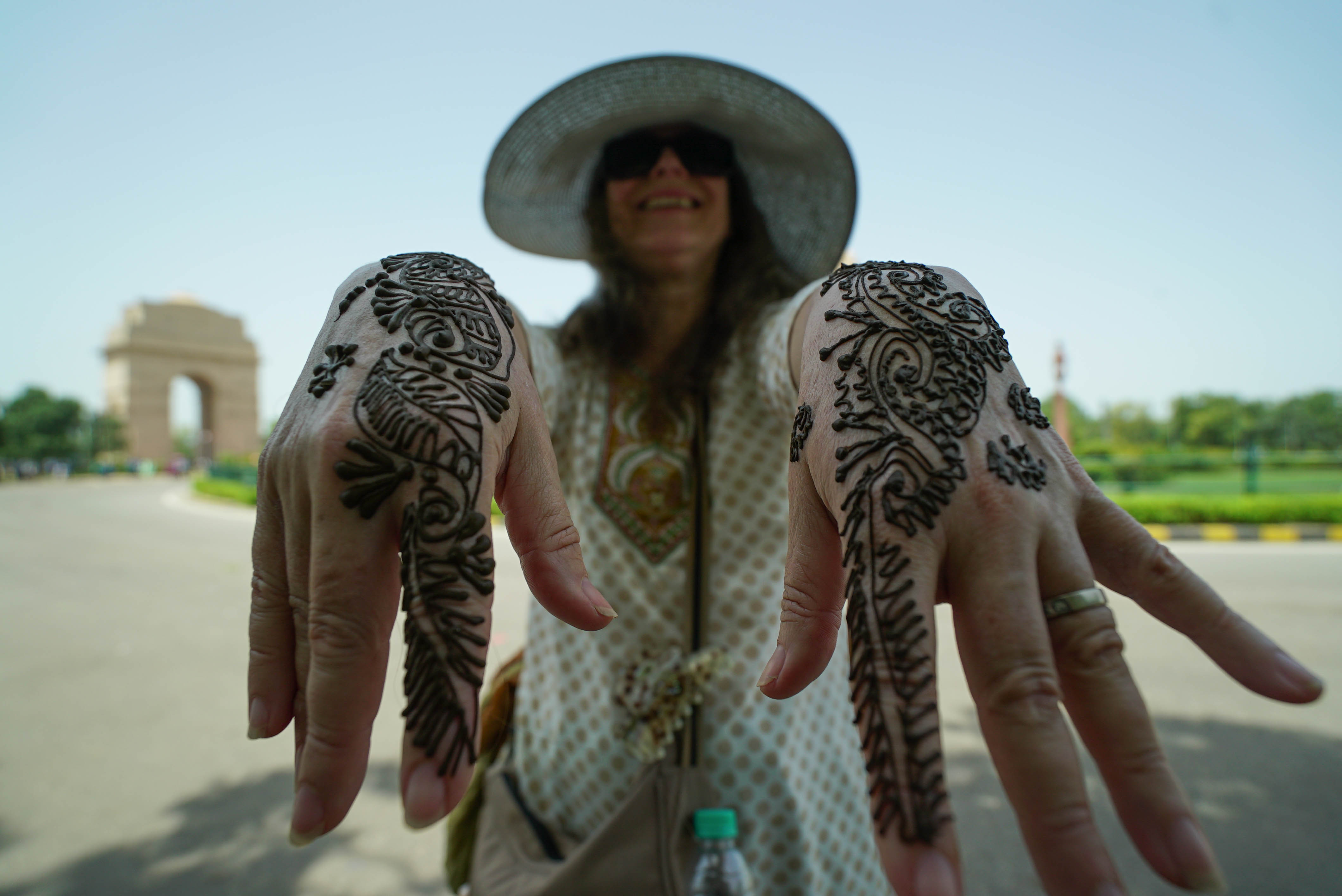
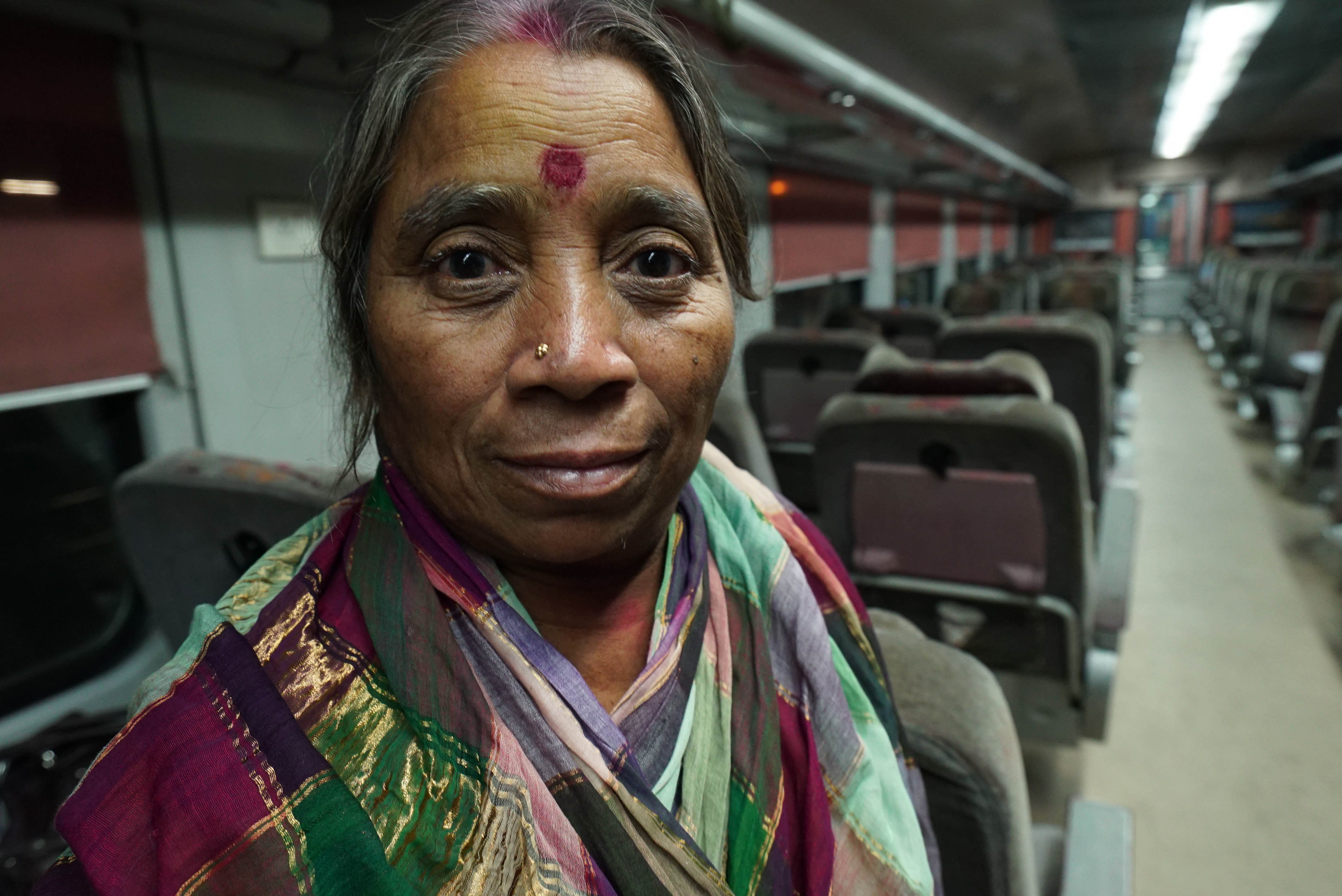
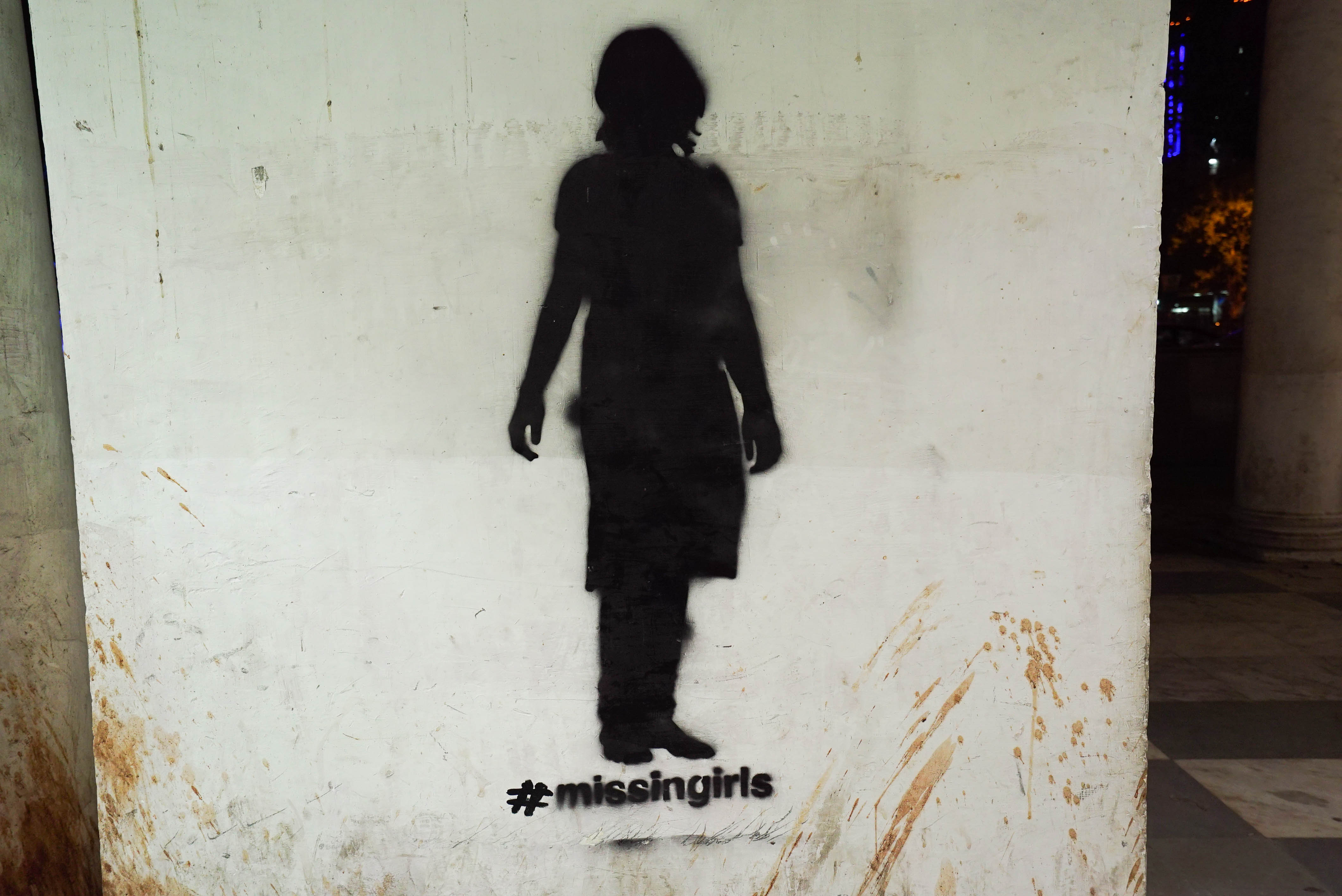
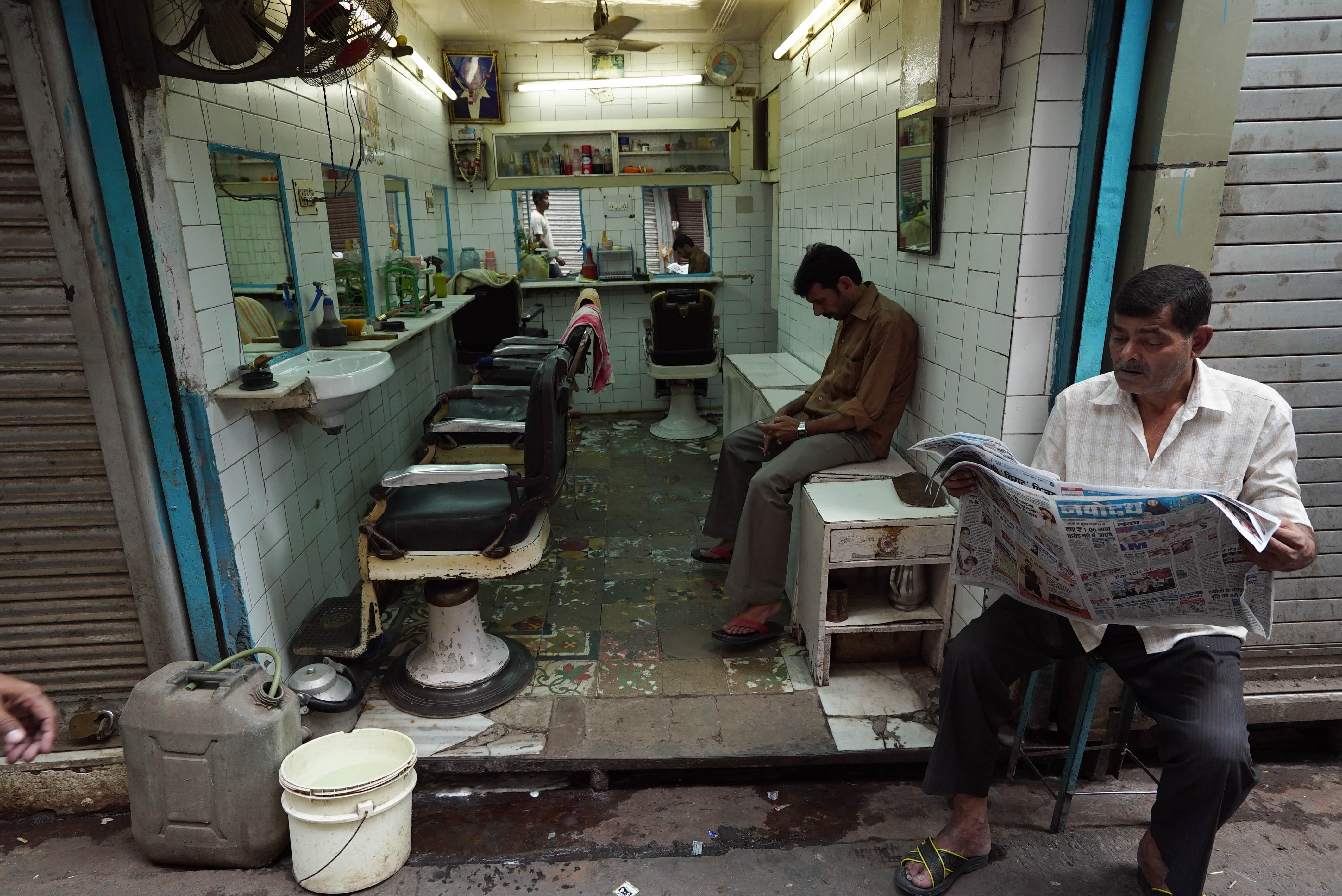
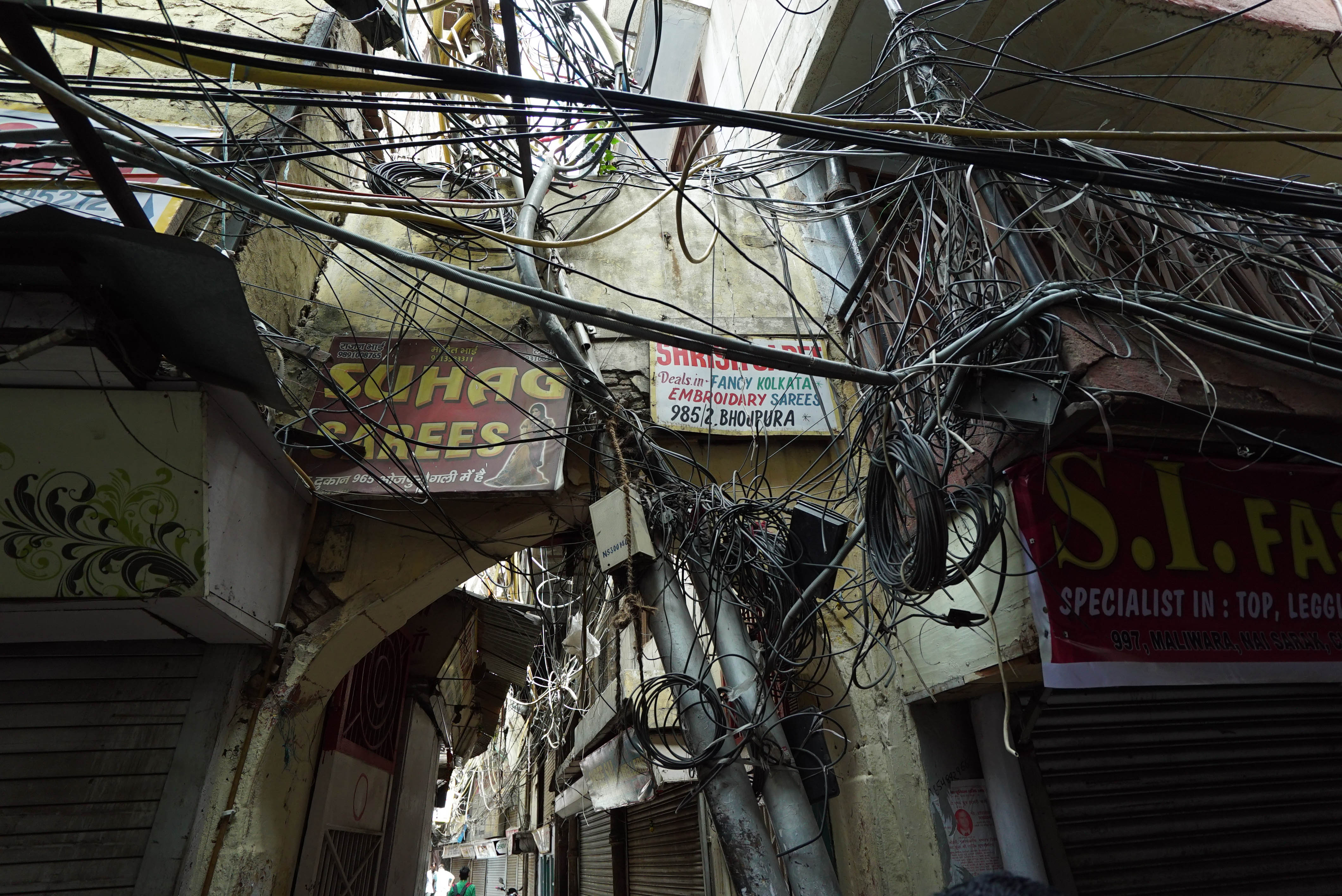
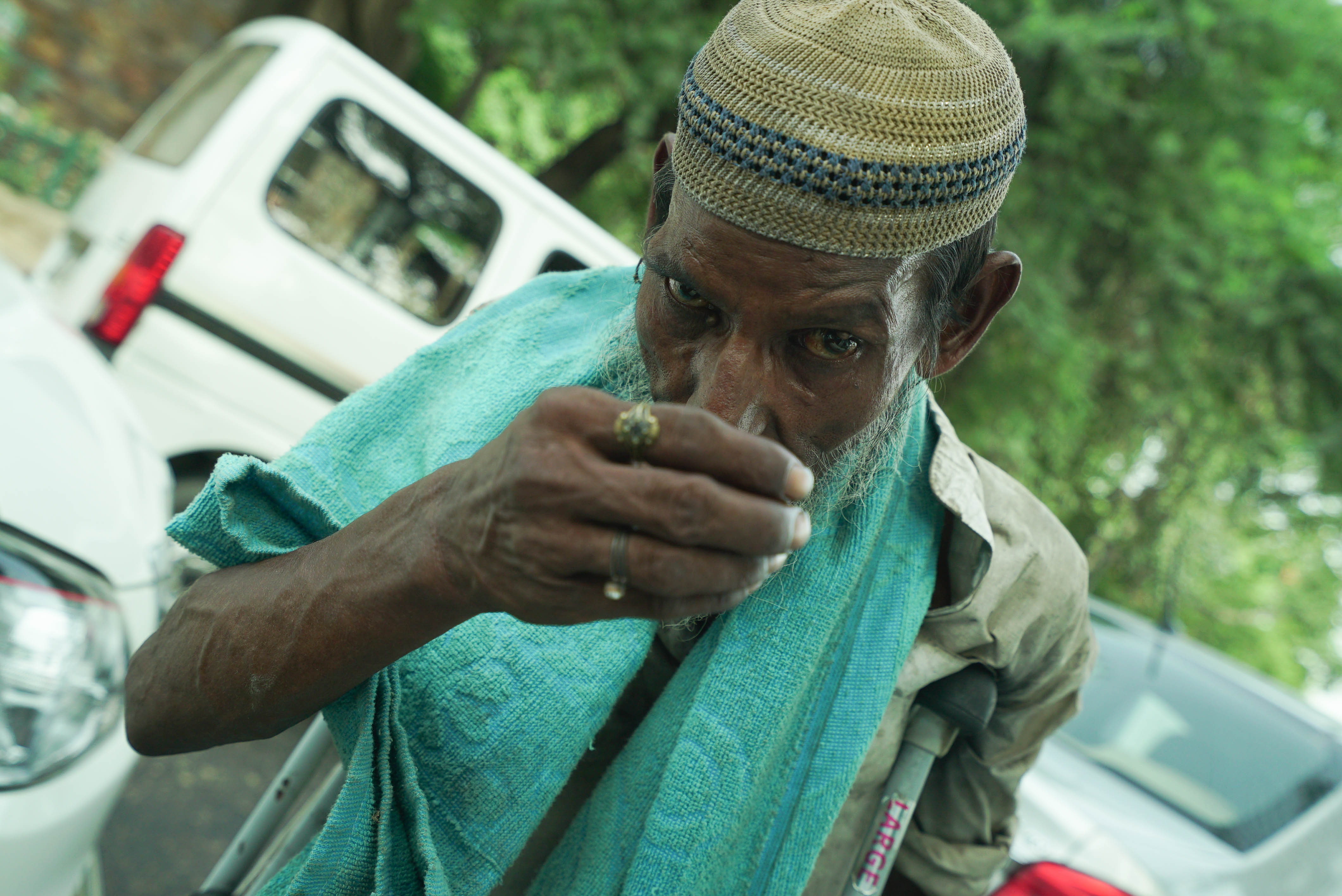
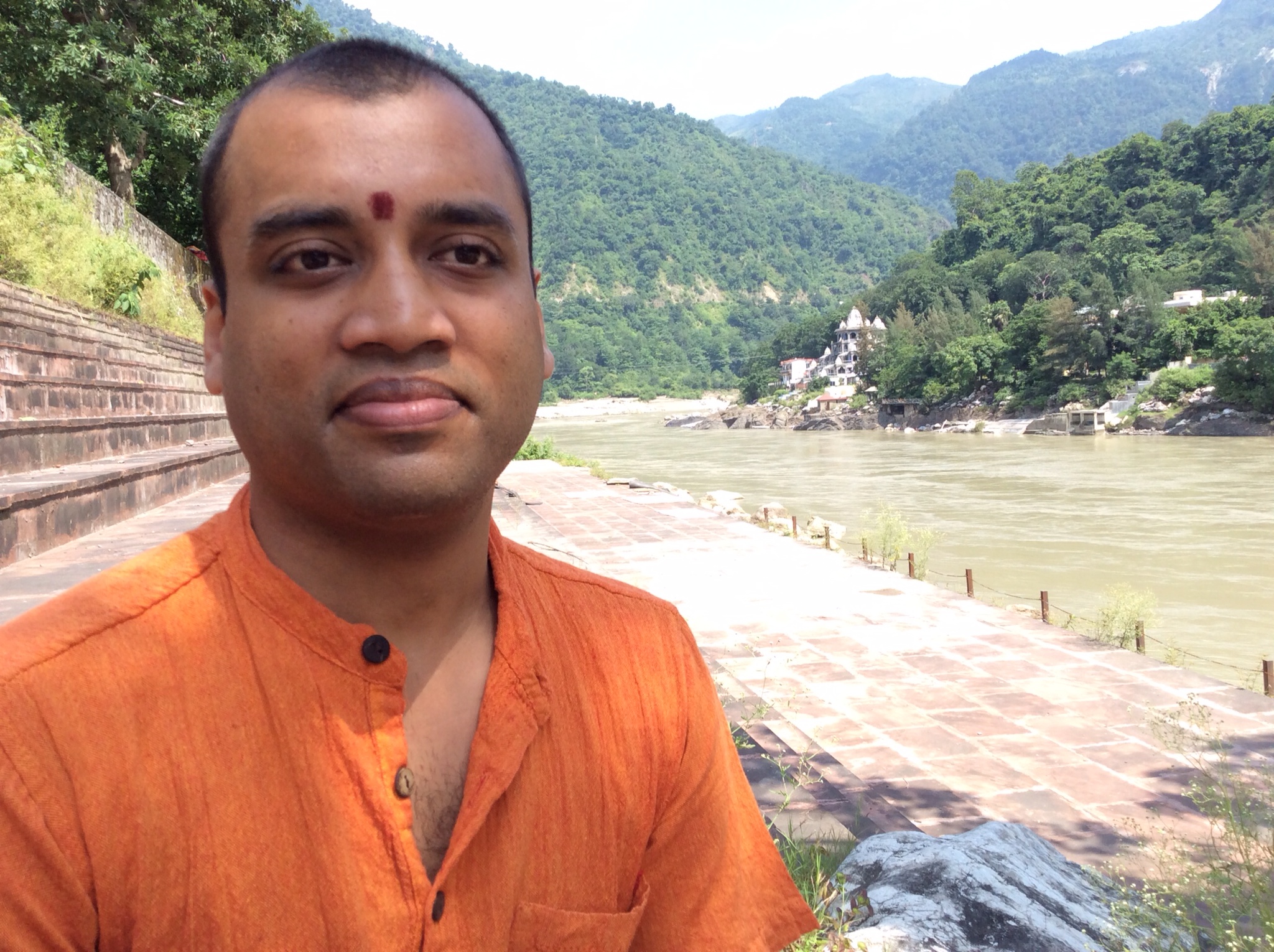
I had put this as a title on one of the photos on our Gone Tours website. And it seems appropriate because we will be experiencing the many faces of Hinduism, Jainism, Buddhism, Sikhism, and Islam over the two weeks of the tour.

By the way, we’ve had some last minute withdrawals from the tour because of personal illness – so there are a couple of vacancies if you want to jump in and join us.

Vishnu

The Camino taught me ~

Gratitude.

I was grateful for so many things.

I was grateful for a bed at night, I was grateful for a good meal, I was grateful when my feet didn’t hurt, when my knee wasn’t sore, when it didn’t rain.

I was grateful for friendship, for acts of kindness, for moments of beauty and moments of joy.

I came back from the Camino and I noticed something strange. I found myself saying “thank you” a lot.

I noticed this in emails.

Instead of signing off: Kind regards, or Best wishes, I was signing off: Many thanks, or simply Thank you.

This was more than just a superficial change of an email protocol, I was doing this unconsciously because I did genuinely feel appreciative.

I felt grateful.

Gratitude is a state of grace that is often deemed unacceptable in our current world. Like humility, it is often seen as a form of weakness, as a point of vulnerability, as being uncompetitive. It’s often seen as a state of supplication, and hence as a personal failing.

Gratitude and humility are anything but forms of weakness or supplication.

In their highest and most noble forms they speak of wisdom, of grace, of knowing.

During my recent trip to America, I had a conversation with my workmate Pieter de Vries. He told me he often got very annoyed when he sent photos to people via email and they didn’t respond with a simple thank you. He said it often took him quite a long time to prepare the shots, and yet he got back no acknowledgment of the effort and care he’d taken to send them to someone.

I too see this all the time.

I recently prepared a To Do list for a friend who is about to go overseas. It took me quite a while to prepare this list. Nothing back. No thank you. That’s okay. To do an act of kindness is reward enough. There actually doesn’t need to be a response to validate that kindness. In seeking one, you undercut your generosity of spirit.

But sometimes it’s nice when someone says thank you.

The Camino taught me gratitude.

It taught me not to expect things.

It stripped away any sense of entitlement.

For that, I’m grateful.

wpid-Photo-10052013-848-PM.jpg

Teaching of Ignorance

I don’t often post articles from newspapers, but this piece below, which I read in the NY Times just now, really hit home with me. 

I have been saying on this blog for yonks that science knows only a minuscule of what’s really going on. 

Take a read – it’s interesting…

The Case for Teaching Ignorance

Photo
 

Credit Post Typography 

IN the mid-1980s, a University of Arizona surgery professor, Marlys H. Witte, proposed teaching a class entitled “Introduction to Medical and Other Ignorance.” Her idea was not well received; at one foundation, an official told her he would rather resign than support a class on ignorance.

Dr. Witte was urged to alter the name of the course, but she wouldn’t budge. Far too often, she believed, teachers fail to emphasize how much about a given topic is unknown. “Textbooks spend 8 to 10 pages on pancreatic cancer,” she said some years later, “without ever telling the student that we just don’t know very much about it.” She wanted her students to recognize the limits of knowledge and to appreciate that questions often deserve as much attention as answers. Eventually, the American Medical Association funded the class, which students would fondly remember as “Ignorance 101.”

Classes like hers remain rare, but in recent years scholars have made a convincing case that focusing on uncertainty can foster latent curiosity, while emphasizing clarity can convey a warped understanding of knowledge.

In 2006, a Columbia University neuroscientist, Stuart J. Firestein, began teaching a course on scientific ignorance after realizing, to his horror, that many of his students might have believed that we understand nearly everything about the brain. (He suspected that a 1,414-page textbook may have been culpable.)

As he argued in his 2012 book “Ignorance: How It Drives Science,” many scientific facts simply aren’t solid and immutable, but are instead destined to be vigorously challenged and revised by successive generations. Discovery is not the neat and linear process many students imagine, but usually involves, in Dr. Firestein’s phrasing, “feeling around in dark rooms, bumping into unidentifiable things, looking for barely perceptible phantoms.” By inviting scientists of various specialties to teach his students about what truly excited them — not cold hard facts but intriguing ambiguities — Dr. Firestein sought to rebalance the scales.

Presenting ignorance as less extensive than it is, knowledge as more solid and more stable, and discovery as neater also leads students to misunderstand the interplay between answers and questions.

People tend to think of not knowing as something to be wiped out or overcome, as if ignorance were simply the absence of knowledge. But answers don’t merely resolve questions; they provoke new ones.

Michael Smithson, a social scientist at Australian National University who co-taught an online course on ignorance this summer, uses this analogy: The larger the island of knowledge grows, the longer the shoreline — where knowledge meets ignorance — extends. The more we know, the more we can ask. Questions don’t give way to answers so much as the two proliferate together. Answers breed questions. Curiosity isn’t merely a static disposition but rather a passion of the mind that is ceaselessly earned and nurtured.

Mapping the coast of the island of knowledge, to continue the metaphor, requires a grasp of the psychology of ambiguity. The ever-expanding shoreline, where questions are born of answers, is terrain characterized by vague and conflicting information. The resulting state of uncertainty, psychologists have shown, intensifies our emotions: not only exhilaration and surprise, but also confusion and frustration.

The borderland between known and unknown is also where we strive against our preconceptions to acknowledge and investigate anomalous data, a struggle Thomas S. Kuhn described in his 1962 classic, “The Structure of Scientific Revolutions.” The center of the island, by contrast, is safe and comforting, which may explain why businesses struggle to stay innovative. When things go well, companies “drop out of learning mode,” Gary P. Pisano, a professor at Harvard Business School, told me. They flee uncertainty and head for the island’s interior.

The study of ignorance — or agnotology, a term popularized by Robert N. Proctor, a historian of science at Stanford — is in its infancy. This emerging field of inquiry is fragmented because of its relative novelty and cross-disciplinary nature (as illustrated by a new book, “Routledge International Handbook of Ignorance Studies”). But giving due emphasis to unknowns, highlighting case studies that illustrate the fertile interplay between questions and answers, and exploring the psychology of ambiguity are essential. Educators should also devote time to the relationship between ignorance and creativity and the strategic manufacturing of uncertainty.

The time has come to “view ignorance as ‘regular’ rather than deviant,” the sociologists Matthias Gross and Linsey McGoey have boldly argued. Our students will be more curious — and more intelligently so — if, in addition to facts, they were equipped with theories of ignorance as well as theories of knowledge.

Instinct, intellect, intelligence & intuition ~

In preparing for my filming in India after the tour, I went onto a website for a Hindu Swami who has an ashram outside of Bangalore.

His name is Sri Paramahamsa Nithyananda, and I did an interview with one of his followers last year – a former UK banker who has now become a swami in his own right.

In perusing the website – http://www.nithyananda.org – I came across this interesting article about the differences between instinct, intellect, intelligence and intuition.

INSTINCT, INTELLECT, INTELLIGENCE, INTUITION 

We all use a mix of instinct, intellect, intelligence and intuition to handle our external and internal environment. Basically, all these terms refer to the same energy working at higher and higher levels of consciousness.

When intellect is purified, it becomes intelligence. When intelligence is further purified, it becomes intuition. The more consciousness you are able to bring into your life, into your responses, your decisions, the higher the chance there is that you are operating at the level of intellect or intelligence.

Are you entirely aware of what goes on inside your head? Our interactions with ourselves and the world are always a mix of conscious and unconscious perceptions. If the number of unconscious perceptions or actions are greater than your conscious perceptions or actions, it means you are operating at the level of instinct.

If your conscious and unconscious processes are more or less equal, you are operating at the level of intellect. If your conscious process is faster than your unconscious process, you are using intelligence. When you operate totally out of awareness, you make the leap to intuition.

All of us use all these processes at different times. Moreover, they are not clearly demarcated , but flow into one another. It is simply a process of greater and greater refinement of the same energy, greater and greater awareness being brought in when handling the same energy.

Intellect is what you normally use when making your decisions. Intellect uses only logic to act. It does not know any other language. Intelligence is more creative, more constructive. It knows how to respond to life moment to moment, how to be awake to the challenge of the moment.

Intelligence is aware of the situation, it can alter the answers according to the demands of the moment. Intuition is when the decision simply happens as a revelation! It happens from the energy of your being, not from the space of the mind.

Meditation brings in the awareness to go from intellect to intelligence to intuition. With meditation, you go beyond the mind, into the space of just being, where understanding and action both happen spontanteously.

wpid-Photo-20140913132319.jpg

Healing

I had my family reunion this past weekend.

We had a great time in Stanthorpe.

They come from the rational / empirical / scientific world.

They are vets and doctors and dentists and social workers and one is a remarkable policeman who deals with issues such as domestic violence, mental health problems, alcohol and drug dependency and so forth.

In other words, they are all healers, in one way or another.

And they are all sceptics, when it comes to psychic healing.

I told them that I had been to two doctors to fix my persistent cough – a cough that had lingered for quite a few months. I had taken two different types of antibiotics, and still the cough had persisted.

And then I began coughing up blood, and the next day I met Michael Tamura, the psychic healer at Mount Shasta.

Michael fixed my cough.

He went into my energetic field, he found stuff that was preventing me being “whole,” and with my permission he cleared it.

Michael sent me an email overnight. I spoke with him today and he’s allowed me to post part of it here. You might find it interesting. I had asked him if healing could be done remotely…

Yes, healing can be “done” remotely.  In fact, healing already is and therefore not bound by time or space.  Healing essentially is our realization that we are whole.  So, it comes whenever we see the truth rather than be convinced of a lie or illusion we hold in our mind.
When I “gave” you that healing in our home, waving my hands around and all that (that’s the Italian part of me! Hahaha…. I use my hands to talk!), I merely helped you see a bit more of the truth and you realized a bit more of your wholeness. 
What does it mean to “move some unhealthy energy or pattern out”?  It just means that when you realize that what you’ve been suffering from was due to seeing and thinking that what wasn’t true (a lie or illusion) was true and real, then, you naturally drop that way of thinking and the illness or condition disappears.
It’s exactly the same as waking up from a bad dream – you realize that it was nothing more than a dream conjured up in your own mind somehow and once you know that, you know with certainty that it wasn’t real and so it didn’t really exist.  Yet, when you are dreaming something, it truly feels, looks, tastes, smells and sounds real – until you wake up.
When I “gave” you that healing, I was just pointing out the “mini-dreams” in your mind that you were dreaming about and helping you wake up from them – that’s the “clearing out other people’s energy” part of the “healing”.  

When a person decides that he no longer sees a purpose for being ill, but doesn’t quite have the certainty in himself to wake himself up from that particular bad dream, he’ll seek help from something or someone that represents that certainty for him so that he can wake up from that bad dream and be well.  

That something or someone may be medicine, herbs, surgery, a medical doctor, a therapist, a spiritual healer, whatever.  It’s whatever helps him have faith that he can be healed.  

The “healing” is there always within you at all times – no one can “give” that to you.  But, if you are willing, someone or something can give you a “good kick” in the right direction, so to speak!

Michael Tamura-5

Here is Michael’s book – YOU ARE THE ANSWER.

Stanthorpe / known for ~

Jennifer and I are about to drive north to a small country town called Stanthorpe, which is close to the border of Queensland. It’s an 800km drive, which we’ll do today.

Stanthorpe is best known for its apples, because it is a cold climate town. And for those of you in the northern hemisphere sweltering through a hot summer, here in Australia it’s winter – and it’s been very very chilly.

Stanthorpe will be  freezing!

We’re driving up there because each year, we have a family reunion there.

My family lives in Brisbane, Queensland. Brisbane is about 1200kms from Mudgee – and so each year they drive south, we drive north, and we meet in Stanthorpe.

Why Stanthorpe?

Because Stanthorpe, apart from growing apples, also grows wine.

I mean grapes.
For wine.

They have some wineries, which in the foreseeable future will not in any way constitute a threat to the Cote d’Or in Burgundy, or the Medoc, or even the Rhone River Valley.

Or Central Otago.
Or the Russian River Valley.
Or Oregon
Or Chile.
Or even Mudgee, come to think of it….

The wineries in Stanthorpe are…

Did I mention they grow apples?

The wineries aren’t really the point. The point is Anna’s.

Anna’s is an Italian restaurant  in Stanthorpe, and Anna’s claim to fame, over and above its culinary excellence (as excellent in fact as Stanthorpe’s wineries) is that it has an evening buffet.

A buffet is a genteel word for “ALL YOU CAN EAT!!!”

Yes, my family drives 400kms – and I drive 800kms – to a place where we can pig out.

Seeing my family at a buffet is a singularly sobering experience – that is, if you’ve managed to get drunk on Stanthorpe wine, which is like getting drunk on Drano.

Seeing my family at a buffet is not something I would ever share on Facebook. Zuckerburg would ban me.  It’s not pretty.

My family believes in trying, each year, to send Anna’s broke.

The plates they give my family simply aren’t big enough. My family one year asked if they could bring wheelbarrows. And shovels.

At the end of the weekend as they drive away they have to use seat-belt extenders. Like they give fat people on planes.

And when they get bored, my family has been known to engage in a food fight or two. The food is there to be used, after all – and given our Health regulations, what’s left over has to be thrown out at the end of the night – so why not throw it around the room beforehand? Put it to good use…

This year, Greg and Donna, and Ken and Angie Mitchell – all of them Queenslanders (God bless their souls) – are driving down to Stanthorpe to meet Jennifer and me tomorrow for a lunch – before my family gets in.

It will be wonderful to see them.

As it will to see my beautiful, and very tolerant, family. My mother will be 108 this year. Or thereabouts. She’s getting old anyway. And still in good health, and spirits.

She’s remarkable.

Drano


PGS / trade story ~

In Australia, the top film industry trade mag is IF magazine –

Don Groves is their best journo, and he’s just published this story on PGS / http://if.com.au/2015/08/16/article/Filmmaker-follows-his-intuition/MDZVGTRZKA.html

Filmmaker follows his intuition
[Mon 17/08/2015 9:03 AM]

By Don Groves

In the past 11 months director/producer Bill Bennett has been criss-crossing the globe, filming interviews with holy men in India and the Himalayas, Aboriginal elders at Uluru, a direct descendant of the Sufi mystic Rumi in central Turkey, and theologians and philosophers at the Vatican.

Accompanied by his partner/producer Jennifer Cluff he’s roamed the US to talk to research scientists, neurosurgeons, psychiatrists and psychologists.

All that is in the service of his most personal project, the feature documentary PGS (Personal Guidance System) the Film.

Bennett, whose credits include Backlash, Spider & Rose, Kiss or Kill and The Nugget, embarked on a quest to understand what intuition is, where it comes from, and how to tap into it after a near-death experience.

“Several years ago I would have died in a car crash, if not for a flash of intuition,” he says. “In the end, I just want to know what saved my life. And why.”

His odyssey began in Dallas after an astrologer in Mumbai told the filmmaker he would make untold wealth and live like a king if he spent at least 15 days in the US city- but it may take 12 years.

In Dallas he met Joni Patry, a Vedic astrologer, who introduced him to a Turkish-based spiritualist, who in turn introduced him to a wealthy London-based jewellery designer, who helped raise money for the film. Another influential supporter is Dallas billionaire Trammell Crow, who has taken a keen interest in the project.

His travels are far from over. Bennett has been invited to Bhutan by the Royal family to shoot there and he intends to film in China and possibly South America too. Another trip to the US is on the itinerary.

Subject to finance, the film will be completed next May and will be released theatrically and VOD in November.

“What has come through very clearly with the people I’ve interviewed is that to really be in a position to access your intuition, you need to clean up your act personally,” he says.

“That means getting rid of anger, resentment, jealousy, hubris of all kinds, putting aside your ego, and learning to embrace humility. And the big one is pay attention. I was surprised that almost everyone I spoke to used those words. Pay attention to the little things around you – but also to yourself. To the thoughts that arise, to how you feel about things, and people. And acknowledge that these are legitimate and very real pointers to your intuitive powers.”  

John Guiger (4 of 5)

A beautiful birthday surprise ~

It was my birthday the other day.

I thought I got through relatively unscathed. I’ve configured Facebook so that my birthday doesn’t appear – because I don’t want to be embarrassed by well wishers.

But bloody Dale and Lynda Lozner.

Somehow or other they found out, and they sent me this crazy birthday card.

Here is a video of it –

Hilarious!

They are two gorgeous people – and Jennifer and I are so looking forward to spending time with them in India.

Lynda & Dale Tweeds

PGS / another small miracle ~

A couple of days ago I was talking to a gentleman who lives on an island off Seattle.

His name is Stephan Schwartz, and he’s quite remarkable.

Dr. Judith Orloff has worked with him on and off over the years, and she put me onto him, as a possible interviewee for my film on intuition.

He is a truly amazing man.

Here is his bio:

Stephan A. Schwartz is a Senior Fellow in the Brain, Mind, and Healing Program at the Samueli Institute. He has spent a lifetime of work focused on exceptional human performance, particularly involving aspects of consciousness.

Mr. Schwartz’ experimental work began in 1973, when he wrote his first book, The Secret Vaults of Time, a survey of all the research done using the non-local aspect of the mind to locate and reconstruct archaeological sites.

Considered one of the founders of Remote Viewing, Mr. Schwartz became Senior Fellow of the Philosophical Research Society in 1976, where he carried out the Deep Quest submarine study, one of the milestone experiments in parapsychology, establishing that nonlocal performance was not an electromagnetic phenomenon.

After founding the Mobius Society where he was the Research Director and Board Chairman for the next 17 years, Mr. Schwartz carried out many experimental studies focusing on three main research areas: remote viewing, therapeutic intention, and non-local awareness and its relationship to genius, religious epiphanies, and personality types.

From this experimental research he has slowly developed a model for the various kinds of observed nonlocal functioning being an informational process.

Seeking to change the materialist reductionism that defined science, Mr. Schwartz co-founded the Society for the Anthropology of Consciousness (SAC), now a unit in the American Anthropological Association, the International Society for the Study of Subtle Energies and Energy Medicine (ISSSEEM), and the International Remote Viewing Association (IRVA), while starting the peer-reviewed journals Phoenix and Subtle Energies.

Since leaving the Mobius Society, Mr. Schwartz has pursued his experimental and theoretical work as a Research Associate of the Cognitive Sciences Laboratory of The Laboratories for Fundamental Research, as Director of Research at the Rhine Research Center, as a BIAL Fellow, and as a Scholar-in-Residence at Atlantic University.

He is the author of four books, The Secret Vaults of Time, The Alexandria Project, Mind Rover, Opening to the Infinite and the soon to be published The 8 Laws of Change. He has published over 90 papers in peer-reviewed publications, and writes regularly for The Huffington Post, and has been an editorial staff member of National Geographic. He has also written numerous magazine articles for Smithsonian, OMNI, American History, American Heritage, The Washington Post, The New York Times, as well as other magazines and newspapers.

Like I say, he’s a remarkable man.

He’s probably best known for his “remote viewing” – that is, for his ability to use ESP, Extra Sensory Perception, to see distant objects and people. He has been employed by the US Government and the military, and by commercial enterprises – and has had great success.

Here is a link to his website:

Home

I spoke to him the other day – and we arranged for me to interview him when I next go to the US, most probably in late October / November.

He has a new book coming out in September, called THE 8 LAWS OF CHANGE, which is about how to use integrity and intention in small choices to institute social change.

I told him I wanted to read the book, so that I was properly prepared before the interview. He told me it wasn’t possible – the only copy he had was one with corrections which he’d passed on to his publisher, and he didn’t even have a digital file. And as far as he knew, the publisher was yet to have copies to send out.

We agreed that I would have to wait until September 25, when it’s published.

I then went onto his Amazon page, and went to pre-order a copy, but my PGS told me to hold off. I don’t know why, but I now listen and act on my PGS, and so I didn’t put in the pre-order.

The next day I got a copy of his book in the post.

There was no attached letter, no sender details on the envelope, I have no idea who sent me the book or how I got it. But it arrived the day after I spoke to him.

I put that down to a small miracle.

By the way, his interview will be a cracker. He’s highly intelligent, articulate, and he has strong views on intuition both from a scientific and spiritual / psychic standpoint. I’m looking forward to meeting with him, and doing the interview…

Stephan Schwartz


Celtic Camino later ~

A few of youse have asked about the Celtic Camino –

We have tentative plans to mount that in October 2016. It will follow the old pilgrimage paths around the west coast of Ireland.

It should be spectacular.

Again though it depends on the level of interest.

Let me know –
bill@gonetours.com

Jen by castle tower