Overall, I did well with what I took. So much though depends on the weather, and the time of year you do the Camino.
I was incredibly lucky with the weather. Two weeks before, it had been snowing and raining. On my Camino, I only really got one proper wet day, apart from a few drizzle days in Galicia. And no snow, and no really cold weather. (April 10 to May 10)
Here’s my assessment of what I took —
BACKPACK – Osprey Kestrel 38L
Fabulous. Comfortable, easy to adjust, loved that you could access your sleeping bag from the bottom, loved that it had a built in rain cover. Always cool even when I was sweating profusely. My only negative is that I could have done with the 48L version. Sometimes it was a little cramped with food. But a joy to put on, which is saying something!
BOOTS – Asolo Goretex Morans
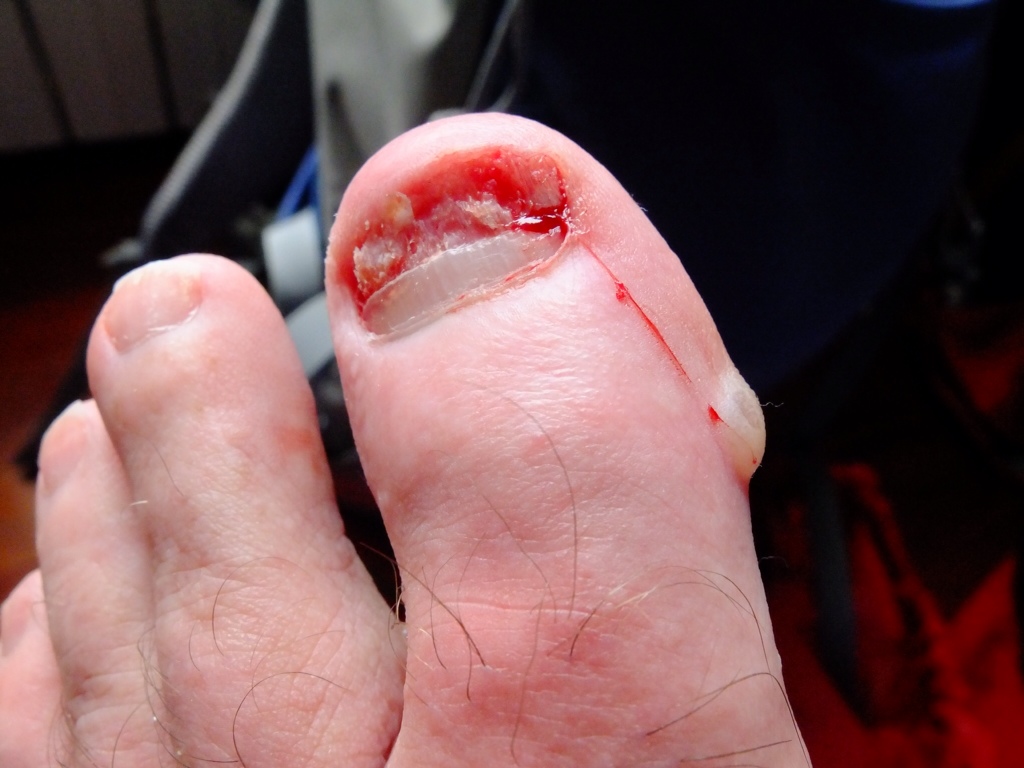
Loved them. They saved me from a couple of serious ankle sprains. The grip was fantastic. Clung to shale rocks and were always comfortable. And waterproof. And they protected my feet perfectly. Yes I got a few blisters, but I don’t put that down to the boots – more to the long miles I was walking, and to my blister management technique, which was largely non existent. After 800 kms the tread is barely worn. They could do another two Caminos easily. Pity I can’t…
INSOLES – Superfeet
Essential. They made the boots work. Gave me cushioning when I really needed it, and helped absorb shock through my spine.
SOCKS – Icebreaker Merino thick
Again, fabulous. Further helped absorb shock, and handled heat and cold perfectly.
SOCK LINERS – WigWam
Probably the reason I had as few blisters as I did. Again, essential.
AFTER WALKING SHOES – “Barefoot Runner”
These for me would have to go into the Essential category. I would put these lightweight shoes on at the end of the day, after I’d showered. They only weigh 400gms, yet they enabled me to walk freely around towns and villages. For me, a far better choice then flip-flops or Crocs.
(I never subscribed to the belief that you should wear flip flops into showers, to prevent picking up foot diseases. I have resolutely refused to walk this Camino with fear.)
NIKE TRACK PANTS
The technical dry-fast version. Had two pairs, and they did the job beautifully. Didn’t want to wear shorts – the long trakkies protected my legs from the sun, and even in the cold my legs seemed warm. I wore black so the dirt wouldn’t show up as much.
UNDIES – Bonds quick dry
Every bit of clothing you bring on the Camino should be easy to wash, and quick drying. My undies were perfect for that, although sometimes if I got in late they wouldn’t dry in time, so I had to hang them off my backpack the next day until they dried!
T SHIRTS – Icebreaker Merino 150gms.
Fantastic. The merino kept me warm in the cold, and cool in the heat. Didn’t hold stinky odour, and were fast to dry. Expensive, but worth it.
OUTER LONG SLEEVE TOP – Icebreaker Merino 200 gms
Again, fantastic. (Icebreaker, how about a sponsorship deal hey? Have your people call my people…) Seriously, I had two of these and wore them every day – when it was minus 5C, and when it was 35C.
(On clothing, I discovered I only needed two of everything – one to wear, and one to have clean for the following day. This required doing the laundry each day after the walk, which was not a problem. I did bring a third t shirt and a third pair of undies, both of which I never wore. I did though use a lighter thickness of sock – a pair separate to my two thick pairs – and I wore these at the end of the day when I was walking around a village or town in my runners.)
OUTER SHELL – Spanish windbreaker jacket
I brought this along for sentimental reasons, because I actually bought the jacket in Leon two years ago, in a hiking store that catered for pilgrims. It was warm and wind proof, however it trapped sweat. It wasn’t breathable, and that meant I had to wash it each night – and it took ages to dry. I’d go for a Gortex jacket if it was to do it again.
OUTER SHELL – Gretox rainjacket Katmandu
Great. Didn’t need to use it much, except for the days coming into San Martin and Astorga, and when I hit Galicia, but always comfortable and most importantly, completely waterproof.
AFTER WALKING JACKET
A very lightweight windbreaker jacket I picked up in Pamplona, and ended wearing it every day, after finishing the day’s walk.
SCARF – Pasmina green scarf
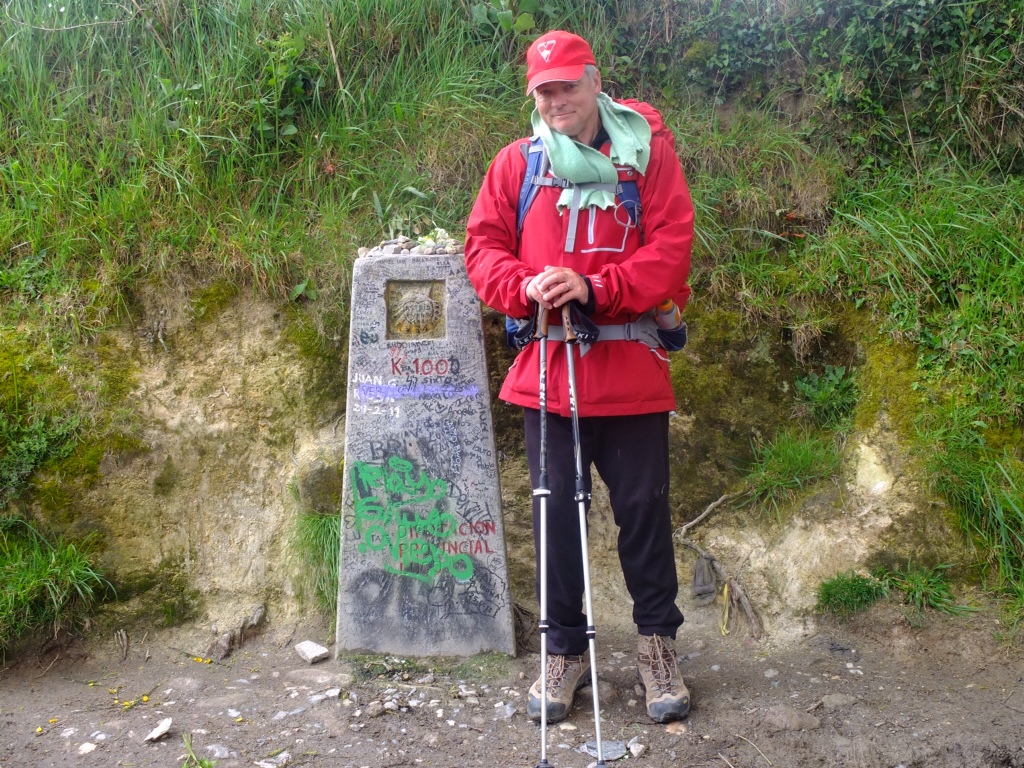
Essential. Kept my neck warm in the cold, and kept the sun off. As it turned out, the unusual green colour became my “signature,” along with my Swannies cap, so people could recognise me from a long way off. That’s if they didn’t recognise the distinctive cripple hobble…
WALKING STICKS – Leki recoilable
Essential. Could not have got through the Camino without them. They helped me up hills, and helped me brake going down descents. Can’t speak too highly of sticks in general, and these Lekis in particular.
SLEEPING BAG – Western Mountaineering
This was expensive. In fact, the single biggest expense other than the airfares, but worth it. Light, warm, comfortable, and packed down to nothing. If I’d travelled later into the season, may not have needed it – but certainly needed it in April/May.
GLOVES – Katmandu wind stoppers
Only wore them about three times, but on those occasions I really needed them.
BEANIE – Icebreaker Merino
Never used it. Sent it on ahead to Santiago. (When it was really cold, I’d put on my rain jacket and use the hood for warmth around my head and ears.)
GAITORS –
Never used them either. Didn’t find I needed them. But then again, the weather was very kind. Shipped them to Santiago too along with…
THERMALS – Icebreaker merinos
Not necessary. Never that cold. Maybe in winter…
REFLECTIVE SAFETY VEST
Let it in the albergue at Roncesvalles. Never used it. Unnecessary.
WRIST WATCH – Casio
Before leaving Australia, I bought a $25 Casio wrist watch that had an illumination function. I used this all the time in the albergues, where you'd wake up at night and not know what the time was. Press a button and a light came on and lit up the time. Essential.
HEADLAMP –
Essential. Essential in the albergues for finding your stuff in the dark, and for when I set off early before sunrise.
KNIFE – Opinel
I got this knife soon as I got to St. Jean Pied de Port. €5 from a local store. It was invaluable, both for cutting up cheeses and chorizo, but also for cutting bandages!
CAMERA – Fujifilm x10
I chose the camera because of its lightweight, its sensor, its manual capabilities, and because I’ve always liked Fuji’s processing engines. But it was a compromise. Weight and sensor size vs Image Quality. I’ll write more about this in a future post, however, the camera did a good job, and overall I’m happy with it.
iPAD
If I was doing this trek again, I’d probably buy an Apple Macbook Air. The iPad has been very frustrating at times because of its limited capabilities – but as with the camera, it’s a compromise and served it’s purpose.
PHONES – iPhone 5 + Nokia
Both phones have been useful. Smartest thing I did, as I was limping into Pamplona, was get Vodaphone SIM cards for the iPad, and the phones. I found Vodaphone had coverage everywhere I went, except for one night in the remote mountains.
IPOD
Never used it. Not once. Didn’t want other influences on my thoughts, other than the sounds and spaces around me.
MULTIPLE POWER PLUG
I went into a hardware store very early into the walk and for €1.50 I bought a power adapter which would allow 3 plugs. Essential, particularly in albergues.
WATER BOTTLE – Gatorade bottle
I didn’t use a Camelback. Too heavy. Instead I bought a Gatorade bottle, because it has a wide mouth for gulping down water fast. I put that in the left hand side pocket of my backpack’s waistband. Easy to reach. 600ml. I had another bottle of water in a pocket of the side of the backpack – always filled to a further 600mls, which I used to top up the Gatorade bottle if necessary. This was a simple and effective way for me to keep always hydrated.
TOILETRIES
Never used the shampoo. Threw away the deodorant. Bought some disposable razors because they were light. Bought a very small tube of toothpaste, and a small can of shaving cream. No hairbrush or comb. No nail clippers.
EARPLUGS AND EYESHADES
Essential. I read about snorers in albergues. They are real and they exist and they will shake your teeth loose.
SUNSCREEN
Essential. Expensive in Spain, unless you buy from big supermarkets. Cheaper to buy at home and bring with you.
PHARMACEUTICALS
You buy what you need in Spain according to what injuries you get. Farmacias are everywhere, especially on the Camino! And pharmaceuticals in Spain are very cheap. For instance, a packet of 40 tablets of Ibuprofen, 600mg, are under €2. Incredible. If I was doing the walk again, I’d make sure I had Ibuprofen, Voltaren cream, crepe bandage, Betadine, and some antibiotic cream. And an elasticised knee bandage.
COMPEED – for blisters.
I had a bad experience with Compeed and would never use it again. Ever. It caused a small blister on my heel to become huge, and infected. Interestingly, the pharmacist in Santo Domingo, after looking at my heel, refused to sell Compeed to me! I know it works for some people, but for me it didn’t. Big time.
LAUNDRY STUFF
Never used my clothes pegs, and never used laundry soap. There were always pegs and soaps available. Never needed a laundry bag. Ziplock bags though are essential.
ONE THING I COULDN’T HAVE DONE WITHOUT?
That’s easy – those Leki walking sticks. And my elasticised knee bandage!
By the way, even with my camera, iPad, various phones and chargers, my pack came in at 8.8kgs. It dropped 1.75kgs further when I posted a lot of stuff through from Pamplona to Santiago.










 PGS - The Way
You must be logged in to post a comment.