I forgot to mention the biggest little change of all –
Nothing scares me now.
Nothing.
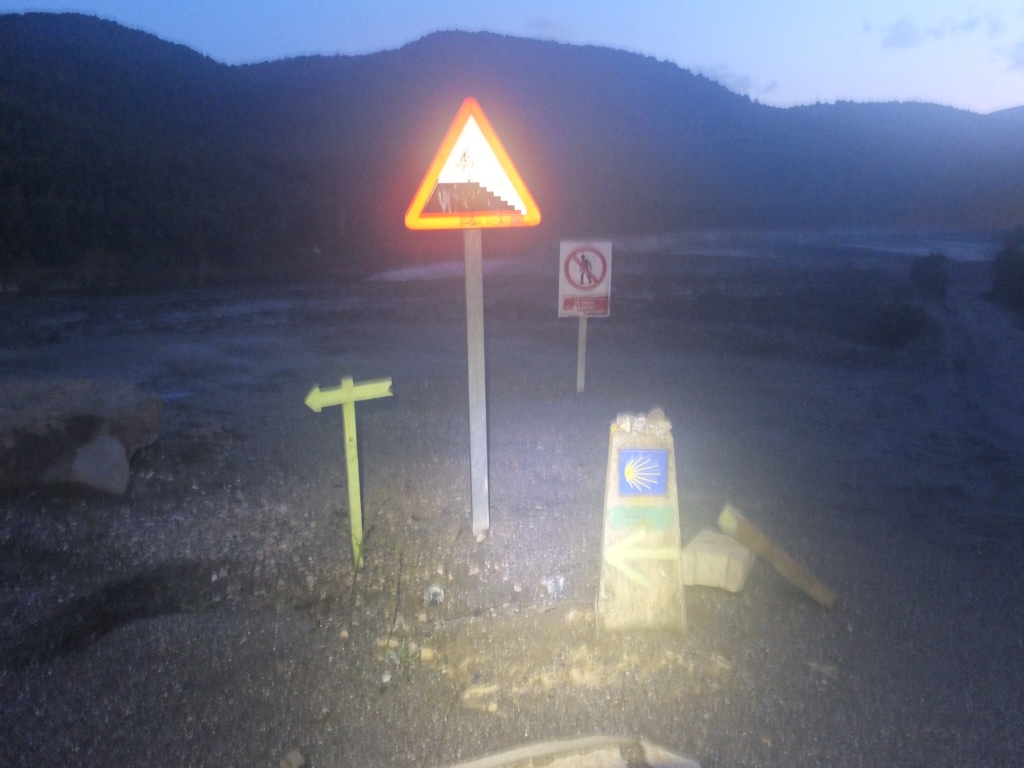

I forgot to mention the biggest little change of all –
Nothing scares me now.
Nothing.
I've already mentioned a big change since walking the Camino – I no longer need glasses.
But I've also noticed little changes.
Since coming back, I now keep my mobile phone on silent. I can't handle hearing it ring. And if I miss a call because I haven't heard it, I don't care. I used to obsessively respond to my phone. Not anymore.
I don't do Facebook anymore, either. Not like before.
Before the Camino, I'd have posted at least four to six times a day. Since returning, I've posted perhaps maybe six times in five weeks. It seems folly now. And ego driven.
Also, I used to always put the alarm on at night. The house is securely locked, but still I would always arm the security alarm. Not anymore.
Personal grooming – I used to use moisturiser each day. Didn't on the camino. Haven't since. And I still haven't put a battery in my razor.
Little changes. They actually mean big things…

In his groundbreaking book, The Hero with a Thousand Faces, mythologist Joseph Campbell established the concept of the “Hero's Journey.”
Essentially, what Campbell did was he examined classic myths from various cultures, and using concepts gleaned from Carl Jung, came to his monomythic theory:
“A hero ventures forth from the world of common day into a region of supernatural wonder: fabulous forces are there encountered and a decisive victory is won: the hero comes back from this mysterious adventure with the power to bestow boons on his fellow man.”
Okay, let's apply that to a pilgrim who leaves home to walk the Camino.
The hero (pilgrim) as Campbell describes in his book, starts in an “ordinary world” and gets a “call to adventure,” to enter an “unusual world of strange powers and events.” The hero/pilgrim then must face a “road of trials,” some of them intense and requiring assistance from others.
The hero/pilgrim ultimately must face a severe test, and if he or she survives, is then granted a great gift, or “boon.” The hero/pilgrim must then decide whether to return to the village, or the “ordinary world,” to bestow this gift or boon on the rest of the community, or the world.
There are so many parallels with someone getting the “call” to walk the Camino, a strange world of unusual powers and events – facing a road of trials, having to overcome an intense challenge, and receiving a gift before returning home.
But, one of the essential elements of the Hero's Journey is returning home. Returning home to bestow the “boon” on those that he or she left behind. This is for the betterment of the home, the village, the community and the world.
In times past, reaching Santiago was only half the journey. The other half was walking back home. Very few pilgrims do this now. I saw about 6 doing the return journey on my pilgrimage.
But some, even when they do return home, remain on the Camino.

There’s an interesting debate going on at the moment on one of the Camino forums –
An experienced pilgrim, who’s walked the Camino several times, has had some recent bad experiences, and she voiced these in a post. She complained that the Camino was different this year – there were many more people, and some were rude, thoughtless, and aggressive.
In the thread that followed, some blamed this on the popularity of the film The Way, starring Martin Sheen, which has helped increase numbers. (I know from my experience that many people are walking the Camino because they’ve seen that film.)
Others have lamented the use of wifi, tablets and smartphones as being contributive to a breakdown of the “Camino spirit.” Some have suggested not walking the Camino Frances at all, and choosing another pilgrimage route.
They’ve disparaged what they call “tourigrinos” who see the Camino as nothing more than a cheap vacation. They walk short distances then take buses and taxis, they ship their backpack on ahead to the hotel that they’ve pre-booked, and they use iPads.
Folks, the times they are a changing…
What’s wrong with a popular film encouraging more people to walk the Camino? If the Camino is a transformative spiritual experience, why should it be restricted to just those select few “in the know?” Why shouldn’t as many people as possible experience the wonder of the Camino?
Okay, the infrastructure might have to play catch-up, but that pours more money into the Spanish economy that right now desperately needs it. And it supports the smaller towns and villages along The Way, those that aren’t on the routine stage stop-overs.
And what’s the problem with using wifi, iPads and smartphones? Hundreds of years ago before this technology, church leaders, heads of state, and merchants used pen and paper, riders and messengers to communicate. I’d hazard a guess that if they were walking the Camino today, they’d be using iPhones or Galaxies. And if they needed to catch a taxi or a train for a stretch, that’s what they’d do.
Cutting yourself off from communications doesn’t make you more of a “true” pilgrim. Not everyone is retired. Not everyone can go five weeks without staying in touch, whether it’s family, their business, or whether it’s simply to post a blog each day.
I have a friend, his name is Steve, and he’s walking the Camino at the moment. At the outset, he said he had no commitment to walk the Camino. Those were his words. I gave him encouragement, by posting on his blog. So did others. Today he posted a blog which was titled: I WALKED WITH GOD TODAY.
Bloody hell. What a switch-around! This is the guy who wanted to give up after the first week. This is the guy who said he had no commitment to the pilgrimage.
This wouldn’t have happened if he hadn’t been blogging. If he hadn’t had his iPad and wifi.
Of course the Camino is going to get more crowded, as more people discover that it can change your life. Should we be trying to restrict this to just “true” pilgrims?
I don’t think so.
Here is the Camino Forum thread – http://www.caminodesantiago.me/board/el-camino-frances/topic19035.html
Here is Steve’s blog – http://steve2013dotnet.wordpress.com/2013/06/16/day-32-i-walked-with-god-today-2/
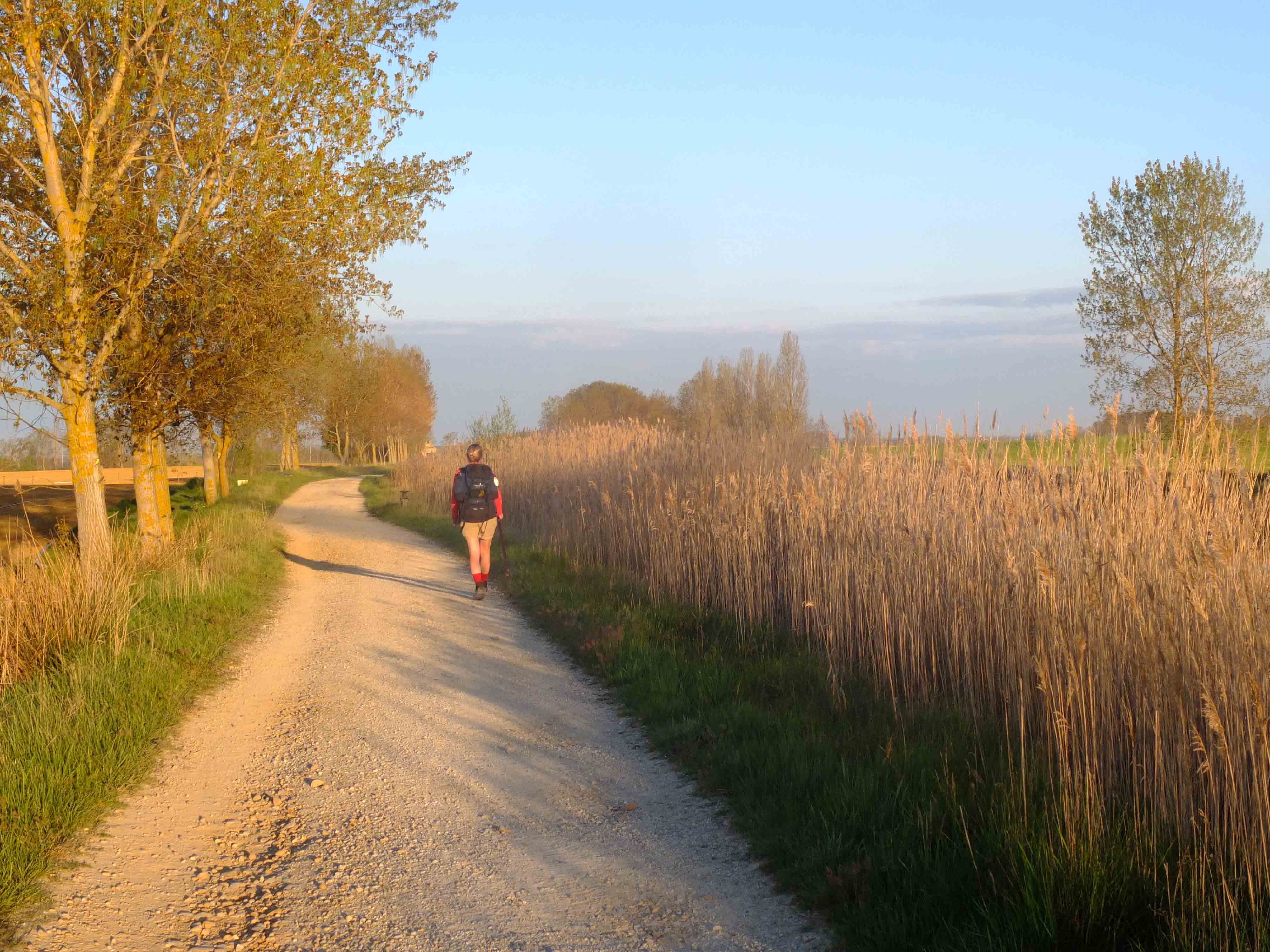
Before the Camino, I used to wear glasses. I wore glasses for 15 years.
Now I don’t need them anymore.
Something happened on the Camino.
I used to need glasses for my long distance sight. I took two pairs with me on my Camino – my regular wire-framed glasses, and a pair of prescription Polaroid sunglasses.
Early on I discovered it was too much trouble to wear the regular glasses because I was forever taking them on and off when I was taking photos. I did though at times need my prescription sunglasses, so I wore them for about a week, until they broke. I had to throw them away.
I still needed sunglasses though, not only to stop glare (yes, I was lucky with sunny days on my walk!), but also to keep dust out of my eyes when the wind blew.
I didn’t have time to wait around for an optician to make up a new script for sunglasses, so I bought a €45 pair of normal Polaroid glasses. I began to wear them.
I discovered that I was able to see perfectly fine. Detail in the distance began to come into focus. Soon I was able to read signs that I couldn’t have read without prescription glasses.
What happened? Two things, I think:
Today I drove 600kms – it took me 8hrs. Usually when I drive such long distances, my eyes get tired and I need my glasses, otherwise I get headaches. Not today. Only when I was driving into the setting sun late in the day did I put on my €45 Polaroids – the ones I’d bought in Spain.
It seems now I don’t need prescription glasses anymore.
Thank you, Camino!
Bill

POST SCRIPT:
Further to the previous post about my life a month on from the Camino…
My wife (wise soul that she is) pointed out that whether or not I put a battery in my razor is not the point – if it simplifies my life by making shaving easier and more pleasurable, then why not do it?
Simplifying your life, she said, doesn’t necessarily mean contracting your life, or reducing the world around you. On the contrary, she said – simplifying your life can lead to a most wonderful expansion of your world, and your experiences.
You can give away all your possessions and still be bound up in complications.
When I thought about what she said, I made an analogy to cooking – you reduce a sauce down until it explodes with a myriad of tastes and flavours.
You’ve simplified, but you’ve expanded.
I regard simplicity as keeping only what matters. My wife Jennifer regards it as taking nothing for granted.
I mentioned to someone in an email just before that I’ve come back from the Camino with very little interest in social media. Before the Camino, I was all over Facebook and Twitter – posting every day on a diverse range of subjects that interested me, and I assumed interested my “friends.”
What in fact I was actually doing was telling the world what sort of person I was.
If I posted on a political matter, and I expressed outrage, then I was announcing that I was a concerned liberal. Or if I posted on a rock concert I’d attended the previous night, I was telling everyone I was “cool,” and not the age I’m purported to be.
I came back and saw clearly the folly of all that, and the unabashed ego…
I was in two minds to delete my Facebook – I’m just not interested anymore in someone telling me what they had for lunch, or seeing a photo of their new pot plant. In the end though I’ve kept it for work reasons. But I’ve noticed that since returning, I have a very real disinclination to be distracted by trivia.
I’ve come to see that simplicity is about shedding burdens, whatever they might be, so you can leap mountains.
Bill
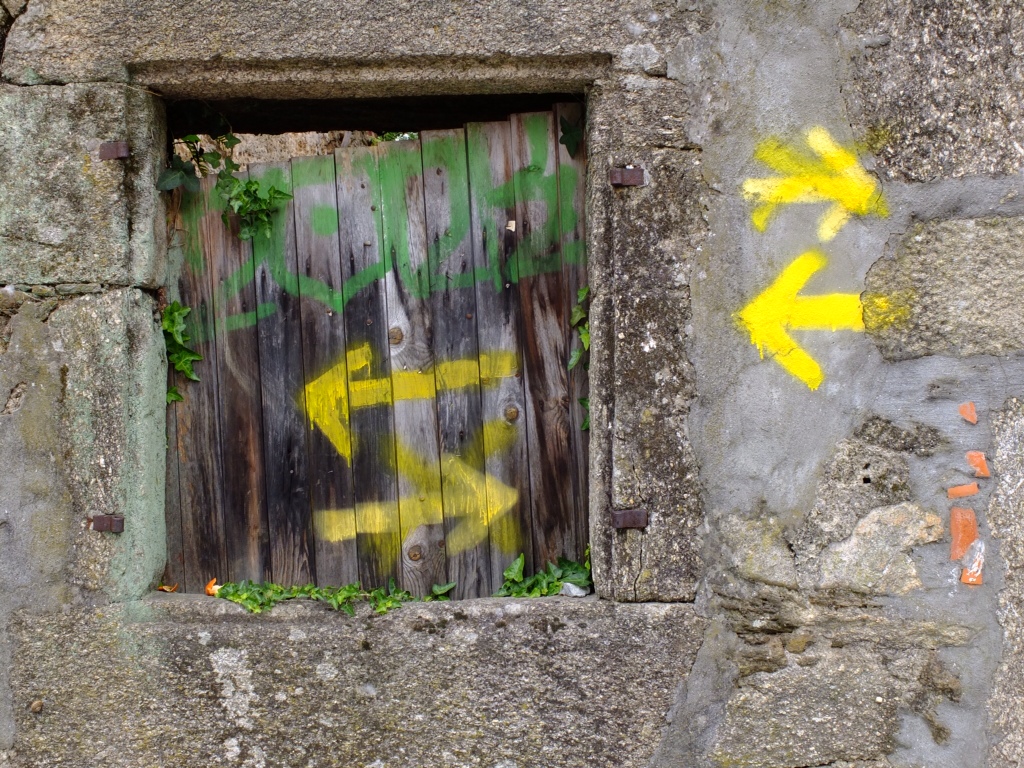
It was two months ago, on April 10th, that I left St. Jean Pied de Port to walk the Camino.
A month later, on May 10th, I arrived in Santiago de Compostela.
I’d walked all the way.
June 10th and it seems another lifetime ago that I walked through those ancient gates heading to Roncesvalles. So much has happened since. So much has changed.
What’s changed?
I’m not sure I can articulate it, other than I can’t bring myself to put a new battery in my razor.
In a much earlier post, whilst on the pilgrimage, I’d written about how complicated my life had become, to the point where I needed to put a battery in my razor to have a shave. And each blade for my Gillette Fusion Power Razor cost $5. For one blade.
At the time I asked myself: Where has the simplicity gone?
Now at home, this daily act of shaving has become very symbolic. Will I keep shaving with a cheap disposable razor? Will I pay $32 for a pack of 6 new blades? Will I put a battery back in my Gillette Fusion Power Razor?
In other words, will I return to the life I once lived, before the Camino? Or will I continue to hang onto those things that I learnt on my pilgrimage.
Which is to live life simply.
Be grateful.
Be humble.
Don’t judge.
I’m organising a garage sale. I’m giving stuff away to St. Vincent de Paul.
And I’m not putting a battery in my razor.
Bill
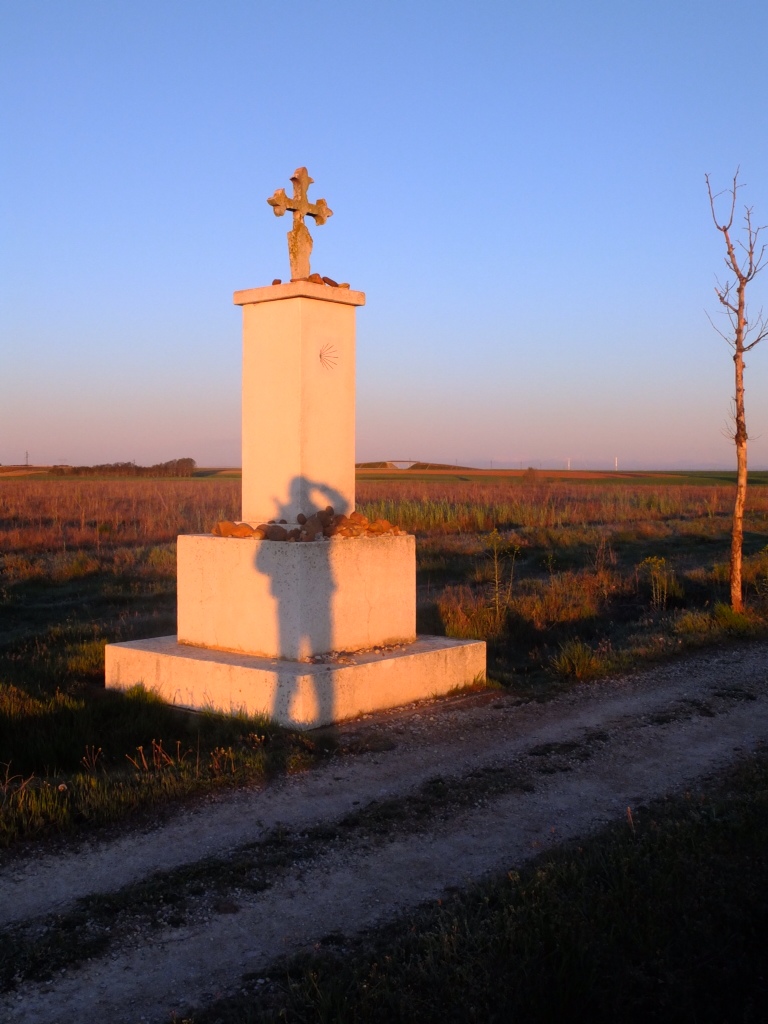
I’ve decided on my next Camino –
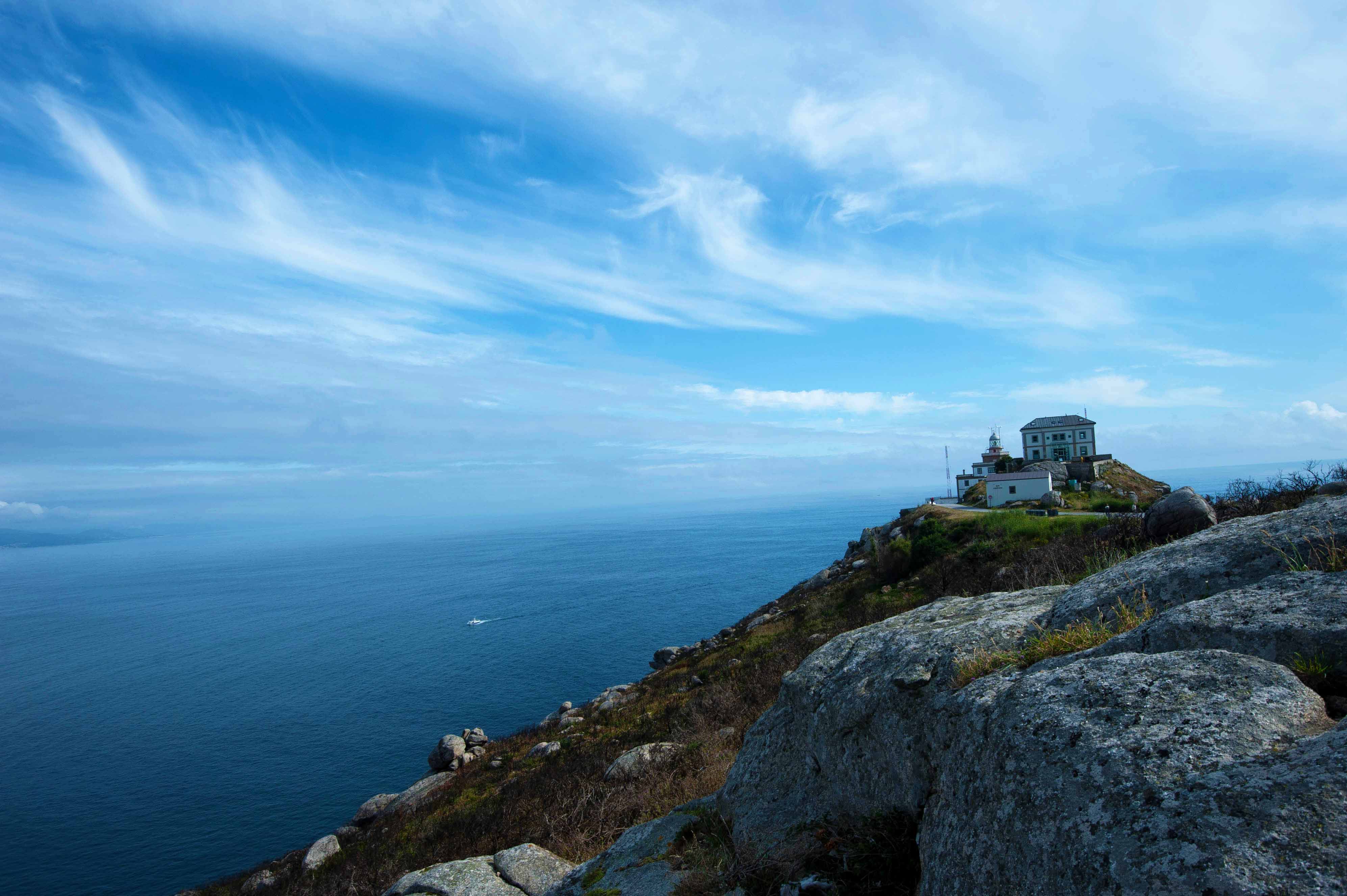
From the lighthouse at Sagres, on the far southern tip of Portugal, up through Lisbon and to Fatima, then onto Santiago and then to the lighthouse at Finisterre.
About 850 kms.
Now I have to do just three things:
Bill
Ask what you can do for the Camino.
I seem to be on a bit of a speech theme here, don’t I. Thanks John F!
But it’s occurred to me that we all wonder what the Camino is going to do for us, but have we given any thought as to what we can offer the Camino, or other pilgrims along The Way?
I remember sitting around a dinner table full of pilgrims one night early into my Camino. Day two or three I think. There was a lull in the conversation and I told the collected group that in the following weeks, each of us was going to meet an angel on the Camino. We may not know it at the time, it might take us years to realise, but we would.
My announcement was met with blank stares. I quickly excused myself from the table, went back to the albergue and fluffed up my sleeping bag.
But it’s true. I met angels. And I know of many other pilgrims who did too, although they may not put that label on those that helped them. But each of us is capable of being an angel, without even knowing.
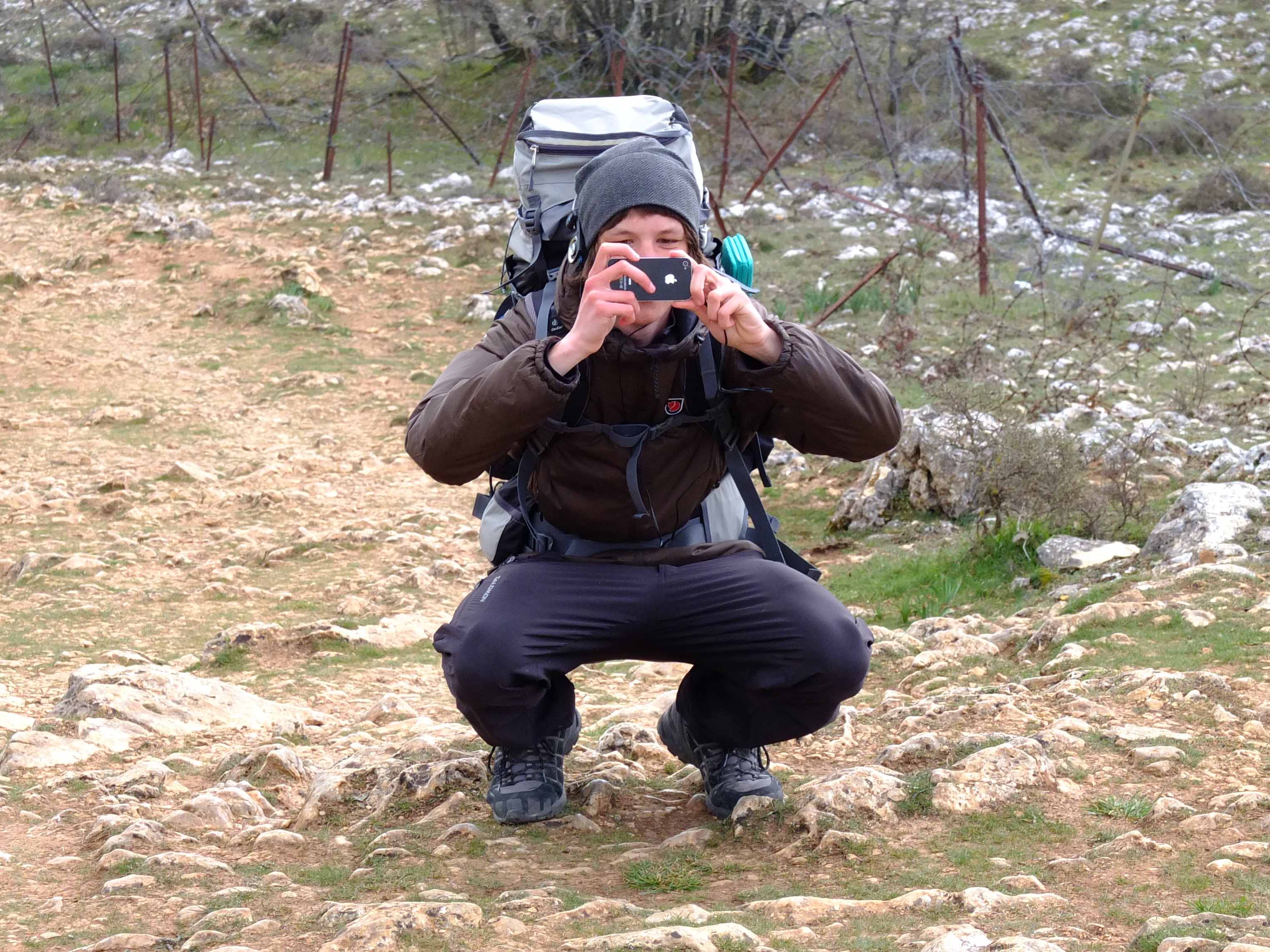
About two weeks into my walk, I’d stopped to take a photograph and this young kid walked up. He kindly asked if I wanted him to take a photo of me. I gave him my camera, which was set to manual controls, and began to talk him through how to focus, how to set the exposure, etc.
Yeah yeah yeah, he said. I know.
Amused and curious, I watched him handle the camera. And he did know. I was impressed. Because only a photographer could have worked out how to use the camera the way I’d set it up.
We then walked together. I asked him how come he knew so much about cameras. He revealed that his camera was set to manual too – and in fact he was shooting film. It wasn’t a digital camera, he was actually shooting 35mm film. I was really impressed. Who shoots film nowadays, particularly a 19 year old kid?
It turned out he was a film school student and his real love was cinematography.
Ah, I said, you might just have met your Camino angel!
I then told him I was a film director, and an Adjunct Professor at the film school of an Australian university. Over the next 10 kms or so we talked, he asked a lot of questions, and I gave him advice. He then kicked on, moving much faster than me, but we crossed paths again several times during the next few weeks. And each time, he would ask for more advice, which I liberally dispensed!
Perhaps I was his Camino angel, I don’t know. But it got me thinking that so many pilgrims walk the Camino thinking they’ll get something from the journey. Perhaps though, without them even realising, their true purpose is to give something back…
Bill


You must be logged in to post a comment.