As a Filmmaker, what I’ve learned watching The Ashes ~

For those of you who follow this blog and don’t know what The Ashes is – it’s a series of five games of cricket played between Australia and England. Each game can last five days. At its fullest, that’s 25 days of cricket with each day beginning at 10:30am or thereabouts, and finishing at 6pm or thereabouts. For cricket-tragics such as Jennifer and myself, we try not to miss one minute, one ball, one run.

The Ashes dates back to 182. That’s 143 years. Australia has won The Ashes 34 times, England 32 times – with 7 drawn matches. To say that the rivalry is fierce is like saying the South Pole is chilly.

We’re talking Colonialists versus Convicts.
Need I say more?

I’ll keep this summary of The Ashes, and indeed cricket itself, at this superficial level because cricket is an inordinately complex game. It has its own language, its own arcane protocols, even the naming of field positions defies rationale or logic.

Cow Corner?
Silly Mid Off?

The Ashes are played every two years, or thereabouts – alternating countries. This series is being played in Australia. Prior to this series starting on November 21st, the English press and the team itself declared that finally they had a group of players that could win The Ashes on Australian soil – a feat rarely done.

They derided the Australian team as being old and passed it, sub-par, they called our cricketers Dad’s Army.

The English were bringing to the series a form of cricket that’s become known as Bazball, a highly aggressive form of the game drawn from the shorter, showier form known as T20. In other words, they were attempting to modernise Test cricket, and in the process write their names into the history books.

It didn’t work.
They lost the first three games 3-0 and Australia retained The Ashes.

The 4th game, played in Melbourne last week, they won using, at times, Bazball tactics. But it was too late. Australia had won The Ashes.

I watch a lot of sport because it tells me a lot about the human condition, about courage and timidity, about how to win and how to accept failure, about hubris and grace.

The final chapter is yet to be played in Sydney starting next week, and even though technically it’s a dead rubber, there’s still a lot to play for – reputations, future places in the respective teams, jobs on the line. And history. With each Ashes game history can be made, or rewritten.

I’ve learned a lot as a filmmaker from these first four games already.

  • Preparation. Pundits say England lost the first three games because of a lack of preparation. This, I believe, came down to hubris. They believed they had a winning formula in Bazball. They believed their team was stronger. They thought they didn’t need to prepare. Dare I say it, they were arrogant.
  • Lesson. Making a movie is all about preparation. As a director, by the time cameras roll on the first day of principal photography, 95% of your work should have already been done. You can’t skimp on preparation. And you certainly can’t be arrogant. Arrogance will cold-cock you every time.
  • Patience. Interestingly, listening to the commentaries as I have, and the analysts on various podcasts, the word patience has come up time and time again. Bazball eschews patience. It’s a form of the game that requires a batter to pretty much take a swipe at anything. Test cricket requires, at times, immense patience. And that patience more often than not is rewarded with a long innings and a big score. Conversely, a lack of patience often brings a batter, and bowler, undone very quickly.
  • Lesson. Making a feature film also requires immense patience. I have stood out in a field for more than an hour many times during my working life, with a full crew on alert, waiting for the right light to get a shot. I have waited a mind-numbing length of time on more occasions than I care to remember for ambient sounds to clear so that we can record a perfectly clean dialogue scene. You need to have the patience of a zen monk to be a film director. That’s why I’d be dreadful doing television. Television doesn’t allow for patience.
  • Quite. I’ve noticed that that English coach and captain have used the word quite quite a bit in interviews. We didn’t quite get it right, they would say, Or We didn’t quite get enough runs today. This word quite, used as they’ve used it, provides an insight into their mindset. It speaks to me of delusion and entitlement. Didn’t quite get it right? Mate, we blasted you off the field. Didn’t quite get enough runs? Buddy, we beat you in two days. Their use of the word quite tells me they aren’t facing up to reality. And they really do believe they’re entitled to win.
  • Lesson. As a film director, you need to be grounded at all times. It’s so important, especially early in your career if you’ve had success. It’s so easy to get a distorted view of your own capabilities. You start believing your own publicity. When you’re making a movie, it’s critical that you remain humble and aware that at any stage, you could make a career-ending decision. Of those directors who get to make a first film, only 36% get to make a second film, only 8% make five or more films, and only 0.1% make 20 or more films. I’ve directed 17 feature films which puts me at 1%. That makes me quite humble…
  • Expectation vs Process. The English arrived on our shores with big expectations. They were going to crush us. We had a weaker team – the worst since 2010, said Stuart Broad – and they said that they were going to climb the Mt Everest of cricket. They were going to go home with The Ashes. The Aussies (other than Glenn McGrath, who traditionally predicts an Australian whitewash of the Poms) remained quietly confident in their process. They didn’t think ahead. They trusted in process.
  • Lesson. I know from forty years of making movies that on those occasions when I’ve thought I’d made a winner, I’ve always been disappointed. And also, when I’ve deliberately set out to make a commercially successful film, invariably I’ve failed. Yet the times when I’ve made a movie simply from a) the desperate need to tell that particular story, b) a desperate desire to have fun with the mechanics of cinema, or c) a deep sense of knowing that this was a movie that I would enjoy watching – on the relatively few occasions when that aligned, then surprisingly the films did (quite) well. In other words, I’ve learned to distrust expectations, and to go into a movie merely for the pure joy of making that movie, trusting that the outcome will be what it will be..

These are just some of the lessons I’ve learned. And many more as well – too many to elucidate here. Elite sport for me provides useful lessons in human psychology. I just wish I had the wisdom to interpret those lessons at times.

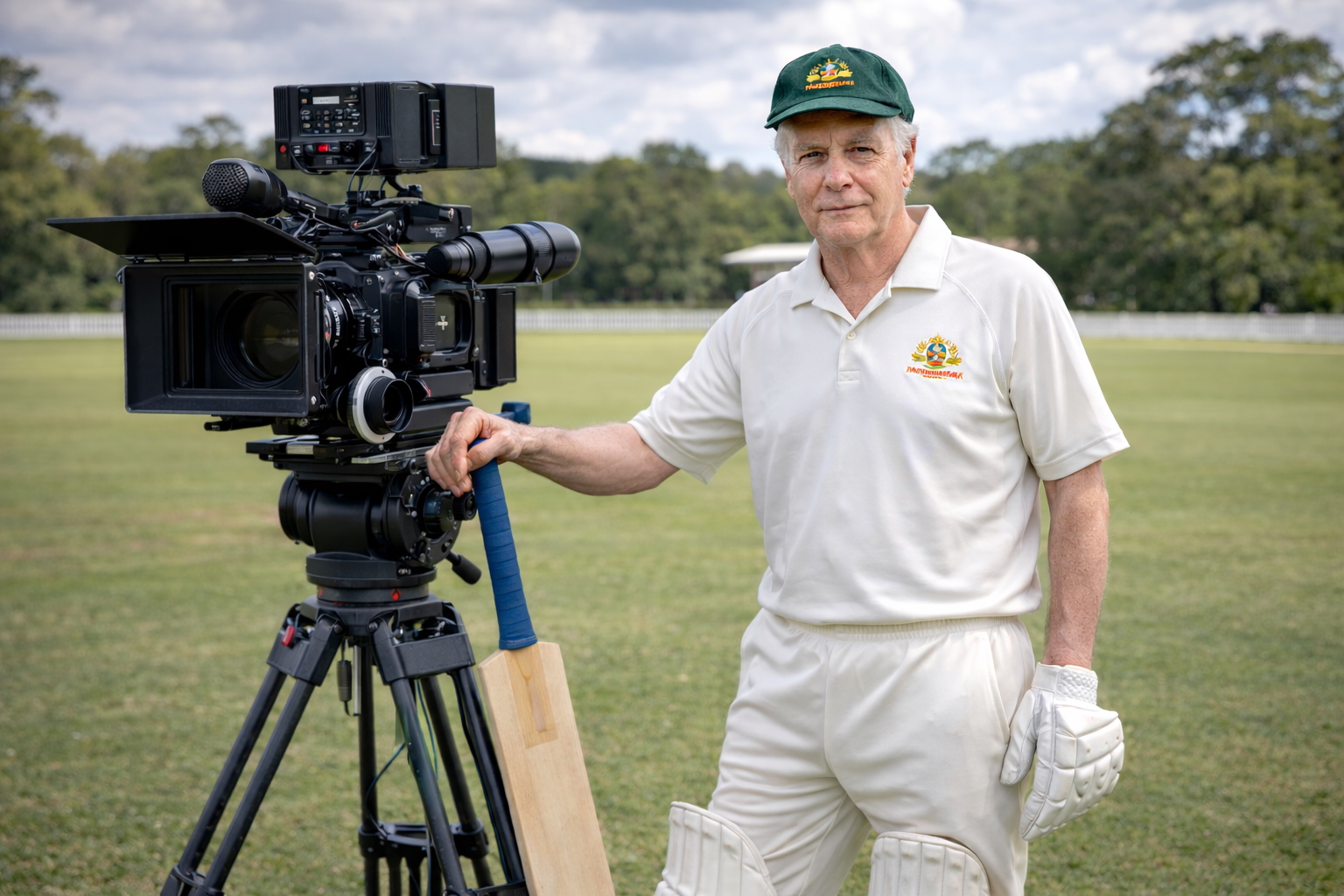
Thanks to ChatGPT for the image below.
Audit of 2025 & plans for 2026

As readers of this blog know, each year around this time I do an “audit” of what I achieved this year pegged against what I hoped to achieve this time last year. And I outline what I hope to achieve in the coming year.

This year was all about the international theatrical rollout of The Way, My Way.

After a successful cinema run throughout Australia and New Zealand in 2024, the film that some reviewers called “the surprise hit of the year” – with a cinema Box Office of close to $2.5m, and a run of 20 weeks in some cinemas – it was time to take the film overseas.

Jennifer and I left Australia on January 28th, and for the next 4 months we toured the film throughout the US, Canada, Germany, with sold out screenings as well in the UK and Italy.

In the US and Canada we did 48 Q&A screenings in 44 different cities and towns in 19 states over a 51 day period. During this time Jennifer and I:

  • took 12 internal flights
  • took 52 Ubers
  • I drove 7,000 kms in five rental cars

Johnnie Walker, Camino legend, joined us for a couple of weeks and he was treated by the Q&A crowds as the rock star that he is. Marc Wooldridge, head of Maslow Entertainment, helped coordinate our trip from Australia, with the aid of our US co-distributor, Outsider Pictures.

We arrived back home on May 28th – we were away exactly four months. Was it exhausting? Strangely, no. Jennifer and I were sensible. We slept well and we ate sparingly. And we traveled super light. That was key, with being on the move constantly.

During the last couple of weeks of the tour, in amongst all the travel and screenings, I began writing a new novel – an Outback thriller I’d been developing over the past ten years or so. It’s called Lady Fix – No Man’s Land. When I got home I continued writing for the next seven months, and this occupied my time for pretty much the rest of the year.

Publishers Penguin Random House had previously published my YA supernatural thriller trilogy, Palace of Fires

https://www.penguin.com.au/brand/palace-of-fires

PRH were tracking the progress of Lady Fix and I submitted it to them last month. They came back with notes, which was expected, and I’m currently working through those notes. I also signed with a top flight literary agent and she will guide me through this process.

I got a delightful surprise last month as well – I was awarded the Malaspinsa Award from the Spanish Ambassador in Canberra for strengthening cultural ties between Australia and Spain for my Camino memoir and film, The Way, My Way.,

So, how did I go with my laundry list of things I wanted to achieve this year? Here’s what I hoped to achieve this time last year, and in bold, what I actually did or did not achieve.

  • Release The Way, My Way in US and Canada – and support that release with a Q&A tour, from the beginning of February to the end of March.
  • Done.
  • Release The Way, My Way in Germany, Austria and Switzerland and support that release with a Q&A tour in April.
  • Done.
  • Screen The Way, My Way to an annual gathering of North American pilgrims in Vancouver in mid May.
  • Done.
  • Screen The Way, My Way to a convention of Camino leaders in Malta at the end of May.
  • Done.
  • Walk the Portuguese Camino (for the 3rd time!) in preparation for the shoot of The Way, Her Way.
  • Didn’t do this. No time.
  • Release The Way, My Way later in the year in Italy, and support that release.
  • Done.
  • Shoot The Way, Her Way on the Portuguese Camino in September / October.
  • Didn’t do this. Not sufficient time to properly prepare with the international touring of The Way, My Way.
  • Work on the post production of The Way, Her Way.
  • Didn’t do this. See above.
  • Write the first draft screenplay of the next movie in my Camino series – called The Way, His Way. (I aim to become the Taylor Sheridan of the Camino! haha)
  • Didn’t do this.
  • Complete the writing of my metaphysical thriller, Dead Image.
  • Didn’t do this. Instead wrote Lady Fix.
  • Complete the writing of my non fiction book, If I can Change, You can Too.
  • Didn’t do this. My time was spent writing Lady Fix.
  • Write a treatment of my dysfunctional pensioner crime-caper screenplay.
  • Didn’t do this.
  • Shoot more material for the Hope film.
  • Didn’t do this.

As you can see, I didn’t do a lot of what I’d hoped to do. I think in retrospect I was way too ambitious in my expectations. I didn’t realise how all-consuming the international Q&A tour would be, and how writing a new novel – Lady Fix – would suck up all my remaining time and headspace.

Writing a novel is hard.
Damn hard.

So what do I hope to achieve in 2026?
I only have two things I wish to achieve:

  • Get The Way, Her Way made.
  • Get Lady Fix published.

If I can achieve those two things then I’ll regard 2026 a successful year.

Here’s the website for The Way, Her Way:
https://thewayherwaymovie.com

On the health front, I end the year in my eighth year since diagnosis of my Parkinson’s disease. This year, I’ve taken a bit of a hit, what with the four months of intensive travelling. But even so, I thank my lucky stars that I’m as good as I am.

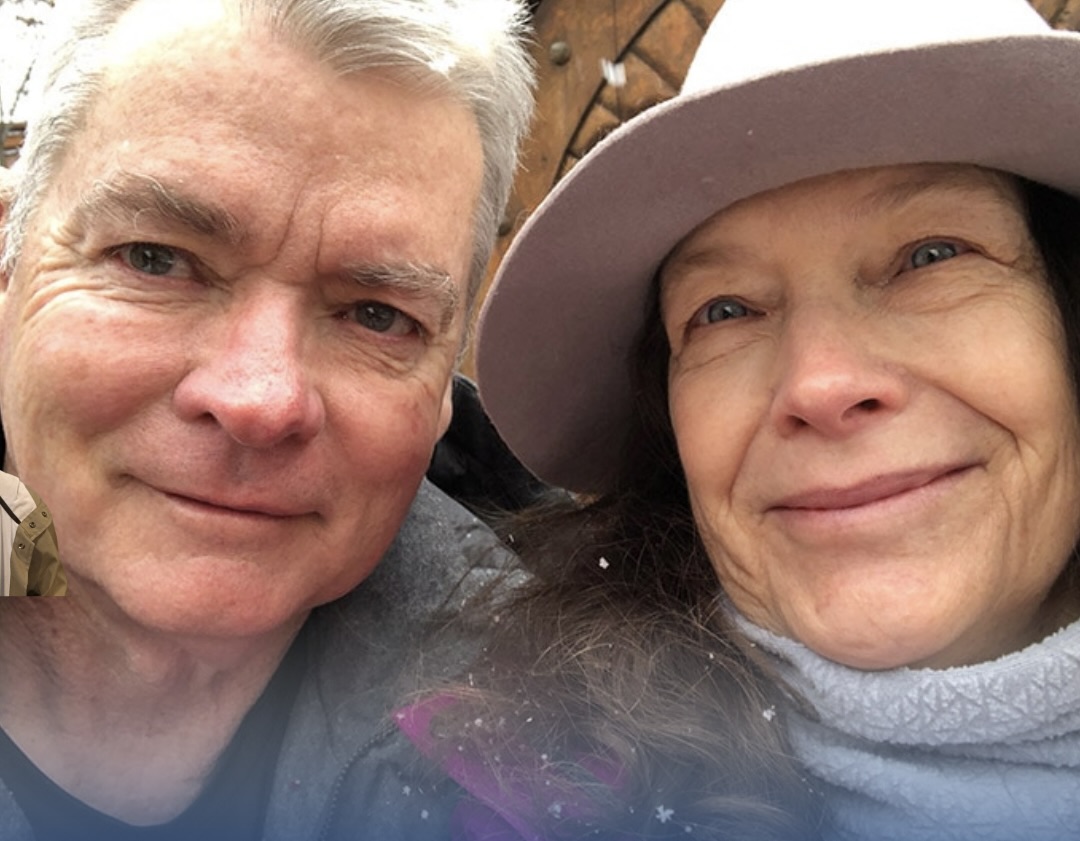
Jennifer is my rock,

Day #4 – 6 Day Fast

I stared at the egg.
I stared at the egg a long time.
It was a boiled egg.
It threatened me, that egg.
It threaded to derail my fast.

All I had to do was crack open its smug shiny shell, peel the shell off and – yummy.

But I resisted.
I walked away.
The integrity of my fast remained intact.

It’s interesting, the games your mind plays when you fast. Anyone who does an extended fast – and I call anything more than two days an extended fast – knows that the temptation to break the fast comes not through hunger, as such. It comes through desire.

Desire is different to hunger.
Hunger is a physical primitive function.
Designed to keep you, and the species, alive.
Desire is illusory.
Desire is sly imagination.
Desire is a femme fatale.

I didn’t hunger for that egg.
I desired it.
It was my femme fatale.
But I walked away.

Today is Father’s Day here in Australia. My wife and eldest son want to take me to lunch, or cook me a Father’s Day dinner.

Should I break my six day fast to take them up on their kindness?
I’ll let you know what I decide!

Day #3 – 6 Day Sept Fast

Day #3 I struggled a bit, I have to admit.

Maybe because I didn’t get enough sleep the night before. Holding your resolve to fast is harder when you’ve had insufficient sleep.

.But I toughed it through.

I distracted myself yesterday by going out to EB Games and trading in my Switch for a Switch 2. Larger screen, better resolution and frame rate. What prompted this was a piece in the Washington Post declaring Hollow Knight a masterpiece. I learned that the follow up game – Silksong – had just been released, enhanced for the Switch 2.

Just by the by, Hollow Knight was made by an Australian mob called Team Cherry. They’re Adelaide based. Hollow Knight has sold more than 15 million copies since its release 8 years ago, making it one of the most successful independent video games of all time.

As I grow older I find it’s crucially important that I constantly work to reverse engineer my age. To become younger. And by that, I mean to think younger.

Video games are a great way of doing this. They’re an extraordinary form of storytelling – both visual and aural. Zelda – Breath of the Wild opened up another part of my brain. As did Journey, which I found to be as spiritual an experience as I’ve ever had. Seriously.

I love the puzzle games. Figuring out Limbo and Inside for me has been very challenging. Man o man do they test your cognitive abilities. Best way to keep dementia at bay, me thinks.

Of all those that play video games, only 6-7% are 65 years and older. I believe if more older people played video games, there would be less dementia. And less depression.

Also for me with Parknson’s, playing video games tests my dexterity. Subtle finger movements. That’s one reason I got the Switch 2 – the buttons and joysticks were larger. Makes it a bit easier.

Anyway – that’s how I distracted myself from a gnawing hunger yesterday.

My Stats:
Weight: 82.7kg
BP: 129/75
Resting Pulse: 55 bpm

As I expected, my weight loss levelled off a bit, otherwise everything else was pretty much the same. Now, excuse me while I go play Silksong…

Day #2 – 6 Day Sept Fast

On day 2 I jettisoned hunger. In previous fasts it took longer.
This time it was just one day of strong hunger pangs.

Maybe because I’m relatively sedentary at the moment, writing my new novel. I did have a vigorous half hour session on my indoor stationary bike. Then another half hour of weights and exercises. Sitting down as much as I am at the moment, I need to find time each day to shake myself out a bit.

Interestingly, my stats are coming back into line:

My Stats:
Weight: 83.4kg
BP: 129/70
Resting Pulse: 53 bpm

So in 2 days I’ve dropped 3.3 kgs. I know this will level out somewhat over the next four days – that this initial weight loss is largely water – but even so I feel much lighter and I have more energy than I did before I started this fast.

A random photo today –

{“identifier”:”leica.lux.filters.processed”,”version”:”1.2″,”data”:”eyJjb25maWd1cmF0aW9uIjp7Imxvb2tzIjp7Im9wYWNpdHlUb25lIjoxLCJncmFpbiI6eyJzZWVkIjo0NSwidXNlckJsZW5kRmFjdG9yIjowfSwibGVucyI6eyJzdW1taWx1eDM1ZjE0Ijp7fX0sImx1dCI6eyJid05hdHVyYWwiOnt9fSwiZm9jdXNQb2ludCI6eyJkZWZhdWx0Ijp7fX0sInRyYWNrZWRMYW5kbWFya3MiOltdLCJsdXRCbGVuZEZhY3RvciI6MSwic2ltdWxhdGVkQXBlcnR1cmUiOjEuNH19LCJjYXB0dXJlQ29uZmlndXJhdGlvbiI6eyJsZW5zUG9zaXRpb24iOnsiYmFjayI6e319LCJmcm9udENhbWVyYU1pcnJvcmluZ0VuYWJsZWQiOmZhbHNlfSwiaXNGcmFtZWQiOmZhbHNlfQ==”}

Day #1 – 6 day Sept Fast (recap)

Here’s how I start my day – with a double espresso.
Even when I fast.
No sugar. No milk. Just two shots of pure espresso.

Usually by day 4 of a fast my body decides that it doesn’t need caffeine anymore, and I can’t bring myself to drink it. I shift across to either Green Tea or First Flush Darjeeling.

Day #1 of my fast wasn’t so bad. I felt hungry but not hugely so. I weighed myself this morning and in just one day I’ve lost 2.1kgs. This is largely water and in subsequent days this loss will come down to about 1kg per day, sometimes less.

The hardest thing about fasting for any period, whether it’s 1 day or 6 days or 14 days, which is the longest fast I’ve done, is to fully commit to it. If you waver in your commitment, even in the slightest, you won’t last the fast!

It’s a little bit like walking a Camino, or making a movie, or writing a book, or entering into a relationship. You have to approach it with full commitment.

My Stats:
Weight: 84.6kg
BP: 148/78
Resting Pulse: 65 bpm

My blood pressure is a bit high. I should be in the 125-129/ 68-75 range. My resting pulse is a bit high too – it should be under 60bpm. It’ll be interesting to see how these shift over the length of the fast.

6 Day September Fast – Day1

I posted this morning that tomorrow I would start a six day fast.

Well, I got to 3pm after not having eaten anything all day, and I thought –
why not start today?

So today has officially been my first day of fasting, after not having eaten since 6:30pm yesterday, Tuesday 2nd Sept.

I’ll check my stats later, but to let you know how I feel: I’m starting to feel hungry. I know the first day of a fast is always the hardest. Second day is tough too. Once I get to day three I’ve pretty much lost my hunger pangs altogether.

So what do I mean by a fast?
It’s really simple.
For the six days I will only drink water, or tea.
No sugar, no milk,
I’ll take some vitamin pills – that’s all.

This evening I came downstairs to the kitchen and Jennifer was cooking up some fruit compote for dessert tonight.

It tested my resolve, let me tell you!

Audit of 2024 and plans for 2025

As readers of this blog know, each year around this time I do an “audit” of what I achieved this year pegged against what I hoped to achieve this time last year. And I outline what I hope to achieve in the coming year.

This year was all about the release of The Way, My Way.

We released the film on 100+ screens across Australia and New Zealand on May 16th. The film opened out to about 330 screens and went on to become what many film analysts described as “the surprise hit of the year.”

We ended up playing in cinemas for 20 weeks – at a time when a film is lucky to last three weeks – and we did theatrical Box Office of close to $2.5m in Australia and New Zealand.

For Jennifer and me, this exceeded our expectations well and truly. I would have been cock-a-hoop with a 6 week run and a BO of $1m.

But the film was cleverly and adroitly handled by distributor Maslow Entertainment, headed up by Marc Wooldridge. Marc, along with his associate Alex Taylor, did a superlative job managing the film.

Marc quickly came to understand the Camino ethos and spirit, and it was that understanding that helped him power the film to the result that we got. Marc will be using his unique approach to help distribute the film across the US, commencing in March.

On a personal note, I very much enjoyed working with Marc this year. I quickly came to respect his knowledge and love of cinema, and his belief in the commercial viability of home-grown movies. Plus we laughed a lot. In this business, tough as it is, you’ve gotta have a laugh.

With the Australian release, Jennifer and I did our bit doing Q&A screenings around the country. It was exhausting, but we got to meet our audience on a personal level, which for us was enormously fulfilling. The Q&As also allowed us to witness first hand the impact the film had on many. Some people told us they’d seen the film five and six times.

We were joined for a few weeks on the Q&A tour by Camino legend and Elder Statesman Johnnie Walker – and that time spent with John was one of the highlights of the year for us.

As was later in the year when we screened the film for a large convention of European Camino leaders in Pula, Croatia. John organised the screening – he was there, with Jennifer and me, and we once again witnessed their overwhelmingly positive response to the film.

We got the same reaction, if not more so, when we screened the film later in the year as part of the St James Day celebrations in Santiago, Spain. Once again John set up the screening, held in a grand old theatre in the historic centre of the city. It was glorious, but scary. This was a cinema full of very experienced pilgrims. There could be no more critical audience. But fortunately they loved it.

John later hosted all of us – some of the cast that had attended the screening, and Executive Producer Rudi Wiesmeier and Sales Agent Simon Crowe – to an unforgettable lunch in John’s favourite restaurant in Santiago. John’s generosity and support for this film has been incredible.

In amongst all this I did other things.

Jennifer and I spent a good deal of the second half of the year working on a project to be shot in India, a story based on true events concerning what’s called a double honour killing. Unfortunately that film fell over – the Indian producer we were working with was not able to pull it all together within our timeframe.

So, how did I go with my laundry list of things I wanted to achieve this year? Here’s what I hoped to achieve this time last year, and in bold, what I actually did or did not achieve.

  • Release The Way, My Way theatrically in Australia and other territories world wide. Done, kind of. We did release the film theatrically in Australia and New Zealand, but not in other territories. That’s happening next year – 2025.
  • Release Facing Fear online globally. Done.
  • Publish a ten year anniversary edition of The Way, My Way. Done. I wrote an updated edition with an extra 15,000 words and it was published through Arcadia Press.
  • Publish a book of my Camino blog posts, called The Way, My Way – Posts from a Blog that became a Book that became a Film. Done – an 80,000 word manuscript that’s in the final stages of publication and will be available on Amazon by Christmas.
  • Complete the filming of Hope – the third in the series which includes PGS Intuition and Facing Fear. Not done. Couldn’t find the time.
  • Further development of my elephant film to be shot in India, tentatively titled Elephant Mountain. Done. The film is now called Mother Thunder. Development is continuing.
  • Write the screenplay to the sequel of The Way, My Way – titled The Way, Their Way. Done, although the film is now called “The Way, Her Way.” I’ve completed the script and Marc and his team at Maslow will be distributing once again.
  • Begin writing another novel – a metaphysical thriller. Done. Or rather, doing… The book is called “Dead Image,” and I’m 30,000 words into it.

On top of all this I commissioned Dan Mullins, of My Camino Podcast fame, to do the audiobook of The Way, My Way. That will be published on Audible.com by Christmas. And I’ve also begun active development on another movie, a crime-caper movie involving a group of dysfunctional pensioners. It’s a comedy.

As well, I spent time this year writing a non-fiction work detailing how I’ve changed since walking the Camino. The book is called If I can Change, You can Too. I’ve already this year written 15,000 words and will look at completing it this coming year.

So what do I hope to achieve in 2025?
This next year is going to be massive.
Here’s what I wish to do:

  • Release The Way, My Way in US and Canada – and support that release with a Q&A tour, from the beginning of February to the end of March.
  • Release The Way, My Way in Germany, Austria and Switzerland and support that release with a Q&A tour in April.
  • Screen The Way, My Way to an annual gathering of North American pilgrims in Vancouver in mid May.
  • Screen The Way, My Way to a convention of Camino leaders in Malta at the end of May.
  • Walk the Portuguese Camino (for the 3rd time!) in preparation for the shoot of The Way, Her Way.
  • Release The Way, My Way later in the year in Italy, and support that release.
  • Shoot The Way, Her Way on the Portuguese Camino in September / October.
  • Work on the post production of The Way, Her Way.
  • Write the first draft screenplay of the next movie in my Camino series – called The Way, His Way. (I aim to become the Taylor Sheridan of the Camino! haha)
  • Complete the writing of my metaphysical thriller, Dead Image.
  • Complete the writing of my non fiction book, If I can Change, You can Too.
  • Write a treatment of my dysfunctional pensioner crime-caper screenplay.
  • Shoot more material for the Hope film.

Seems like a lot?
It’s about how you use your time.
I try not to waste a moment.
I try…
But I am, by nature, a lazy man.

Mounting the production of The Way, Her Way in Portugal is once again going to be a big and complex undertaking, but that’s what Jennifer and I do. We’ve shot films on the remote Nullarbor Plains (Kiss or Kill), in Nova Scotia (Two if by Sea), in Papua New Guinea on the Trobriand Islands (In a Savage Land), in New Orleans (Tempted) on a remote Barrier Reef island (Uninhabited), and of course we shot The Way, My Way on the Camino in France and Spain. I seem to love setting my stories in exotic and logistically difficult locations!

On the health front, I end the year in my seventh year since diagnosis of my Parkinson’s disease. This year, with all the traveling and the tension involved in supporting the release of the film, and not being able to keep up my fitness regime, I saw a deterioration in my condition. That said, my neurologist, one of the country’s top Movement Disorders specialists, still rates me his gold-star patient – and hasn’t materially altered my medication for the past two years.

This coming year, I’ll be having cutting-edge stem-cell treatment in the US with one of the world’s leading experts in this field. He’s had spectacular results with Parkinson’s patients. Fingers crossed it slows the progression – it might even go some way to reversing the condition. We’ll see.

So that’s it – I achieved pretty much all of what I set out to achieve this year, plus some. And I’ve set an agenda for next year that would be challenging for someone half my age. But I don’t see age as a barrier. On the country, I feel more energised, and more capable, than at any time in my life.

Bring on 2025 is what I say!

Breaking old habits, forming new & better ones –

According to Chat GTP, it takes on average 66 days to break an old habit, or form a new one. That’s a bit over two months.

In my November Challenge, I broke two bad habits and I formed a new one: I took salt and processed sugar out of my eating plans, and I established a routine of going for a walk each day. If I couldn’t walk for whatever reason, I did 45 minutes hard on my indoor bike.

You know when a habit forms when you feel guilty that you’re not doing it.
Simple as that.

And you know when you’ve finally kicked a bad habit to the curb when its desire holds no further allure for you.

I knew when I’d broken my addiction to chocolate this past week when I didn’t buy my favourite Toblerone when it was on special. If I’d bought it, I would’ve eaten it.

I didn’t buy it.

I probably need a second month to really cement all this in place, and so I’m continuing my November Challenge into December. And I’m adding one more thing – 45 minutes of weights/yoga/meditation before I go out for my walk.

In the best selling book, Atomic Habits, by James Clear – (I highly recommend it if you haven’t already read it) – the author lays out the four main steps to Behaviour Change:

The Four Laws of Behavior Change:

Make It Obvious: Identify the cues and ensure they’re visible.

Make It Attractive: Pair habits with something enjoyable or align them with your identity.

Make It Easy: Reduce friction; simplify actions to make starting easier.

Make It Satisfying: Use positive reinforcement to encourage consistency.

3. The Power of Small Changes:

• Focus on improving by just 1% every day. Over time, these small gains compound into significant results.

• Similarly, small errors or negative habits compound in the opposite direction.

4. Identity-Based Habits:

• Rather than focusing solely on outcomes (e.g., losing weight), focus on the kind of person you want to become (e.g., “I am a healthy eater”).

• This shift makes habits align with your self-image, increasing their likelihood of sticking.

5. Habit Stacking:

• Attach a new habit to an existing one to create a chain of actions (e.g., “After I brush my teeth, I will meditate for one minute”).

6. The Role of Environment:

• Shape your surroundings to support your habits. Make good habits easier and bad habits harder by adjusting your environment.

7. The Plateau of Latent Potential:

• Change often appears invisible at first. Progress requires persistence, as results come after crossing a “breakthrough point.”

8. The Goldilocks Rule:

• Habits are most effective when they are in the sweet spot of difficulty—not too hard, not too easy.

For me, the two important factors that make habit changing doable are:

  • Habit stacking
  • Making it easy.

Habit stacking means that I can’t go out for my walk if I don”t do my 45 mins of exercise/yoga/meditation first. The exercise/yoga/meditation is stacked onto the walk. I can’t do one without the other. So if I really want to do my walk, then I have to do the exercise/yoga/meditation first.

Making it easy means that 45 mins of exercise/yoga/meditation is broken down into 10 mins intense weights, 20 mins of yoga, 15 mins of meditation.

Now, ten minutes of weights, or pushups or sit-ups or other vigorous exercise, is nothing. Nor is 20 mins of yoga. Once I get into my yoga I find 30 mins slips by without my even noticing. Similarly 15 mins of meditation – usually it strings out to 25-30 mins.

But I have to make this achievable each day – so there’s no point setting goals that aren’t practical for my daily life. 45 mins is something I can do – it’s no big deal.

As I age, I realise how important this is. It’s so easy as you get older to find yourself “rusting up.” You can’t bend like you used to. You can’t swivel to look behind you or check your blind spot while driving like you used to.

Yoga fixes that.
It’s the greatest lubricant for rusty bodies that I know.

Next year is going to be huge for Jennifer and me. We’ve got a massive Q&A road tour throughout the US and Canada, and then onto Germany, Austria and Switzerland starting early Feb through to end of May. Then in September we begin production on another film.

We’ll need to be in peak physical condition. This December Challenge will go some way to achieving that – and more importantly, establishing a routine which we can then take with us on the road.

My November Challenge is over – what did I learn?

On this, the last day of the November Challenge, I went for a walk in the rain.

It was glorious.
I felt great!

I got soaking wet, but it didn’t matter. I felt energised, I felt fit, I felt 10 years younger than my biological age. (Which is 71, by the way.)

What’s my November Challenge?
Towards the end of October, I set myself a challenge for November. That I would:

Take a walk of no less than 45 mins each day.
– Put no added salt on my food.
– Eat no processed sugar – chocolate, sweets, ice cream etc.

I set myself this challenge because I had, for a long long time, added salt to whatever meal was put in front of me regardless of how the food tasted. It had become a habit I couldn’t break. Similarly, chocolate after dinner at nights. It was not uncommon for Jennifer and me (mainly me!) to demolish a whole block of Whittaker’s whilst watching telly of an evening.

Not good.
Good, but not good!
Things had to change.
Hence, my November Challenge.

Well, the good news is that I’ve broken the salt and sugar / chocolate addictions.

During the month I’ve had no chocolate, no sweets, no ice cream or gelato. None of it. And I’ve not put salt on any of my food, And coming into December, I’ll hold fast to these mandates.

I was in the supermarket yesterday and I noticed that the particular type of Toblerone chocolate that I used to crave – honey and nougat – was half price. I had no desire to buy it. Normally if it’s half price I’d have bought two.

Not yesterday.
Nup.
No way.
And not tomorrow either.

As for my exercise – you’d think a minimum of 45mins walking a day for 30 days straight would be no trouble for a Camino walker such as myself, however because I’m now 6 ½ years into Parkinson’s, walking for any stretch has become difficult. But other than time off whilst I was travelling this month, I managed to keep to my schedule.

Lately I’ve been doing 4.5km walks at an average of just under 5km/hr – which for me with this PD, that’s good going. I used to be able to do 6.25-6.5km/hr before I took on this condition, but hey, I’m also getting older. There’s that too.

Some days during this November challenge I mixed up my walks with sessions on my indoor bike, and that was useful because on the bike I could push more into my cardio zones. There’s no doubt that at the end of this month, I feel way fitter and way healthier than at the start of the month.

I haven’t lost that much weight (see chart below), but that’s okay – this wasn’t about weight loss. This was about taking back control of my mind. Which I’ve done.

So I’m going to continue my November Challenge into December – which will be harder because of Christmas and the holiday period – but I’ve decided I’m going to add one more thing to my list: 45 mins of exercise and meditation before my walk. Ten minutes of weights, twenty minutes of yoga, and mediation for fifteen minutes. Twenty minutes of yoga isn’t much, nor is 15 mins of meditation, but it’s a start.

I’ve found the trick to these challenges is to keep the bar low – make the goals achievable. You can always outperform if you have the time and/or the inclination. Set the goals too large, then it becomes an impediment each day to even try.

They say it takes roughly 66 days to establish a habit. That’s a bit over two months. So if I can continue this through December, come the start of 2025 I’ll be in a good place.

All up, this November challenge has been very worthwhile!