Crikey – tomorrow we leave!

Yikes – it’s come up so fast!

Tomorrow Jennifer and I leave for Europe. We’re going to Spain via Munich for a couple of days to see a dear friend who has swung his support behind the movie. Then on Saturday we fly to Madrid to meet up with Line Producer Annie Kinnane and Transport/Unit Manager Dave Suttor.

We’re spending a few days in Santiago de Compostela – the end point of the Camino – spending some time with Camino legend Johnnie Walker, who has very kindly swung his support behind our endeavour which, as the Mastercards ads say, is priceless.

Then we’re driving back to Burgos to meet the second wave of our team coming in.
Then we kick it off seriously.

I’d forgotten how difficult it is to make a feature film.

For the past several years I’ve been working on these theatrical feature documentaries – PGS and Facing Fear. And the next film in the series, on Hope as well. And whilst they’ve required all my skills and experience as a filmmaker, they’re go-karts in comparison to the Formula One of feature films. (If I can use an analogy from my recent newly acquired passion – F1.)

Making a feature film is a privilege.

Films last.
Unlike television which comes and goes,
films last.
I take that seriously.
I’ll have my name on this film and I take that very seriously.

Added to that is the complication that this is a film about myself.

I’ll write a separate blog later about how I didn’t want this film to be made, and how it came into being anyway – but for now let me just say that I don’t want to even think about the personal consequences of this film being poorly received.

I’m putting myself out there, big time.
I stand to be ridiculed as a filmmaker and as a person.
And I’m fine with that.
If you don’t step off the edge you can’t ever know what it’s like to fly.

But back to the production.

I now have the most perfect group of people to work with to make this film something very special. Each one has been handpicked not only for their technical expertise, but also for their “energy.” What they bring to the show energetically. And I don’t mean their enthusiasm, or vigor – I mean what they bring as spiritual beings.

And the cast is perfect too.

Like Nomadland, this is going to be a mix of actors and “actuals,” the actual pilgrims that I met along my way, and who have agreed to come back and play themselves in the movie.

Again I’ll talk more about the casting in a later blog, but just to say that the actors that are in this film will have to tailor their performances to the actuals. To the real people, if I can call them that. That’s going to be a huge acting challenge – to hit that level of truth and naturalism. But again, all the actors in this film are up to it.

Frances McDormand did it beautifully in Nomadland, and won the Best Actress Oscar for her performance.

This is the first feature film I’ve made in thirteen years. And it was ten years before that, that I made The Nugget, starring Eric Bana. I don’t make a feature film unless I feel absolutely committed to telling that particular story. I’ve never been a director-for-hire. I’ve always generated my own material.

Actually, no – that’s not true. I was a director-for-hire on the Sandra Bullock movie I did for Warner Bros, but that was only because the producers who hired me originally were Don Simpson and Jerry Bruckheimer. I really wanted to work with those guys. But then the film went into turnaround and they stepped back. Such is the merry-go-round of Hollywood.

Jean Luc Godard famously said: All I need to make a film is a girl and a gun. (In fact that’s the common belief, that he said that – but I’ve done a deep dive and he was actually quoting from the legendary DW Griffith, director of Birth of a Nation.)

But that aside, I have my girl, I have my gun –
That’s all I need to make a film.


It’s jazz, baby…

Something occurred to me last night.

Most films are orchestral. And by that I mean they are structured, they are ordered. Everyone in the orchestra has their own set and defined roles. They all play music under the direction of the conductor, and according to the score sheets in front of them written by the composer.

The music is formal, at times stiff, and as well, clearly defined. When you go to a concert hall to hear an orchestra play Beethoven’s Fifth, you know what you’re going to hear. Sure, there’ll be some subtle variations according to the interpretation of the conductor, but basically you’re going to hear Beethoven’s Fifth.

The other thing about films being orchestral is that they are large. They are large and they are cumbersome. And because they are large they allow no deviation. A pianist playing Rachmaninov’s 2nd piano concerto isn’t allowed to deviate markedly from Rachmaninov’s original score. And everyone else in that supporting orchestra knows their role and what to do and when to do it.

And when it all clicks it’s magnificent.
Orchestras can and do create transcendent music.
As do some films.
They create transcendent imagery.
And they stir emotions and the intellect unlike any other art form.

That’s why I love making films.

I’ve made my fair share of orchestral films in my time. I’ve walked onto sets in the US and the crew has been so large I haven’t know most of their names. I hated that. I’ve worked on films where, if you need to shift the unit to get a shot, it’s taken several hours, there were so many trucks. I’m not joking.

This next film I’m undertaking is not going to be an orchestral film.
It’s going be jazz, baby!
We’re going to be small and nimble and we’re going to riff.
We’re going to play off each other.
We’re going to create something fresh and vibrant and surprisingly unexpected.

A few years back I took my wife Jennifer to a restaurant in New York called Eleven Madison Park. It’s one of these fancy places where you have to book and pay six months in advance. But it was a special occasion – her birthday.

A fancy restaurant like that can also be orchestral. Large and formal and stiff. But what made this particular restaurant great, and interesting for me, was that they based their whole philosophy on Miles Davis – the legendary jazz musician.

Here’s a New Yorker piece on the restaurant, and the influence of Miles Davis:
https://www.newyorker.com/magazine/2012/09/10/check-please-4

The restauranteur compiled a list of eleven words that defined the music of Miles Davis, and he printed them up and hung them on the wall of his kitchen to remind himself and his staff that they needed “a little bit of Miles Davis” in their approach. Those words were:

  • Cool.
  • Endless Reinvention.
  • Inspired.
  • Forward-Moving.
  • Fresh.
  • Collaborative.
  • Spontaneous.
  • Vibrant.
  • Adventurous.
  • Light.
  • Innovative.

These are the words I’ll be bringing to this next film…

How to make a movie on the Camino

It’s been twelve years since The Way, a movie about the Camino starring Martin Sheen, and directed by his son Emilio Estevez, was made.

That film was the impetus for a lot of people to walk the Camino – and in commercial terms, the film made a lot of money. It did really well.

What’s interesting is that there hasn’t been another English language film made since. My movie, The Way, My Way, from my book of the same title, will be the first.

Why hasn’t there been another movie made since? There have been a lot of documentaries, and a few non-English speaking movies – but not an English language feature film.

One of the reasons is that logistically, it’s very difficult.

To capture the essence of the Camino, you really do have to traverse the entirety of The Way – 800kms. For a major production, that’s logistically difficult – what with all the trucks, finding accommodation for all the crew and cast (for a movie, that could be upwards of sixty people, usually more.) And anyone who knows the Camino knows that finding that number of beds – hotel beds, not albergue beds – is a big ask.

Film people wouldn’t ever sleep in an albergue!

The other thing that makes it difficult is that shooting a movie is disruptive. And you can’t disrupt the day-to-day operation of the Camino. You can’t “lock down” sections of the Camino to have your stars walk along an empty stretch of track, and stop pilgrims from walking through shot.

Pilgrims just wouldn’t cop that.

Then there’s the issue of the trucks. Any film production has a massive number of trucks. Moving them through historic towns and villages, often through very narrow lanes, would be a nightmare.

These logistical difficulties have haunted me these last several years.

I want my movie to be authentic, and truthful to the spirit of the Camino. I want it to be real. And whilst I admired The Way enormously, they got a lot wrong. You don’t wear jeans on the Camino, number one. The actress Debra Unger wore jeans and yes she looked great in jeans but it bugged the shit out of me the whole movie. So did the James Nesbitt character, the Irish actor. He wore jeans too. You don’t wear jeans on the Camino.

The actor playing the Dutch pilgrim had two trekking poles and he used them all wrong. That bugged the shit out of me too. Plus partway through the movie the poles disappeared and then he used a wooden staff. What happened to his poles?

I’m being picky, I know – and as I say, I admire the film greatly. And it’s done a huge amount to bring awareness of the Camino to a huge number of people. I aspire to that film’s success.

So what am I going to do?

For quite a while, this was going to be a big budget movie with star casting. I always felt uncomfortable with this approach, because of the logistical difficulties that I’ve mentioned. I always felt it would be extremely difficult, if not impossible, to get that degree of verisimilitude that I sought.

And then Nomadland came along and for me, everything changed.

It won Oscars for Best Picture, Best Director, and Best Actress. It used a mix of actors and non-actors. It was shot in a way that I was familiar with, from my earlier films such as A Street to Die, Backlash, Malpractice, Mortgage, Kiss or Kill, In a Savage Land, and Tempted.

Suddenly I could see a way to make my Camino film without compromise.

And so that’s how I’m approaching it – with a stripped down crew, using many of the actual pilgrims that I met during my walk – they’re coming back to play themselves – and shooting it in such a way that the film captures the true essence of what it’s like to walk the Camino.

In a later post I’ll talk technical stuff – but just to say that it will be super wide screen – 2.40:1 format, and we’re using vintage Leica lenses – 1970’s and 1980’s glass.

Using these lenses will present some major technical difficulties for us, but the “Leica look” will be worth it. From an artistic point of view, I’m very excited by this. It will give the film quite a unique cinematic look and feel.

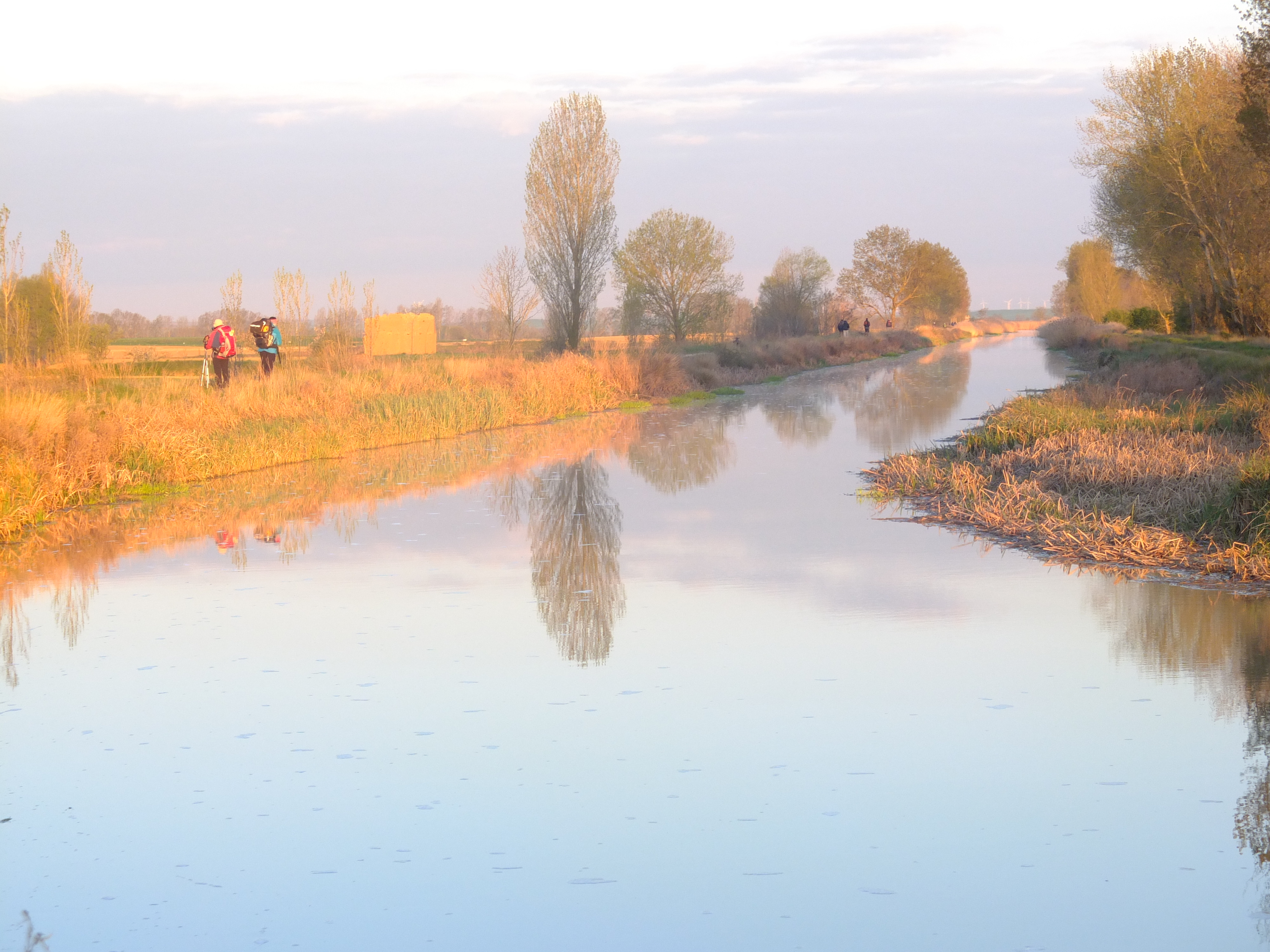
Once again here is a pic from that Camino I did ten years ago: