Yesterday, awe finished the movie. The Way, My Way. Tomorrow we have our first advance screening. Talk about cutting it fine!
But we did it, thanks to Post Production Supervisor Rishi Shukla, Wayne and Libby Pashley and their team at Big Bang Sound Design, Rob at ZigZag Post and Rodney at JORR. They all worked unbelievably hard to get this film ready for this coming spate of advance screenings, before the movie opens nationwide on May 16th.
Johnnie Walker, variously described as Camino royalty and Camino legend, arrived in Sydney Friday morning. He will be attending all the screenings across the country over the next ten days, doing Q&As with Jennifer and myself, and Chris Haywood for a few sessions too.
This freight train leaves the station tomorrow. The schedule is:
Tuesday 16 / Mount Vic Flicks / Blue Mountains / NSW
Wednesday 17 / Opening Night film, Gold Coast Film Festival / Qld
Sunday 21 / Nova Carlton, evening / Melbourne / Vic
Monday 22 / The Sun cinema Yarraville / Melbourne / Vic
Tuesday 23 / Nova East End cinema / Adelaide / South Australia
Wednesday 24 / Luna cinema, Leederville / Perth West Australia
Thursday 25 / The Windsor / Perth / West Australia
Friday 26 / John, Jennifer and I fly to Croatia to attend a gala screening at a conference of European Camino leaders from 17 countries, in Pula Croatia on May 3rd.
It’s a pretty gruelling schedule, right?
But Johnnie is deeply committed to promoting the film, which he says is the most authentic movie made about the Camino.
If I’m a bit uncommunicative on social media for the next two weeks, this is why!
What I’m most looking forward to is sitting with audiences and seeing how they react to the movie. And I’m looking forward to the Q&As too.
Gruelling, yes – but huge fun! After eight years working on this film, tomorrow it finally steps out into the light.
Chris Haywood (playing the role of Bill) and Johnnie Walker on location at O Cebreiro on the Camino.
I’m currently reading a Sci-Fi trilogy called Three Body Problem, written by Chinese author Cixin Liu. The series is called Remembrance of Earth’s Past. The Netflix series starts on March 21st.
The trilogy has been hugely popular worldwide – the first book won the Hugo Award for Best Sci-Fi or Fantasy novel. I’m now partway through the third book, Death’s End. I was hoping to have read all three books by the time the series started, but I won’t finish this final 600+ page book in time.
These books are dense and complex, and huge in their ideas. I haven’t read anything like them. And what makes them so fascinating is that there is really no central character – the books are about humanity.
Civilisations.
This is not a spoiler – but one of the premises is: How would humanity respond if it knew it was going to be destroyed by an alien force in four hundred years?
Four hundred years.
In reading these books, what I’ve discovered is that perspective changes everything. Time changes everything. Distance – space – changes everything.
When you’re immediate and up front and personal, you have a different perspective to if you’re on another planet, for instance, and you’re dealing with something that’s not only light-years away, but millennia away.
I find these fascinating concepts.
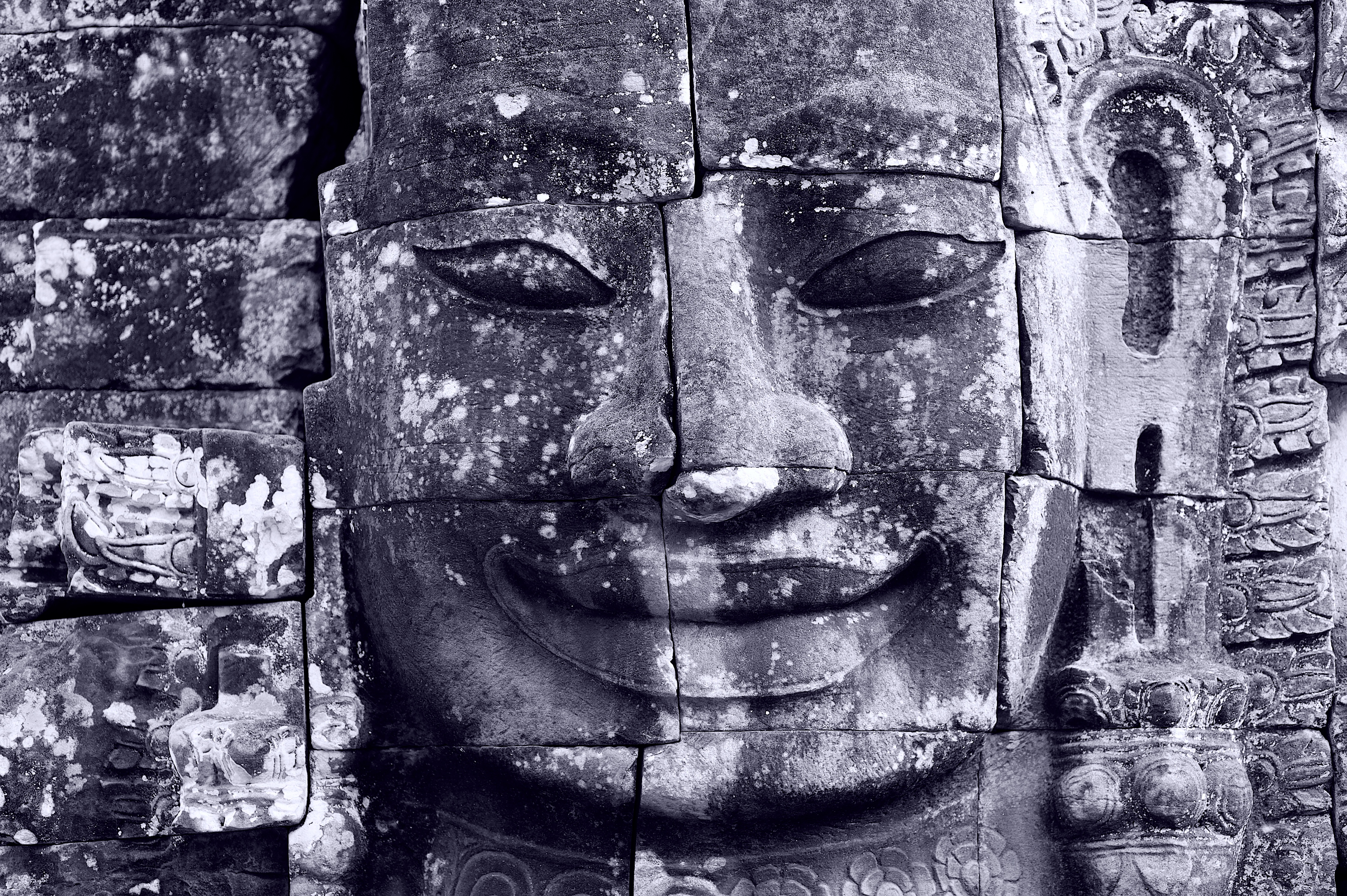
And the reason I’m putting this in a blog is that in reading these books, I remember someone once telling me that they had an out of body experience where Lao Tzu came to this person and took her by the hand and took her out of her house, up, up, out of her street, up, up, out of her suburb, up, up, further up, out of her city, and then out into space so that she could look down on the planet, Planet Earth, and see her life, her problems, her dramas, from this cosmic perspective.
And Lao Tzu said to her: See? All your troubles and dramas don’t really matter when you see them from this perspective.
I’ve been remembering that while I read these books. Because goodness knows we have problems in the world right now – as indeed we always have. And yet seen from the Lao Tzu cosmic perspective, they’re really quite insignificant.
Now I know a lot of you are going pile on top of me and say: How’s what’s happening in Gaza insignificant? How’s what’s happening in Ukraine insignificant? How’s what’s happening with the coming US elections insignificant?
What I’m talking about – and I’ve had blowback from this before – is trying to find a perspective of neutrality. That’s what I aspire to – neutrality. Non-attachment, if you like.
There’s a new film opening in the US next month. It’s called Civil War, and it’s made by an acclaimed British filmmaker, Alex Garland. It’s just premiered at the SXSW Festival, and caused a stir. A good stir. Some have called it a masterpiece. It’s set in a near-dystopian future in which the US has broken out in civil war.
In a press conference after the screening, the filmmaker said: Why are we talking and not listening? Why are we shutting conversation down? Left and Right are ideological arguments, that’s all they are. They’re not right or wrong. They’re not good or bad. We have reached a point where we vilify the other side, we’ve ratcheted up the rhetoric into an ethical debate which makes it easier to see the other side as evil – and once someone is seen as morally wrong, as evil, then their opponents can justify all sorts of extreme measures to stop them.
Step up and away, is what I’m saying. With perspective, you can see that ultimately it really doesn’t matter. You think it does, you believe passionately it does, but with the cosmic perspective of Lao Tzu, it’s all really insignificant.
I’m sitting there watching the Oscars, right? And all these people get up and make their speeches. And most of the speeches are full of Hollywood Humble.
And I start to think –
There is no best picture. There is no best actor, or actress. There is no best screenplay, or cinematography, or editing. No best music, or design, No best director.
There is only truth, and beauty, and art.
And binding it altogether – the truth, the beauty, the art, is love.
We need winners, don’t we. It makes things easier for us. Complicit with winners, and losers, is Judgement. And complicit with Judgement is Separation.
And separation is splitting us apart. Splitting the world apart.
I might have liked some films more than others – but I can’t say one film is better than another. One director is better than another? One actor, or actress, or cinematographer or sound designer, or music composer is better than another?
They all expressed their art through truth and beauty – and love.
When looked at this way there are no winners. There are no losers. There is merely the work. And if that work is art, then we are all winners.
So the Oscars are now done and dusted for another year.
Jimmy Kimmel was suitably lame and inoffensive. Where’s Ricky Gervais when you need him?
So how did I fare with my predictions? Not as well as previous years. I made the mistake of letting my personal likes/dislikes get in the way of my critical thinking.
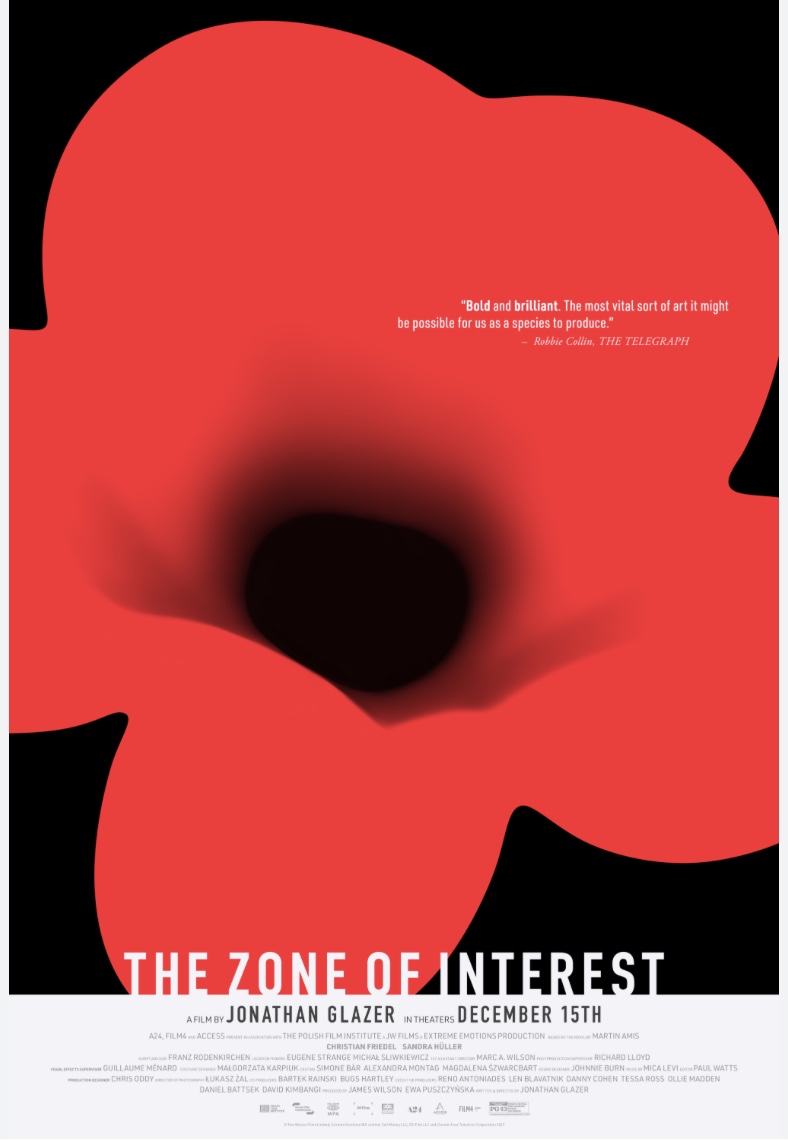
So here’s my report card: I got 11 out of 20. That’s because I disliked Poor Things so much. Even though I predicted Oppenheimer would win Best Sound, principally because it was such a loud movie, I’m really thrilled that The Zone of Interest got the award. The film used sound in such an horrific way. Also, Christopher Nolan has a habit of making his movies so that you can barely understand what the characters are saying. His dialogues are almost inaudible.
I’m also delighted that American Fiction won the adapted screenplay award. It was a very clever script. And equally so Anatomy of a Fall, winning for best original screenplay.
So, here’s what I got right, and wrong.
Best Picture Oppenheimer / YES
Best Director Christopher Nolan / YES
Best Actor Cillian Murphy / YES
Best Actress / YES Emma Stone
Best Supporting Actor / YES Robert Downey Jr
Best Supporting Actress / NO America Ferrera
Best Original Screenplay / YES Anatomy of a Fall
Best Adapted Screenplay / NO Oppenheimer
Best International Film / YES The Zone of Interest
I want to write about something that’s fascinated me for some time – What I call a person’s Highwater Mark.
What’s a person’s Highwater Mark? It’s the zenith of their life’s achievement. It’s the point beyond which they never reach.
Most of us achieve our Highwater Mark in our 40s. Some earlier, some later.
What’s my Highwater Mark? Making small personal films and writing novels.
George Miller’s Highwater Mark is making big spectacular action movies. Bill Gates’s Highwater Mark is creating Microsoft. Volodymyr Zelensky’s Highwater Mark is being President of Ukraine. Paul Selig’s Highwater Mark is channeling books. Nicole Kidman’s Highwater Mark is being an A-List actress.
A person’s Highwater Mark has nothing to do with success. Success comes and goes. It has nothing to do with achieving more. Most of us normally achieve more within the limitations of our Highwater Mark.
George Miller will no doubt make more big budget action movies. Bill Gates will continue with his philanthropic work. Zelensky will always be defined by being President of Ukraine. Paul Selig will continue to channel books, and he most probably will do other things too, but his channelled work will be his Highwater Mark. Same with Nicole Kidman. Her Highwater Mark will be her status as an extraordinary actress.
Me? I’m still lapping at my Highwater Mark but I doubt that I’ll push further up the beach. It’s not like I’m going to direct a Marvel movie.
A person’s Highwater Mark is that place on the beach where the Spring Tide reaches. Subsequent tides won’t ever reach that far.
We each inevitably find the Highwater Mark in our lives, most of us without ever realising it. This is as far as we’re ever going to go. It’s this far and no further.
And as we get older, we normally recede from our Highwater Mark. Very few of us take our Highwater Mark further up the beach.
But it’s possible. It’s possible to unlock further potential within us. But first we have to acknowledge that we have that potential.
As we get older, we get tired. Or worse still, complacent. Or even worse still, we get damaged. Damaged by the vicissitudes of life. We don’t seek to over-reach. We live too much in the past.
But it’s possible to establish a new Highwater Mark. To unlock that unlimited potential. We just dream bigger dreams. Further up the beach…
Each year, as many of you who follow this blog might know, I make my Oscar predictions. I’m normally pretty good, with a strike rate usually in the mid 90% range.
Living in Mudgee as I do, where there is no cinema, it’s difficult getting to see movies. And for a good deal of 2023 I was overseas, shooting my own movie – The Way, My Way.
That said, I have seen a good many – and I read the trades each day – The Hollywood Reporter, Deadline Hollywood, IndieWire, Variety, Screen Daily – enough to keep on top of things.
There are some totally outrageous films in the Oscar short list this year. They are:
Barbie
Poor Things
Saltburn
Zone of Interest
Now, I walked out of Poor Things after about thirty minutes. I thought it was pretentious. I wasn’t engaged at all with any of the characters. I acknowledged that Emma Stone was working her chops off for an Oscar, which she most probably will win, and I was in awe of the production design etc – but the story didn’t hold me, nor did I find any of the characters in any way relatable. It was just a highly talented filmmaker strutting his stuff… and that’s not enough to keep me in a cinema.
Barbie I thought was outrageous in a good way. I was engaged from the get-go, I thought it said some important and profound things about gender politics and male toxicity, and the style and direction of the film was totally original. And the script was amazing.
I was shocked when Greta Gerwig missed out on a Best Director nomination, equally Margot Robbie for Best Actress. That staggered me.
Saltburn I also loved, again for its boldness. Once again, a totally outrageous film that smacked you in the face constantly with its bracing storytelling and images.
And then there’s The Zone of Interest, Jonathan Glazer’s supremely clever take on Auschwitz. An exquisite use of cinema. Use of sound, use of nuance, use of restraint. For me, hands down, the best film of the year. Along with Anatomy of a Fall – both starring Sandra Hüller, giving extraordinary performances in each film. A tie for me for best film.
Coming close behind is American Fiction – a beautiful performance by Jeffrey Wright, and a very smart script.
I saw Christopher Nolan’s Oppenheimer on its opening day. I was utterly underwhelmed. It’s not that I hated the film, I just thought Nolan could have done so much better. I was expecting cinema – instead I got talking heads most of the time.
Why shoot on 70mm film?
And for me, the four act structure didn’t work at all. The film ended with the detonation, which by the way was exceptional cinema. But the 40 mins or so after that was just an all-too-obvious Oscar grab for Robert Downey Jr – who was amazing and will no doubt get the Oscar – but it didn’t serve the film. Which was way too long. But hey, it’s made over $1b at the box office and will snag all the major Academy Awards this year – so what do I know?
Talking about super long films – Killers of the Flower Moon really tested the bladder. Said to be Scorsese’s “masterpiece” by Spielberg, it doesn’t come close to Raging Bull. Not by a mile.
Back to the Oscars. Okay, so here are my predictions. This is my list:
Best Picture Oppenheimer
Best Director Christopher Nolan
Best Actor Cillian Murphy
Best Actress Emma Stone
Best Supporting Actor Robert Downey Jr
Best Supporting Actress America Ferrera
Best Original Screenplay Anatomy of a Fall
Best Adapted Screenplay Oppenheimer
Best International Film The Zone of Interest
Best Cinematography Oppenheimer
Best Film Editing Oppenheimer
Best Sound: Oppenheimer
Best Production Design Barbie
Visual Effects The Creator
Original Score Poor Things
Original Song Barbie
Best Costume Design Barbie
Best Makeup & Hair Maestro
Best Documentary Bobi Wine
Best Animated Feature The Boy and the Heron
So on Sunday night US time, Monday late morning Australian time, we’ll know the results. We’ll find out whether the film that underwhelmed me the most gets the majority of gongs, or whether some of these very brave and outrageous films snag a few.
All up, 2023 was a really good year for bold cinema.
As readers of this blog know, each year around this time I do an an “audit” of what I achieved this year pegged against what I hoped to achieve this time last year. And I outline what I hope to achieve in the coming year.
This year was all about the movie adaptation of my Camino memoir, The Way, My Way.
After nearly eight years in development, and something like forty drafts of the screenplay, the movie finally got shot.
We shot along the length of the Camino, from St Jean Pied de Port on the French side of the Pyrenees, right the way through to Santiago de Compostela in Galicia, in the far western region of Spain.
We shot with a small crew, so as to keep a tiny footprint on the Camino, and of the twenty roles in the movie, only four were played by professional actors – the rest were pilgrims.
I made this decision because I wanted the film to be truly authentic to the spirit of the Camino.
Post production has been lengthy – we’re now at 28 weeks and we’re still not done. But the film now has a distributor, a wonderful distributor – (details to come early next year) – and it looks like a mid-May theatrical release in Australia, later in the year for the rest of the world.
Jennifer and I are very excited that the film has landed in the right hands.
In amongst all this I pre-released a new novel, The Golden Bridge. It’s been picked up by a publisher and will be getting a proper launch next year, then available in bookstores, but right at the moment it’s available on Amazon here:
On a personal note, making the movie took the stuffing out of me this year. And it’s my own stupid fault. I didn’t eat well, (or rather, I ate too well!) I let my exercise slip, I didn’t sleep enough, I really didn’t look after myself as well as I should have.
I prioritised my film over my well-being.
This year I turned 70, and in August I celebrated (if that’s the word) five years since being diagnosis with Parkinson’s disease – although I’d become aware of symptoms some twelve months prior to diagnosis. So I’ve had this incurable degenerative brain disease for more than six years now.
Making a movie on location – as writer, producer and director – is not easy at the best of times, but when you’ve got Parkinson’s disease, let me tell you it was tough.
I tried not to let it show.
So audit time: How did I fare with what I said I’d do this year, compared to what I actually did do? I said that this year I’d:
Market Facing Fear throughout the US and in other territories. Yes, I did it.
Have a new book, The Judith Sessions, published. Didn’t happen – for reasons beyond my control. And it won’t ever happen.
Have a second new book published, a fictional work called The Golden Bridge. Did it.
Shoot and edit The Way My Way – a feature film based on my memoir of the same title. Did it.
Shoot the third film in my Personal Guidance System series, this film called I Hope. Partly done. Shot about 25hrs of material.
Launch a website aimed at helping people understand and deal with fear. Nup. Didn’t get around to it.
So my strike rate wasn’t too bad.
What do I hope to achieve this coming year, in 2024?
Release The Way, My Way theatrically in Australia and other territories world wide.
Release Facing Fear online globally.
Publish a ten year anniversary edition of The Way, My Way.
Publish a book of my Camino blog posts, called The Way, My Way – posts from a blog that became a book that became a film.
Complete the filming of Hope – the third in the series which includes PGS Intuition and Facing Fear.
Further development of my elephant film, tentatively titled Elephant Mountain.
Write the screenplay to the sequel of The Way, My Way – titled The Way, Their Way.
Begin writing another novel – a metaphysical thriller.
That’s a lot to chew off, and any one of those goals would be an achievement in itself – but I like to set myself lofty targets.
We’ll see how I go.
Again on a personal note, I’ve started taking back control of my body.
I’ve rejoined my local gym and I’m doing 30-45 mins cardio, 45 mins weights and core-strengthening exercises 4-5 times a week. I’ve also gone back to my Nordic walking, 2-3 times a week.
This last Sunday I walked 8kms at 4.35kms/hr. That for me was a big deal. Through most of this year I was incapable of walking more than 2km at a stretch without getting knocked up.
One of the biggest downsides for me with Parkinson’s is that it severely impacts your ability to walk. I’m fighting this, and I’m finding that Nordic walking is helping greatly.
I’m intermittent fasting as a matter of course – not eating before 1pm – 2pm. And I’ve taken red meat, alcohol, dairy and processed carbs out of my diet. I’m working on sugar and salt, but I’m not there yet.
Already I’m starting to feel the benefits of this return to a routine of exercise and mindful eating. With less travel anticipated this year, I should be able to bring my physical wellness back into line.
I have no plans to retire.
I have too much to do.
I’m not letting this condition I have stop me, much less slow me down. I feel that finally I have some semblance of command of my craft, and I have things I want to say.
This past ten years of my life, post Camino, has been a huge learning period for me – the Parkinson’s being a key part of that learning – and now I feel I need to put what whispers of wisdom I might have accumulated into service.
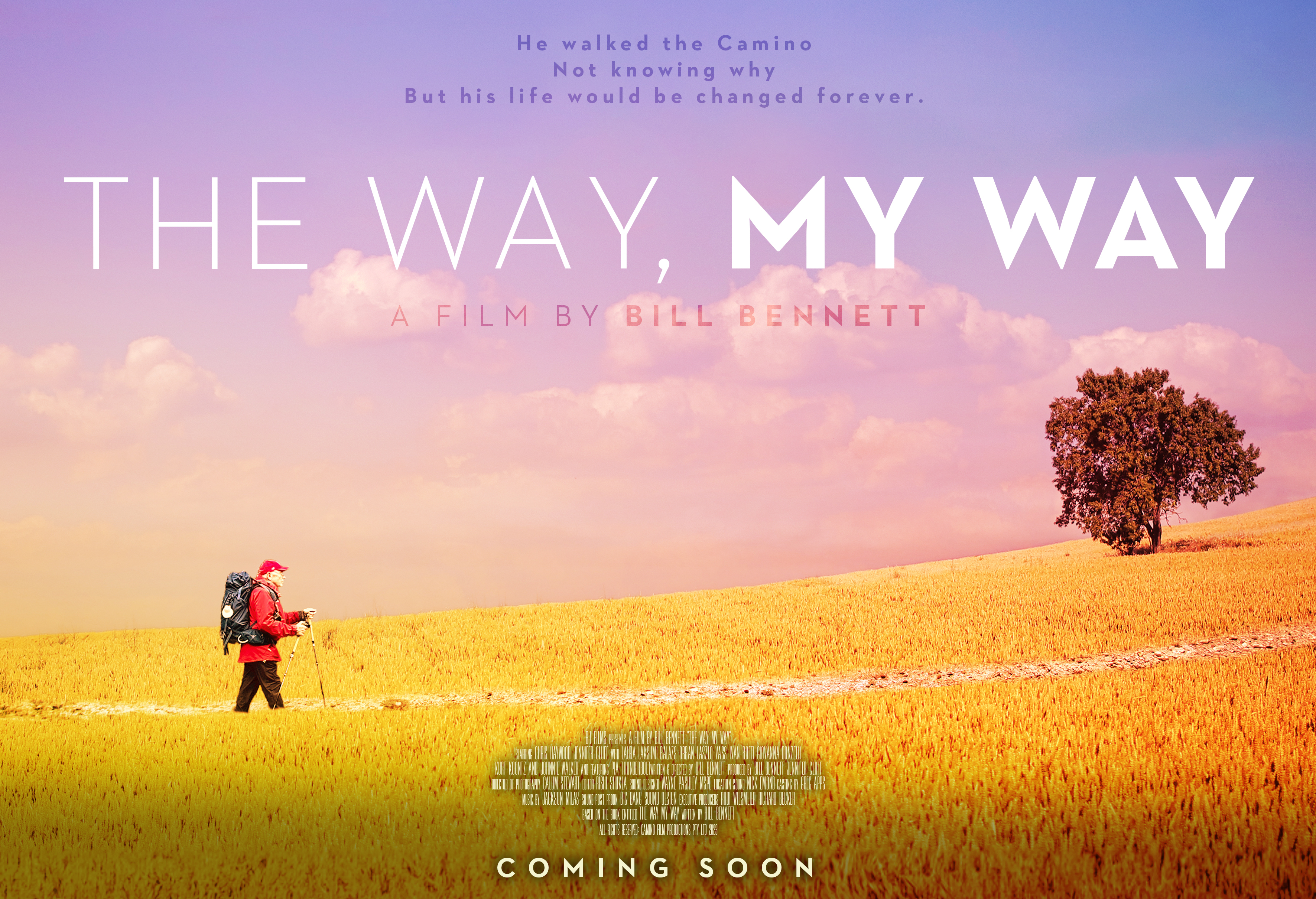
You’ll notice a new look to the blog – I’m using the key art from the film – the poster artwork, which is interim artwork until a distributor comes on board – but more on that later… oh and by the way, I notice from the analytics that this blog has been getting a lot of traffic recently, so I’m going to eat my bran and be more regular, I promise!
Firstly, there’s been a lot of interest in the film lately so I thought I would use my blog to update you all on what’s really happening, as against what’s purported to be happening.
QUESTION: What stage is the film at right now?
The film is now at fine cut stage. What that means is that after nearly six months of editing, we have locked off the picture cut. It´s running time is 103 mins, without end credits. I’m finally happy with the cut – at least, I’m happy enough – for if truth be told, I could spend another twelve months or more in the editing room fine fine tuning with Rishi Shukla, my trusted editor, but to what end? At some point I have to let go of my baby.
QUESTION: What happens next?
The next stage is sound post-production, which is probably even more complex than picture post production.
Fortunately I have the best sound team in the country, and indeed one of the best in the world in Wayne Pashley and Libby Pashley and their team at Big Bang Sound. They were Oscar nominated last year for their work on Baz Luhrmann´s Elvis. Their previous credits include Mad Max Fury Road, the Babe movies and Happy Feet for George Miller.
Wayne and Lib have done all my movies since Kiss or Kill in 1996, for which they won the AFI Award for Best Sound.
Sound post will take us up to next February, So the film won’t be completed until end of Feb earliest.
QUESTION:What’s happening with distribution?
Now that the film is in sufficient shape to show distributors, we’re beginning to have screenings. We’ve already had interest from one major distributor here in Australia, and we’re hoping that an offer might be forthcoming.
Once we have an Australian distributor locked in we´ll then seek a foreign sales agent. This has to be done linearly, step by step. I’ve been producing movies now for forty years and I know my way around distribution and exhibition enough to know that you can’t rush these things.
I’ve brought on veteran distributor Richard Becker to act as consultant in these matters. Richard is retired now, but he’s been a huge fan of this movie right from the getgo, and he’s providing invaluable advice. Distribution and marketing is a minefield, and even someone with my experience needs someone like Richard to guide the film through this minefield.
QUESTION:When am I going to be able to see it? And where?
That’s the key question, and the answer is I don’t know, and the decision isn’t mine anyway – it will not even be the distributor´s decision most likely – it will be the exhibitors´. They’re the ones that call the shots. If a distributor can’t get the screens, then they can’t release the movie.
If everything falls into place, then I’m hoping – and I emphasise the word hoping – that the film will be in cinemas in Australia in the first half of 2024, and internationally sometime after that.
Streaming then will follow – and as for the timing on that, it will depend on the distributors, because they’ll most probably hold those rights.
But you know, there’s another scenario:
The film gets invited into Official Selection at the Cannes Film Festival, the film gets a ten minute standing ovation in the Palais, after the screening there’s a bidding war between Netflix, Amazon, A24 and a bunch of others, Netflix offers us US$20m and it takes us all of five seconds to accept their offer, they give the film a short theatrical release to qualify for the Oscars, then a quick window to streaming – meanwhile the film goes on to take out Oscars for Best Picture, Best Director, Best Actor and Best Screenplay – I accept the three Oscars with practiced humility, the film then gets another run in the cinemas, and I´m then signed by Warner Bros to direct a Marvel spinoff movie for a directing fee of $7.5m with 5% from dollar one.
I like that scenario.
haha
The reality is that first we have to finish the movie then we have to get distribution then we have to market the film very carefully. I’ve seen too many good films fall through the cracks to be complacent about all this stuff. It´s a delicate and complex process making a movie – it´s even more delicate and complex selling it.
If you have anymore questions contact me at: CaminoFilmProds@gmail.com
Oh and by the way, I am going to be blogging more regularly so please follow me here to ensure that you get these incredibly witty and insightful missives.
After five weeks of filming in Spain then a few days filming in Mudgee, Australia, we’ve now completed Principal Photography for my Camino film, The Way, My Way – based on my memoir of the same title.
Now the fun starts.
Everything comes down to editing. All the decisions you make as a director on location are based on how it´s all going to cut together in the editing room.
Given the way this film was shot, the editing process will be even more crucial than normal.
As per my style in such films as Kiss or Kill, Malpractice, Tempted, or Backlash – this is a film that has a high degree of improvisation. This was necessary for when we came to shoot with the “actuals” – the actual pilgrims that I met and walked with on my original Camino ten years ago.
They’ve come back to play themselves in the movie.
Their involvement dictated a certain style of performance from the actors, but also it influenced the shooting and hence the editing style. The actuals were real, they were authentic, so the surrounding performances had to match their verisimilitude pitch-perfectly. A more formal, “dramatic” visual style would have been totally out of kilter with the authenticity of the actuals´ performances.
To keep the location crew size down to a minimum, I had no continuity person on set, however I had two cameras on just about everything we shot, so I know I’ve got the coverage to get me out of trouble if needs be,
Rishi Shukla is my editor. He cut the two theatrical feature documentaries I’ve done lately: PGS – Intuition is your Personal Guidance System, and Facing Fear. Editing a dramatic feature film is a whole other ballgame though. The rules are totally different, and this will be Rishi´s first movie as a feature editor. But I’ve seen his choices in the assembly so far and I know he’ll do a mighty fine job, like he’s done with everything else we’ve worked on.
I look forward to the next 12-15 weeks or so in the editing room with him.
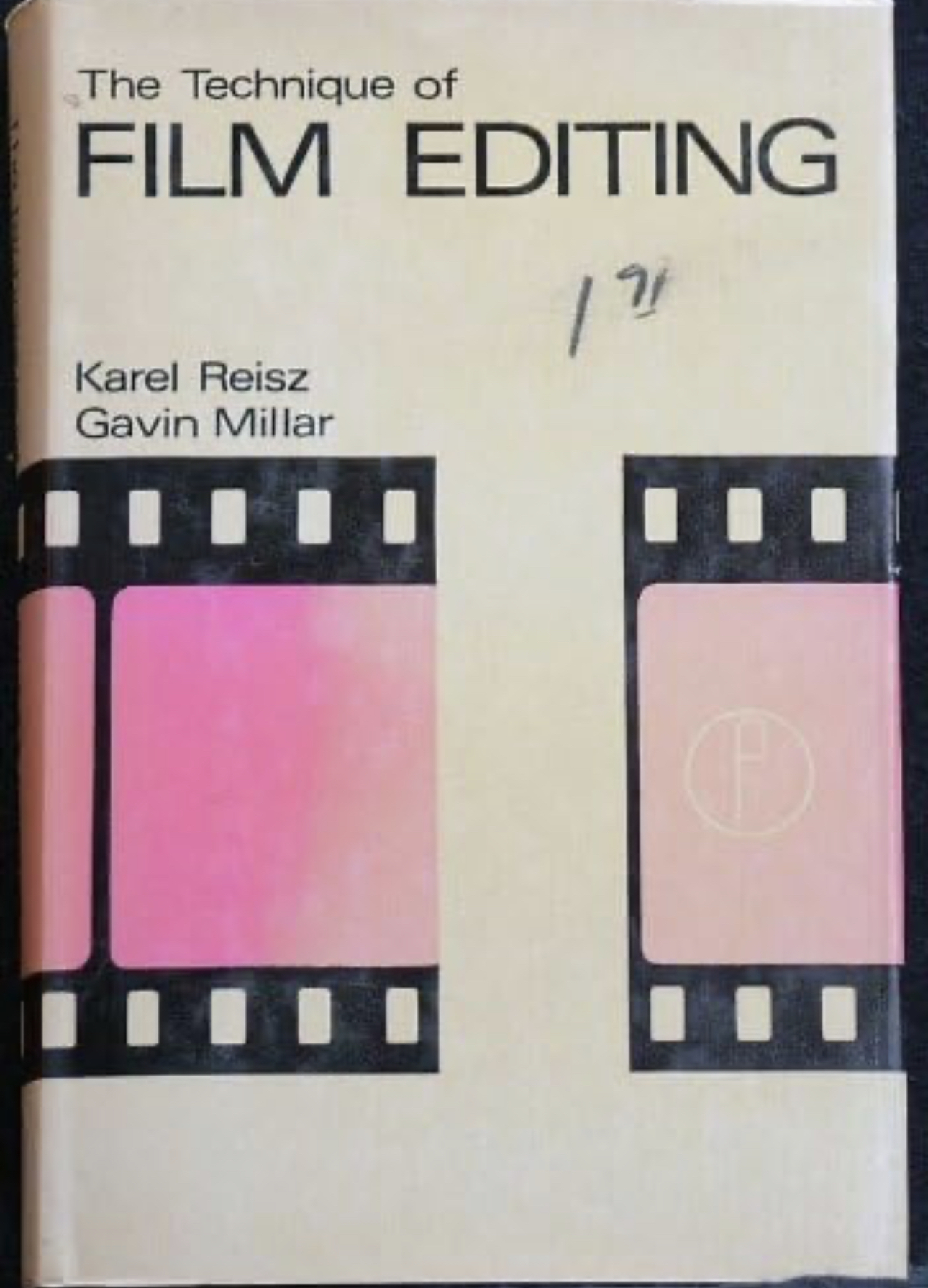
Going back some fifty years – yes, fifty years – when I first determined that I wanted to make films, the first book I read was Karel Reisz¨s classic, The Technique of Film Editing, written in 1953.
As a young cadet journalist working for the ABC in Brisbane at the time, I would read this book in the back of the camera car as we went out each day to cover news stories. I also read Film Sense, by Sergei Eisenstein.
I read these two books over and over.
Everyone – cameramen, journos, the editors – they all thought I was a wanker. But instinctively I knew that if I wanted to learn how to make films, I had to learn editing, and both those books were the definitive works. They’re still as relevant today as they were fifty years ago.
Later, I would enroll in a three year acting course so that I could understand performance.
Editing is the key to film production. And I’m jumping out of my skin to start!
For the past five week I’ve been directing a feature film in Spain, along the Camino de Santiago. The film is called The Way, My Way, based on my Camino memoir of the same name.
I’m heading back home for a further period of shooting in Australia next week. Then comes months and months of post production. Then comes months and months of marketing and publicity.
It´s taken me nearly seven years working on this project to get to where I am right now, and probably more than forty different drafts of the script. I’ve lost count.
I’ve had constant rejections – from actors, from distributors, from financiers, from functionaries in government film offices who weren’t even born when I made my first movie.
They all, for their own reasons, said no. For some, it was too much a risk. For some, they didn’t believe in me. For some, they saw me as a filmmaker that once showed talent, but that talent left the building a long time ago. Thank you and goodnight.
If this were a war and each rejection were a bullet, my body would be riddled by now. It would be lying in the mud in the trenches, a bloody mess. It would be so shredded they’d need my dog tags to identify me.
But somehow I’ve managed to pick myself up after each mortal wounding, and I’ve picked up my weapon, put my armour back on, and I’ve gone back to war, to fight yet another battle, to face further bullets, further assaults, further indignities.
What is my weapon? My weapon is my vision. I see the film already made. There can be no more powerful weapon.
What is my armour? My armour is my implaccable determination. It´s my shield, it´s my suit of kevlar, it deflects most of the ordinance.
Most, not all.
Some of it somehow manages to get through the layers of protection I’ve built up around me over the years, over the decades of fighting, and it wounds me. It hurts, and it leaves scar tissue.
Each war, each movie, extracts its toll. But the fight is worth it.
This latest film – my fourteenth feature film as writer/producer/director, my fifteenth as writer/director, my sixteenth as director only – was also a war, and the war will be ongoing until way after its release, sometime next year.
Who am I fighting? My most powerful and cunning of enemies is myself.
My fears. My willingness to compromise. My unwillingness to compromise. My loss of vision. My sheer exhaustion. My creative inadequacies. My empathy.
To be a good film director you have to be a bastard at times.
But this is war, fuckit.
I have one chance in my life to make this film – a film that will last – and I’m going to do everything I possibly can to make it the best film it possibly can be.
I fight other enemies too.
The budget. There’s never enough money. The weather. There’s never enough days of light. Beautiful light. There’s never enough days of storm and thunder. There’s always too much ordinariness. That’s one of my biggest enemies – weather and light that’s ordinary. Time. There’s simply never enough time to do what I really want to do: People. Invariably in a war situation, people show their true colours. Some shine, some disappoint. That’s human nature.
I’m never alone when I go to war.
I’m surrounded by highly talented, highly experienced veterans, and sometimes rookies too, who share the vision and in their own highly specialised way join me in this particular battle.
For me they are a source of joy and wonderment and they save my life every day. Every day I look around me and I quietly say thank you. Today you saved my life.
By my side is Jennifer. She believes when I lose faith. She takes risks when I’m too scared to. She sees it done when my exhaustion clouds my view. She cops the flak so that I can keep fighting.
Without her, I wouldn’t have the strength to pull myself up out of the bloodied muddy trenches and get back out there to face another day.
Making a movie is like going to war. Sometimes you win, sometimes you lose.
Whatever the outcome, it´s a privilege to have the opportunity to fight for a vision that can hopefully have a positive and uplifting impact around the world.




 PGS - The Way
You must be logged in to post a comment.