How Judgment works ~

Judgment is a sly and wicked beast.

Here’s how judgment works on the Camino.
It works with a simple innocent question:

Where did you start from?

With that one question, you put judgment into train.
Oh, you started from Sarria did you?
(Meaning, you did the minimum walking required to get your Compostela)

Immediately you find yourself judging that person.
You’re not a true pilgrim, you say to yourself.
I started at St Jean Pied de Port.
I’ve walked further than you.
I’m better than you.

Or –

Bloody hell, you started in St. Petersburg?
Are you serious?
That’s gotta be like, five thousand ks or something, no?
You’re a shitload better pilgrim than me!

The Camino is a great place to shed judgment. For starters, most pilgrims are stripped of those material things that might prompt judgment.

You meet a pilgrim on the track and you are denied information about where they live – castle/mansion/free-standing house/semi-detached house/townhouse/unit/rented/owned/back seat of their car.

Or the kind of car they might drive – Bentley/Mercedes/Tesla/Kia/Kombi-van/junkheap aka shitbox.

And you can’t judge pilgrims by their accessories.

Women don’t often wear jewellery as a rule, and men tend to leave their Rolexes or their Philippe Pateks at home. Most pilgrims wear the same kind of clobber. Some might go upmarket and wear Jack Wolfskin or Arc’teryx, some might have bought all their gear from Decathlon, the big European discount store. But by and large you’ve got very little to judge people on.

It’s hard to judge pilgrims based on the usual criteria we use to judge. But given that we just love to judge, we’re then left to use other more nuanced means, such as the above innocent question.

One of my favourites was: How much does your backpack weigh? I could make very serious judgements about a person based on their response.

If their backpack was way in excess of 10% of their body weight I would classify them as a novice pilgrim. If their backpack was way less than 10% of their body weight I would classify them as an idiot. If they told me to fuck off I’d respectfully nod and fuck off.

At the heart of judgment is separation.
And a belief that you are inherently better than the person you’re judging.

You know more, you have more, you have better style and taste, you have superior skills, in one way or another you are better than the person you’re judging.

And in determining this, you feel better about yourself.

I try not to judge anymore.
It’s difficult, but I’ve learned the difference between judgment and discernment.

Judgment is a hierarchical mechanism. With the person judging being higher up the hierarchical scale than the person being judged.

Discernment is a preferential mechanism. What do you prefer? What’s appropriate and what’s not? There’s no separation in discernment.

We can’t take judgment out of our system. We need judgment to make cogent choices. But instead of using judgment to separate, we can use discernment to determine what’s a better fit, without the need to condemn or vilify or ridicule.

I can go to a movie and I can come out and say I like that movie or I don’t like that movie and I can choose to say what I say using either judgment or discernment.

These days I try and use discernment.
Except when it comes to Marvel movies…

I’m in a routine ~

Since the pandemic began, in February 2020, my wife Jennifer and I have been hunkering down in our home in Mudgee, a beautiful wine-growing town 4hrs drive NW of Sydney.

We’ve been very fortunate. We have a large house in large grounds and up until quite recently, the virus didn’t come to our town. But even so, we sat tight and battened down and followed all the health orders.

Our lifestyle changed dramatically. Prior to the pandemic, we’d been travelling quite extensively overseas for work, filming then marketing PGS – Intuition is your Personal Guidance System, then shooting the next film in the trilogy, Facing Fear.

Suddenly, all that changed.
We were stuck at home.
No more travelling.
No more getting on and off planes.
No more going through security.
No more rental cars driving on the wrong side of the road.
No more hotels and crappy restaurants.
No more figuring out how much tip to leave.

At first it felt weird. Being at home. Only going out to do grocery shopping. That now has been our life for the past twenty months. Twenty months. My God, that’s almost two years!

Two years stuck at home.

And you know what?
It’s been glorious!
I seriously hope I never have to get on another plane in my life.
I’m serious!

Mudgee has been in lockdown the past nine weeks, but this past week that’s been lifted, and because our state of New South Wales yesterday reached 80% full vaccinations (Jennifer and I are double-jabbed), restrictions are starting to lift.

But I don’t know it will mean much to Jennifer and me, because we’ve got into a routine which we really like.

I used to hate the notion of being in a routine.
I railed against the notion of a routine.
Every fibre in my body resisted routinely doing anything.
I liked surprises.
I liked doing things differently each day.
I relished the thought of not knowing what a new day would bring.

All that’s changed.
I’m now in a routine and I love it!

So here’s my routine. And believe me, it doesn’t change.

My Routine

2:30am – 5am
I wake up and read. That’s how I start my day. Usually I’ve gone to sleep the night before at about 10:30pm, so what with a few bouts of sleeplessness I usually wake up having had about three and a half hours sleep.

At the moment I’m reading Murakami’s Kafka on the Shore and I’m loving it. I usually read for two hours or so, then I put myself back to sleep with a meditation mantra – Paul Selig’s:

I know who I am in truth
I know what I am in truth
I know how I serve in truth
I am free, I am free, I am free.

Paul, through his Guides, says this shouldn’t be used as a mantra but I’ve found it helps me disengage and get back to sleep.

7am – 8:30am (or thereabouts)
I then usually wake at somewhere between 6:30am and 7am. I get up and go downstairs and have a coffee – a double espresso- then I do what I call my 20/20. Twenty minutes of yoga and twenty minutes of meditation. I do this every day. Usually the yoga blows out to 30mins or more, and quite often I do more than twenty minutes meditation too. I use an app – Insight Timer – and often use binaural beats to get me deep.

8:30am – 1pm
This is my writing time. I interrupt it only to make Jennifer coffee and sometimes toast with Vegemite. I take this up to her when I hear she’s awake. We have a chat then I go back downstairs and continue with my writing.

This is when I have breakfast – a small bowl of home-made muesli with almond milk.

Sometimes when I’m in full-on writing mode I shift to a different routine. I wake up at 4am or thereabouts and go downstairs immediately and write till about 11am or so. I then do my 20/20 in the afternoon. I’m in full-on writing mode when I’m in the creative phase of conceiving something new, and my thoughts come through dreams, and I know I have to get it down straight away. I write in a semi somnambulistic state.

I try to leave this morning period entirely free for writing. Sometimes I have to do zoom meetings with the US, and because of the time difference the only time that can be done is in my morning – and sometimes I have to do interviews for podcasters or YouTubers – but I try and keep this morning time free of interruptions so that I can write unimpeded.

1pm – 2:30pm
This is the time when I have some lunch and chat with Jennifer. Usually a salad, but sometimes an omelette or eggs and bacon. I only have coffee before 10am. After that I switch to Darjeerling tea. Black, no sugar.

2:30pm – 4pm
During this time I do admin work – answer emails, follow up on the various projects I have in development or financing. Do personal stuff too.

4pm – 5:30pm
Around 4pm, sometimes earlier, I go upstairs and I read for an hour or so, then I have a nap. If for whatever reason I haven’t already done my 20/20 I do it after my nap.

5:30pm – 6:30pm
I then go downstairs and chat with Jen and then I do my exercise. My exercise is 40-50 minutes on my exercise bike, while watching telly. I usually watch a show or sport that Jennifer wouldn’t want to watch – either Formula One or English Premier League, or a show that might be a bit violent or not to her taste. My exercise is usually HIIT – High Intensity Interval Training. It tuckers me out! On Sundays I do 60 minutes.

6:30pm – 7pm
This is dinner time. This is the time we talk – usually about story. Shows we’ve watched, books we’ve read. Sometimes we talk about politics. Jennifer cooks. She’s an amazing cook. After dinner we clean up and make tea ready for the evening’s telly.

7pm – 10pm
This time is sacrosanct. We watch TV. For us, it’s both enjoyment and work. We are ferocious in our analysis of what we watch. Production, performance, casting, the writing. We need to keep up with what’s being produced, and often we are in awe of what’s being produced. We have subscriptions to Netflix (of course!), Binge (incl HBO), Stan, Apple TV+, Disney+, Amazon Prime, Kayo, and we watch SBS on Demand too. This is a very important time of the day for us.

10pm – 10:30pm
Bed time and reading. The reading makes me sleepy. I’m usually out to it by 10:30pm – 10:45pm. I have a FitBit and it tracks my sleep. I usually average about 6hrs sleep a night, including my afternoon kip. My resting heart rate usually sits around 62-63 bpm.

Then the next day starts around 2:30am again which is when I pick up my Kindle and begin to read.

So that’s my routine. And I gotta say, I love it. I’m productive, I stay healthy, and I have time to spend with the most important person in my life, which is Jennifer.

I feel I have a blessed life.


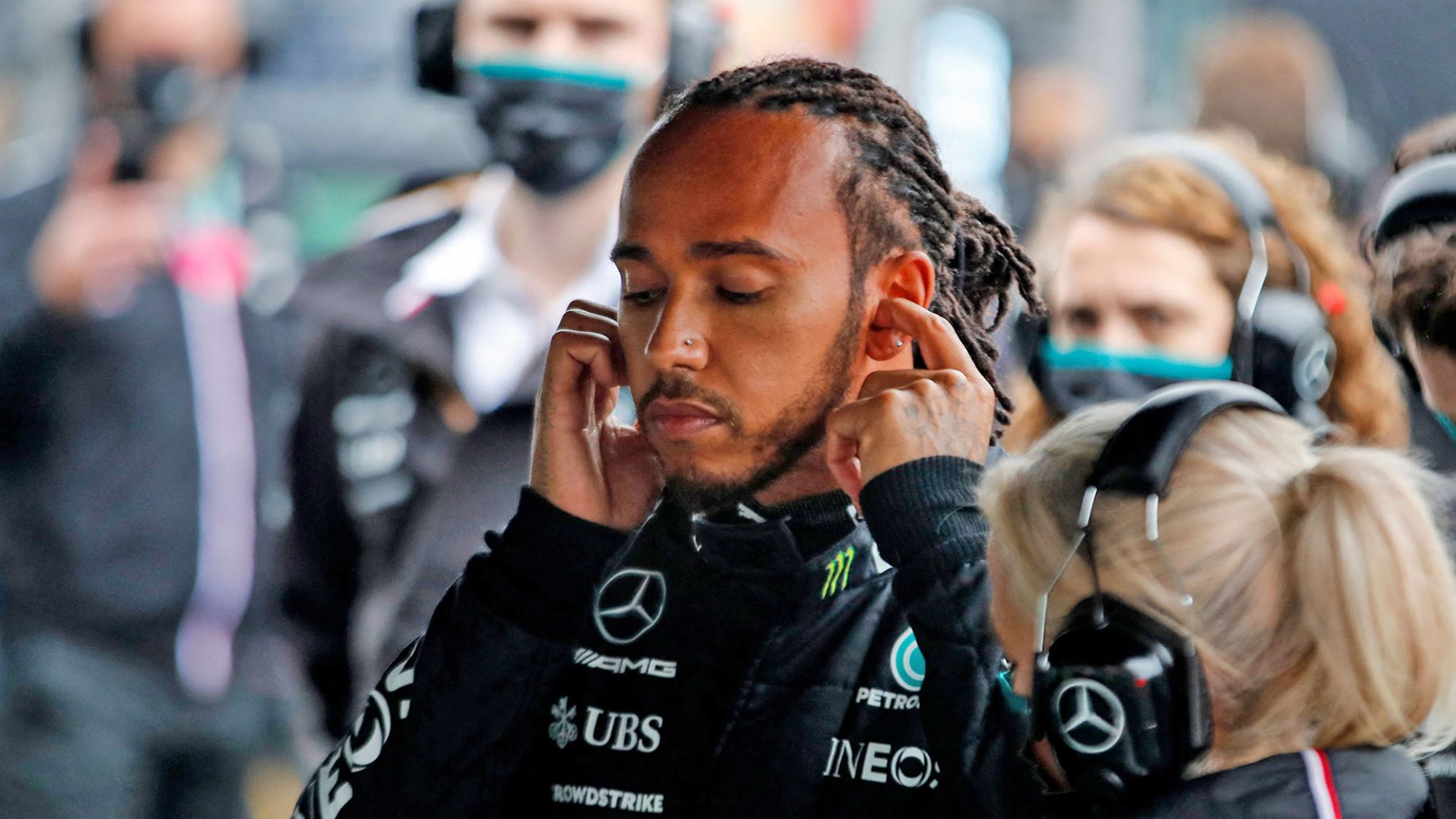
“I should have followed my gut,” says Lewis Hamilton.

At the beginning of this year, I started following Formula 1 motor racing.

This came as a big surprise to my dear wife Jennifer, to my family, and to those that I confided in – because I have largely kept it my dirty little secret, until now that is!

Why was it a surprise? Because I’m no way a rev-head. I’ve shown zero interest in motor sports until I began watching a documentary series on Netflix called Drive to Survive, which was a series following the F1 circuit for an entire season.

After watching this doco I got hooked.
And I mean obsessively hooked.

For the whole year I’ve watched every practice session, every qualifying session, every race. I listen to F1 podcasts. I keep up to date with all the latest news on the F1 app. I am a fan.

Why?
Me, who drives a sedate station wagon that’s done 250,000kms and is 12 years old.
Me, who doesn’t know how to top up the windscreen wiper fluid.
Me, who would have to call the NRMA if I got a flat tyre.

Pathetic, isn’t it?

But I’ve become fascinated with Formula 1 because it is heightened drama. The stakes each race are huge. The egos each race are huge. The margins between winning and losing are wafer thin. The technology is mind-bogglingly sophisticated.

And then there’s Lewis Hamilton.

Lewis Hamilton is seven times World Champion and this year he’s going for his eighth title. If he gets it, he will be the greatest driver in Formula 1 motor racing history.

His nemesis is a young up-and-coming Dutch driver named Max Verstappen. Hamilton drives for Mercedes and Verstappen drives for Red Bull. One makes cars and the other makes putrid energy drinks.

You can tell who I’m rooting for.

Lewis Hamilton is humble, a sweet guy, and could well become one of the world’s greatest ever elite sportsmen. It all comes down to the final few races of the season. At the moment Max Verstappen is leading him by six points.

I watched this morning a replay of last night’s Turkish Grand Prix. I won’t go into the details, but there was a crucial moment in the race when Lewis Hamilton was instructed by his race director over the team radio to pit-stop and get a new set of tyres fitted.

Hamilton didn’t want to. He wanted to keep going and finish the race on his original set of tyres. Initially, he refused to follow his race director’s instructions. He had the chance of finishing close to Verstappen.

But a few laps later when his race director insisted, Hamilton acquiesced and went into the pits, had his tyres changed, and when he came back out onto the track again his new tyres weren’t working for him and he ended up coming fifth in the race, when he could have come third.

Hamilton, unusually for him, was furious. He said over the team radio that he should have followed his gut. Read about it here…

https://www.formula1.com/en/latest/article.i-should-have-trusted-my-gut-hamilton-reveals-why-he-was-left-frustrated-by.3K8x7EIPlXOK3jIQocsPDx.html

You hear this often – following or trusting your gut. People call it intuition. And yes it is a form of intuition. I call it Cognitive Intuition – because it is intuition based on expert knowledge.

In making my film PGS – Intuition is your Personal Guidance System, I figured out that not all intuitions are the same. I came up with the concept that there are four types of intuition:

Survival Intuition
Cognitive Intuition
Mystical Intuition
Proxy Intuition

If you want to learn more about this, go read my book PGS, available on Amazon.
PGS the Book

Lewis Hamilton is an expert driver. He called upon his expert knowledge to make a gut call. An intuitive call. As it turned out, he was right.

Most gut decisions are…