

This post should get some discussion going!
😀
I thought it was worth starting up a new post on this subject, because I notice it’s being discussed on another page, and I think it deserves a page (or two!) on its own.
The argument being put is that you should listen to your body when you feel pain. Pain is the body’s alert mechanism that tells you something’s not right. That you should stop what you’re doing, attend to the pain and the underlying cause or causes.
If you don’t listen to your body, if you override pain’s warning, then you risk damage to your body – and perhaps serious permanent damage.
I believe that’s correct.
But I also believe there is pain and there is pain.
Everyone who walks the Camino experiences pain. If everyone who walked the Camino listened to their bodies, very few would finish.
Dealing with pain I believe is part of the Camino experience.
For me, pain humbled me. Pain became an incredibly important part of my catharsis. Arguably, if I hadn’t experienced the pain I did, I would not have undergone the metaphysical changes that have subsequently had such a profound effect on my life.
Without pain, my Camino would not have been as much of a spiritual journey as it turned out to be, because at times the pain put me into a transcendent state.
I saw people give up the Camino because of pain. They would go to a nurse, or a doctor, and they would be told that they would have to rest up for two weeks, or stop. So they went home.
Of course a medical professional is going to advise you to stop. That’s their job. That’s what they’re trained to do. I felt that many pilgrims were relieved to have this professional advice, because it gave them legitimacy to stop.
Then there were those that had serious structural ailments and of course they had to stop. That’s just common sense. You can’t walk on a broken leg. You can’t walk if you’ve got life threatening asthma and there’s pollen in the air. You can’t walk if your knees are shot.
But there is pain and there is pain.
Blisters are painful. Bah! Unless you’re going to get gangrene and risk amputation, you can walk through blister pain. You treat the blister, you monitor it, but you keep walking. Tendonitis is painful. That’s more serious. But how many people have walked the Camino with tendonitis?
Let me state this very clearly and unambiguously –
- I am stupid.
- Don’t listen to me.
- Don’t do what I do, or did.
I’ve only ever written this blog from personal experience, to document those experiences so that some of you might get something from what I’ve done. But I’ve never tried to foist my point of view on anyone. Or tell anyone what to do.
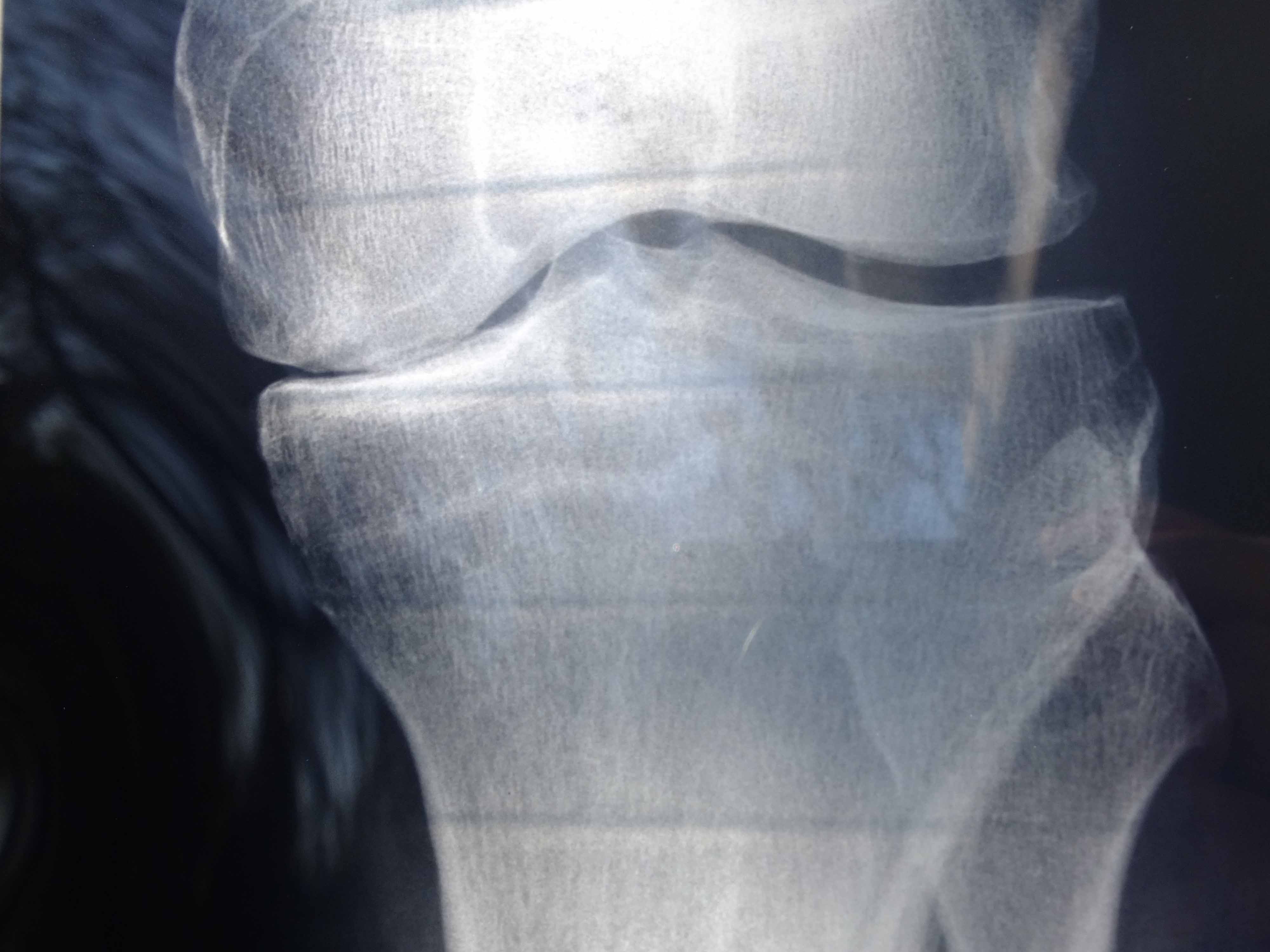
If I’d given up in Pamplona, when my knee was the size of a balloon and my pain was immeasurable, I would have regretted that the rest of my life.
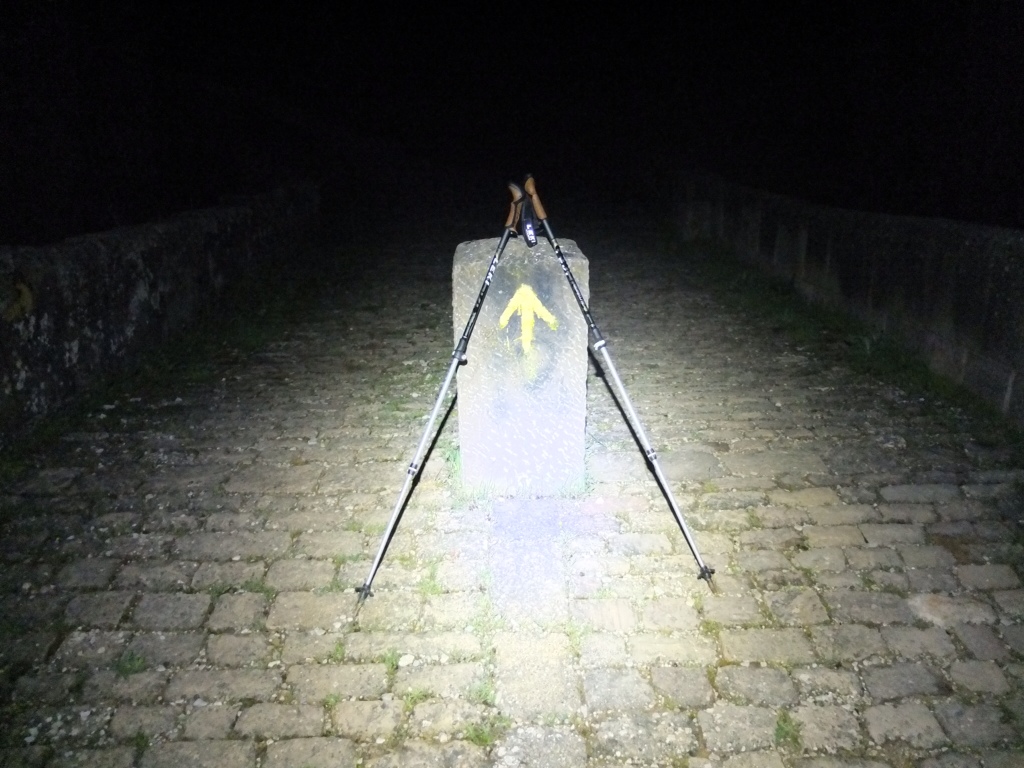
I rested for a day, I lightened my backpack, I iced my knee, I bought trekking poles, I took anti-inflammatories, then I continued on. And later during the walk I had more pain, and I continued on.
I got to Santo Domingo and the nurse there said I should take a week off. I took a day off, and kept walking. And I finished the Camino. And it will go down as one of my great achievements in life.
And it’s changed my life.
I don’t say this because I’m a tough guy, or macho, or that I’m better than someone who stopped. I hate pain. I’m a complete wuss. But, I had a particular need. That need was to finish the Camino. That’s all I wanted to do. And I was prepared to put that need ahead of anything else, including my own well being.
Is that achievement any greater because I walked through pain? No. I wished I hadn’t had the pain. But that’s what the Camino threw at me, to humble me, to literally bring me to my knees, to force me to look at my life from a new perspective.
There is pain and there is pain.
Listen to your body, then you decide what’s best to do.
Don’t do what I did. Necessarily…

 PGS - The Way
You must be logged in to post a comment.